Chevron Returned Nearly 150% of Free Cash Flow to Shareholders. Is Its Dividend Safe?
Chevron handed shareholders more cash than it actually generated last year, and debt climbed sharply to cover the gap. Now that oil prices have shifted the math entirely, one number in the upcoming earnings report will reveal whether the dividend…

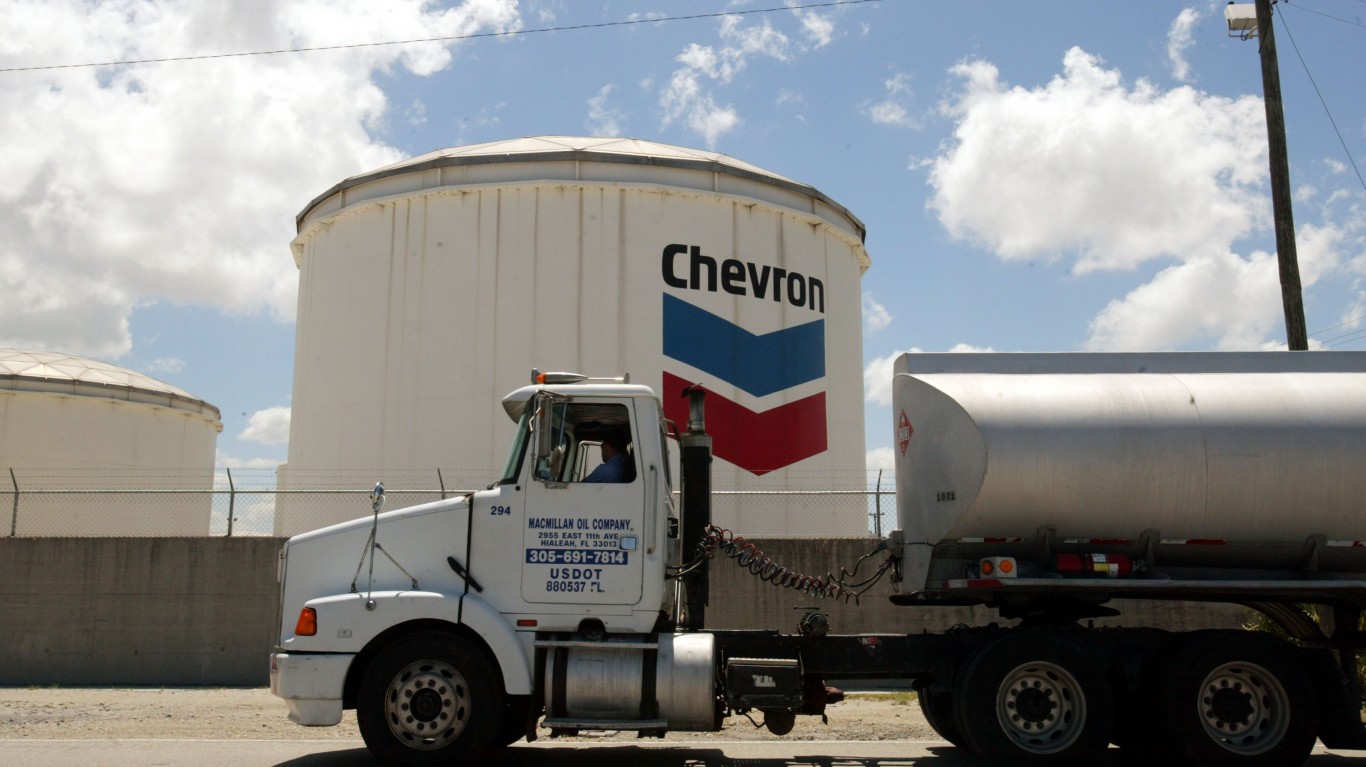
Chevron (NYSE:CVX | CVX Price Prediction) beat third-quarter estimates this morning, helped by refining profits as diesel prices rose (per CNBC). For income investors, though, the more useful number is how much cash Chevron hands back compared with the free cash flow it actually makes. That is the shareholder return payout ratio: dividends plus buybacks, divided by free cash flow.

Why 149.7% of Free Cash Flow Went Back to Shareholders
In 2025, Chevron generated $16.6 billion of free cash flow, meaning operating cash flow minus capital spending. It paid $12.8 billion in dividends, or 76.9% of that total, and bought back $12.1 billion of stock. Put together, shareholder returns came to 149.7% of free cash flow.
What This Ratio Reveals That Earnings Miss
Earnings mostly tell you where oil prices went. This ratio tells you whether the payout comes from the business or the balance sheet, since any dollar returned above 100% of free cash flow must come from cash on hand or borrowing. Total debt rose from $24.5 billion at the end of 2024 to $40.8 billion at the end of 2025, a year that also included the Hess acquisition. A strong balance sheet can cover that gap for a while, but eventually it has to close.
2026 Cash Flow Is Rewriting the Math
This year looks very different. First-quarter free cash flow came in at negative $1.549 billion because of working capital swings, but Chevron still bought back $2.5 billion of stock. In the second quarter, free cash flow reached $18.10 billion, against $3.504 billion in dividends and $3.003 billion in buybacks. That put the payout ratio at about 36%.
The third quarter added $12.00 billion of free cash flow, up 156.9% from a year ago. Chevron also paid down $3.5 billion of debt, and net debt fell $7.8 billion. Free cash flow for the first nine months totals about $28.6 billion, already above all of 2025. Prices did much of the work: Brent averaged $97 a barrel, compared with $69 a year earlier.
A Dividend That Held Through 2020
The quarterly dividend is now $1.78. It was $1.71 in 2025, $1.63 in 2024, and $1.51 in 2023. In 2020, Chevron kept it at $1.29 instead of cutting. January’s 4% raise was its 39th consecutive annual increase. The company described it as the kind of multi-decade run we screened for in our free Dividend Kings guide. At the $7.12 annualized rate and 1.975 billion shares outstanding, the dividend costs about $14.1 billion a year.
Signals That Separate a Raise From a Squeeze
Chevron has two ways to return cash, and buybacks are the one it can adjust, since they can shrink in a weak year without hurting the company’s reputation, while the dividend works as a promise. Management says Hess assets generate free cash flow “roughly double the incremental dividends,”. On the positive side, Chevron reached $3 billion of structural cost cuts six months early. On the negative side, if Brent drifts back toward $69, the combined payout could rise above 100% again just as the debt cuts begin to reverse.
The shares are up 58.27% year to date and trade at about 37 times earnings, so a lot of this cash windfall is already reflected in the price.


Verdict: Watch the Buyback Line
The payout ratio matters more than the earnings beat because it shows Chevron paying for its dividend from cash it earned this year. The key thing to watch is the 2027 buyback rate announced alongside the expected January dividend increase. If buybacks are set to fit inside free cash flow, the raise run looks safe.
Contact [email protected] for any questions or corrections.
Chris Lange is a financial and geopolitical writer with more than a decade of experience covering a myriad of topics. He has published thousands of articles for 24/7 Wall St., with past coverage focused heavily on stocks, IPOs, healthcare, defense, global affairs, and technology.
His work has been quoted, or referenced by a number of outlets including Business Insider, USA Today, Yahoo Finance, MSN, The Motley Fool, and many other publications. A graduate of Southwestern University, he studied business with a focus on investments and has previous experience in banking and startups.
When not reading or writing the news, he is following his passion for Lacrosse, playing chess, or building solar projects with his dad.