4 Elite Dividend Stocks That Pay You Passive Income Every Quarter
Not every dividend that has survived for decades is actually safe, and one of these four blue-chip names is covering its payout with earnings so thin that a drop in oil prices could change everything.

When you’re drawing income from a portfolio, the check size matters less than whether it keeps coming every year. A blue-chip payout is funded by free cash flow left over after the business reinvests in itself. A stretched payout depends on borrowing, asset sales, or one unusually good year. The four companies below were picked for scale, established market positions and long operating records, and they pay meaningful yields. The leader of the group, Exxon Mobil (NYSE: XOM | XOM Price Prediction), has raised its dividend for 44 consecutive years. The question for each one is whether today’s cash flow actually covers the check.
Exxon Mobil: 44 Years of Raises Backed by Real Cash
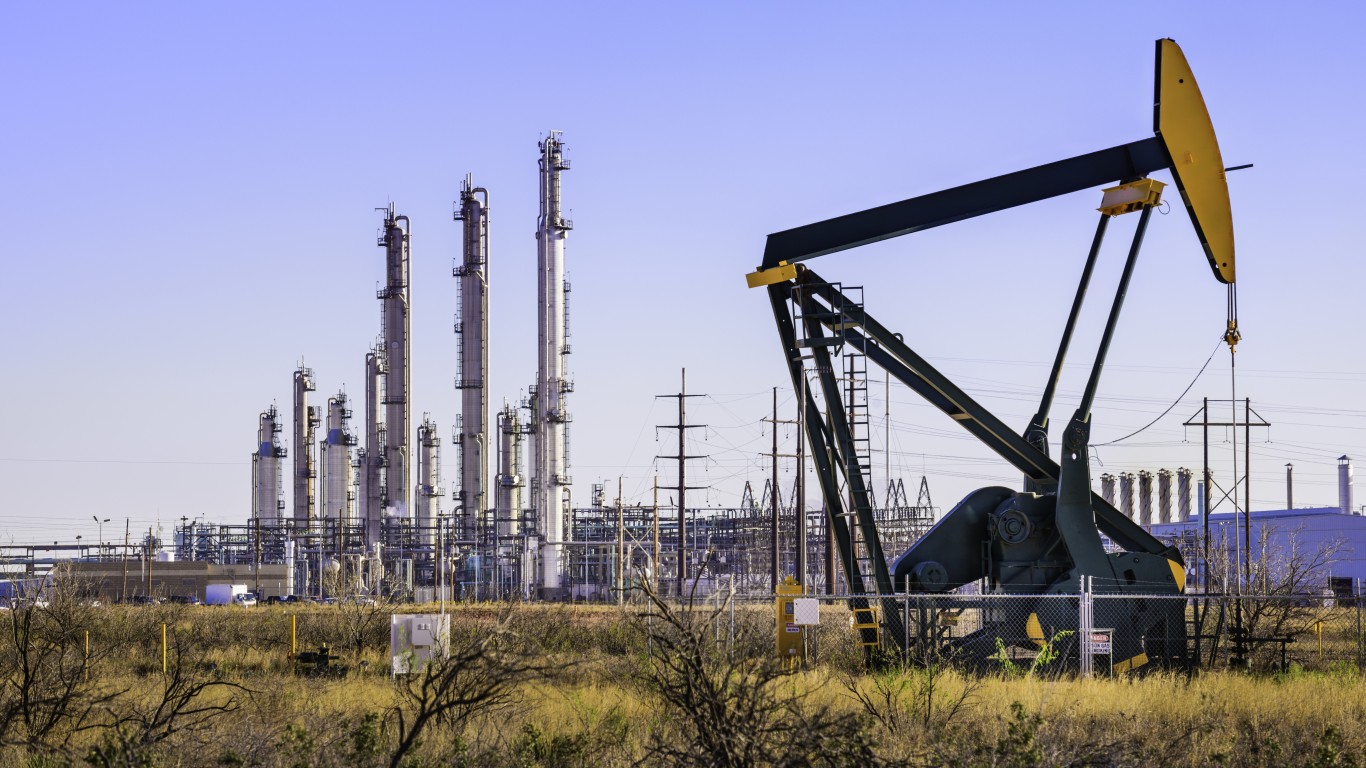
Exxon is an integrated energy and chemical giant with a market value of about $763.8B. Its upstream assets include Guyana, the Permian Basin, Kearl, PNG LNG, and Golden Pass LNG, and it also runs refining, chemicals, and specialty lubricants businesses. Guyana and Kearl have each produced more than 1 billion barrels cumulatively. That gives Exxon a deep resource base.
The stock yields 2.26% at $184.55. The board just raised the quarterly dividend to $1.07 from $1.03.
Dividend safety: Third-quarter free cash flow came to $19.10B on operating cash flow of $25.70B, and Exxon returned $9.40B to shareholders in the quarter. That means free cash flow covered dividends and buybacks. Over the trailing period, the dividend uses roughly 73% of free cash flow and about 60% of earnings. Exxon’s finances are very strong: debt-to-equity is 0.17, interest coverage is 56.3x, and net debt stands at $22.1B after nearly $11B of net debt reduction so far this year. The dividend history backs up the streak, with the quarterly rate stepping up every year from $0.73 in 2016 to its current level.
Why the payout should hold: Exxon has captured $16.9B in cumulative structural cost savings since 2019, which lowers the oil price it needs to fund the dividend. Management has also set a $20B share repurchase target for 2027, which suggests it expects cash to spare after paying shareholders. The third quarter beat profit estimates on a refining boom.
The risk: This year’s results benefited from higher oil and gas prices. If prices fall, free cash flow will shrink, and dividend growth will slow until the coverage margin rebuilds.
Chevron: Biggest Yield in the Group, With the Thinnest Earnings Cushion
Chevron (NYSE: CVX) produced about 3.98 million barrels of oil equivalent per day in the third quarter, and its U.S. output exceeded 2 million BOE per day. Its U.S. refineries ran a record 1.09 million bpd at ~98% utilization. The company’s market value is about $459.5B.
Chevron yields 2.77% at $232.46, the highest yield on this list. The latest declared quarterly dividend is $1.78.
Dividend safety: Free cash flow reached $12.00B in the quarter after $4.01B of capital spending. Over the trailing period, the dividend uses about 77% of free cash flow. On an earnings basis, coverage is tighter. At a trailing P/E of 37, the dividend works out to roughly 103% of the past year’s earnings. That makes Chevron the most stretched payout of the four on an earnings basis. Its financial position softens the concern. Chevron paid down $3.5B of debt in the quarter, net debt fell $7.8B, the leverage ratio is 0.22, and interest coverage is 13.7x. The dividend record shows the quarterly rate climbing from $0.72 in 2011 to $1.71 in 2025 and $1.78 now.
Why the payout should hold: The Hess integration has delivered $1.5B in synergies, and Chevron reached $3B in structural cost savings six months ahead of plan. It also has growth ahead. Its Venezuela joint ventures plan to invest $7 billion over five years, which could more than double production there, and new Bakken midstream agreements should cut costs by about 50%.
The risk: The latest quarter benefited from Brent averaging $97/bbl versus $69 a year ago. If oil drops back toward last year’s levels, the earnings margin under this dividend gets thin again.
AbbVie: A Dividend Aristocrat With the Strongest Free Cash Flow Coverage
AbbVie (NYSE: ABBV) develops and sells medicines in immunology, neuroscience, and oncology, and it owns the Allergan Aesthetics portfolio, which includes Botox Cosmetic and Juvederm. It is worth about $521B and is a member of the S&P Dividend Aristocrats Index.
AbbVie yields 2.24% at $295.25. The board just raised the quarterly dividend about 5.2%, from $1.73 to $1.82, starting with the February payment.
Dividend safety: The free cash flow yield is 3.42%, so the dividend uses about 65% of trailing free cash flow, the most comfortable ratio on this list outside the bank. The reported P/E of 123 is inflated by acquired IPR&D and amortization charges, so cash flow is the better measure here. The adjusted operating margin was 48.7% in the third quarter. The dividend history shows the quarterly rate rising every year from $0.40 in 2013, the year AbbVie became independent, to $1.73 this year.
Why the payout should hold: AbbVie has managed the loss of Humira’s exclusivity. Skyrizi sales grew 22.7% to $5.78B and Rinvoq grew 23.9% to $2.71B, more than offsetting Humira’s 31.2% decline. Total revenue rose 10.3% to $17.40B, and full-year adjusted EPS guidance went up to $13.95 to $13.99. Chief executive Robert A. Michael said in the third-quarter release, “Given our strong outlook and significant momentum, we are once again increasing AbbVie’s full-year guidance and raising our quarterly dividend.”
The risk: The balance sheet is the weak spot. Years of acquisitions and buybacks have left AbbVie with negative book value, and its interest coverage of 6.94x is the lowest of the four. The Apogee Therapeutics (NASDAQ: APGE) deal adds integration risk on top of that debt load.
JPMorgan Chase: Lowest Payout Ratio and a Fresh Raise
JPMorgan Chase (NYSE: JPM) has $5.0 trillion in assets, about 5,135 branches, 63.7 million active mobile customers, and a #1 global ranking in investment banking fees. Its market value is about $895 billion.
The trailing yield is 1.79%. With the quarterly dividend now raised to $1.65 from $1.50, the forward yield at $339 is about 1.95%. That is the lowest yield on this list, and it also comes with the most room to grow.
Dividend safety: For a bank, earnings and capital levels are the right way to measure coverage, because deposits and lending make free cash flow a noisy number. Trailing EPS is $23.84, so the new annual dividend takes only about 28% of earnings. In the first quarter, JPMorgan paid $4.10 billion in dividends on net income of $16.494 billion, with a CET1 ratio of 14.3%. The quarterly payout has risen from $1 in 2022 to today’s rate, but the bank cut it to $0.05 from $0.38 during the 2009 financial crisis.
Why the payout should hold: In the second quarter, adjusted EPS rose 13% to $6.14 and return on tangible common equity was 23%. The board also authorized a new $50B buyback program. Jamie Dimon, chief executive at the time of the filing, said the bank has “ample amounts of capital and liquidity, with $291 billion in CET1 capital, $572 billion in total loss-absorbing capacity and $1.5 trillion in cash and marketable securities.” The shares trade at a trailing P/E of 14 and a forward P/E of 13.
The risk: Credit costs are going up. The card net charge-off rate is 3.33%, and the total allowance for credit losses rose 12% to $31.4 billion. A recession would hit earnings well before it threatened the dividend.
What These Four Dividend Payers Offer Income Investors
These four names offer income that has grown each year, backed by businesses large enough to get through a bad cycle. AbbVie and JPMorgan have the widest coverage margin, and Exxon has the longest verified raise streak. Chevron offers the biggest yield but depends most on oil prices to keep its payout covered by earnings. Together, they span dividend raises across energy, healthcare, and banking, with dividends paid out of real free cash flow and earnings.
Contact [email protected] for any questions or corrections.
Lee Jackson has covered Wall Street analysts' equity and debt research and equity strategy daily for 24/7 Wall St. since 2012. His broad, diverse career, including a stint as creative services director at an NBC affiliate in Austin, Texas, gives him unique insight into the financial industry.
Lee Jackson's journey in the financial industry spans more than 30 years, including nearly two decades as an institutional equity salesperson at Bear Stearns, Lehman Brothers, and Morgan Stanley. His career spanned pivotal sell-side Wall Street events, from the dot-com rise and bubble to the Long-Term Capital Management debacle, 9/11, and the Great Recession of 2008. This reflects his resilience and adaptability amid market volatility.
Lee Jackson’s practical financial industry experience, gained through a career at some of the biggest banks and brokerage firms, is complemented by a lifetime of writing across various platforms. This unique combination allows him to shed light on the intricacies of Wall Street in a way only someone with deep insider experience and knowledge can. Moreover, his extensive network across Wall Street continues to provide direct access for him and 24/7 Wall St., a privilege few firms enjoy.
Since 2012, Jackson’s work for 24/7 Wall St. has been featured in Barron’s, Yahoo Finance, MarketWatch, Business Insider, TradingView, Real Money, The Street, Seeking Alpha, Benzinga, and other media outlets. He attended the prestigious Cranbrook Schools in Bloomfield Hills, Michigan, and has a degree in broadcasting from the Specs Howard School of Media Arts.