IREN Falls 5%, CoreWeave Drops 4% as Texas Election Stokes Data Center Moratorium Fears; Nebius Dips 2%
Texas just handed AI data center investors a political wildcard that could reshape where the next wave of GPU capacity gets built, and three major stocks are already paying the price before anyone knows what the new governor will actually…

This post may contain links from our sponsors and affiliates, and Flywheel Publishing may receive compensation for actions taken through them.
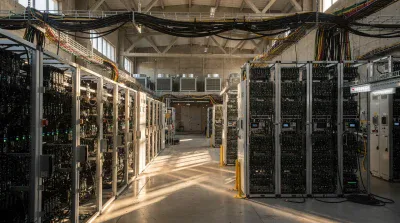
AI data center stocks are sitting out a broad tech rally as Wall Street considers what Texas election results could mean for the state’s expansion. IREN Limited (NASDAQ:IREN) stock is at $23.33, down 5%. Over the past month, IREN stock is down 44%. The company runs two energized campuses in Texas, at Childress and Sweetwater, which puts it near the center of the story.
CoreWeave (NASDAQ:CRWV) stock is at $51.73, down 4%. Measured over the past month, CoreWeave stock is down 42%. Meanwhile, the Invesco QQQ Trust (NASDAQ:QQQ), which tracks the NASDAQ 100, is up 1.88%, a gap that shows how narrowly the selling is focused.
Texas Governor’s Race Puts Data Center Moratorium Risk in Play
Democrat Gina Hinojosa defeated Gov. Greg Abbott in the November 3 Texas governor’s race after campaigning for tougher limits on new data centers, including an immediate moratorium in the state. Democrats also won or kept governorships in Georgia, Pennsylvania and Ohio, other major data center states. Wells Fargo estimates that Texas holds 27% of planned U.S. data center gigawatts, with Georgia at 7% and Pennsylvania and Ohio each at 5%, a map that puts IREN and CoreWeave directly in focus.
Dan Ives of Yorkville Ives & Co. called the Texas race the “biggest worry” of the night for AI investors. “The midterm elections will slow the pace of data center buildouts across the U.S.,” Ives said. Before the vote, Wells Fargo chief equity strategist Ohsung Kwon had warned that a Democratic win in Texas could be a “left-tail event” for the AI trade. For IREN, the concern lands close to home, since the company’s own filings flag Electric Reliability Council of Texas (ERCOT) amendments to the large-load interconnection approval process as a risk.
IREN delivered Horizon 1, a 50-megawatt (MW) liquid-cooled deployment, at its Childress campus and is building 200 MW of liquid-cooled capacity at Sweetwater 1. On the company’s August 27 earnings call, co-CEO Daniel Roberts stated “a tighter interconnection process should favor real and well-capitalized projects.”
Why Nebius and Applied Digital Carry Different Texas Exposure
Nebius Group (NASDAQ:NBIS | NBIS Price Prediction) stock is at $147.92, down 2%. Across the past month, Nebius stock is down 38%. The smaller same-day drop lines up with the company’s footprint, since its announced U.S. AI factory sites are in Pennsylvania and Missouri, with no Texas site disclosed. Pennsylvania, though, is one of the states where Democrats won or kept the governorship, and Nebius has announced up to 1.2 gigawatts there.
CoreWeave, by contrast, runs graphics processing unit (GPU) cloud capacity through data center partners that include Texas facilities, which helps explain why its drop sits closer to IREN’s. Among its landlords is Applied Digital (NASDAQ:APLD), which names CoreWeave as a principal customer.
Applied Digital’s main campuses sit in North Dakota, with further builds in Louisiana and Alabama, and its management hasn’t identified Texas as a current market, while the Invesco QQQ gain shows the broader tech rally continuing as the AI infrastructure group faces election-related questions. The power, cooling and networking suppliers are a separate trade. Those feeding that expansion are worth understanding, and we broke down seven of them in a free report on the companies behind the AI boom.
Each of the three featured stocks posted its steep one-month decline after a Gartner report predicted that 80% of neocloud companies would end operations by 2030. Neoclouds are GPU-focused cloud providers such as CoreWeave and Nebius, and that forecast was already weighing on the group before the election results arrived.
How IREN’s Owned Infrastructure Sets It Apart
IREN owns its power, land and data centers, and it’s converting legacy mining sites into AI cloud capacity running GPUs it owns, while CoreWeave is a pure-play GPU cloud provider that rents much of its capacity from partners and leans heavily on debt to fund its build-out. Nebius runs a full-stack AI cloud. It covers compute, storage and software across Europe and the U.S. Applied Digital acts as a landlord, signing long-term take-or-pay rents with hyperscale tenants.
Those differences shape how each company handles policy risk. Wes Cummins spoke on the company’s October 7 earnings call. The Applied Digital chairman and CEO noted that “the scarcity value of established, powered, and community supported campuses increases” as new development gets harder in certain markets. Similar logic underpins IREN’s pitch for its energized Texas sites, though a statewide moratorium could still complicate expansion there.
What Texas Policy Could Mean for IREN and CoreWeave
IREN now faces the question of whether Texas officials turn campaign positions into new restrictions on large-load data centers, and whether those rules reach sites that are already energized. Supporters of the stock can point to management’s statement that IREN’s 2026 capacity is largely sold out, along with the scarcity argument for existing campuses. The bears counter that a moratorium could slow expansion across a group that leans on heavy borrowing.
IREN, CoreWeave and Nebius all have quarterly results coming up, which could give each management team a chance to address Texas directly. Investors may want to stay cautious until the Texas data center debate resolves.
Contact [email protected] for any questions or corrections.
David Moadel is financial writer specializing in stocks, ETFs, options, precious metals, and Bitcoin. David has written well over 1,000 articles for leading online publications, helping investors understand markets, income strategies, and risk.His work has appeared in The Motley Fool, InvestorPlace, U.S. News & World Report, TipRanks, ValueWalk, Benzinga, Market Realist, TalkMarkets, Finmasters, 24/7 Wall St., and others.With a master’s degree in education, David has taught at the elementary, high school, and college levels. That teaching background shapes his writing style: clear, educational, and practical. David has also built a loyal social-media audience by providing trustworthy financial content on YouTube, X/Twitter, and StockTwits.