Cboe and Citadel Securities Are Suing to Overturn the CFTC’s Approval of Stock Perpetual Futures. Could That Slow Hyperliquid?
Cboe and Citadel Securities filed a lawsuit hours after regulators greenlighted stock perpetual futures for U.S. exchanges, putting billions in potential trading volume in legal limbo and raising questions about whether Hyperliquid's offshore advantage just got bigger.


Cboe Global Markets (CBOE: CBOE | CBOE Price Prediction) and Citadel Securities are suing to challenge the Commodity Futures Trading Commission’s (CFTC) approval of stock perpetual futures, which Hyperliquid (CRYPTO: HYPE) already lists outside the U.S. On November 3, 2026, Cboe joined the Capital Markets Alliance, a group that includes Citadel Securities and the Healthy Markets Association. The alliance filed the lawsuit in a New York federal court just hours after the CFTC chairman cleared these contracts for trading.
Stock perpetual futures, or “perps,” are leveraged contracts that track stock prices and do not expire. Traders in these contracts exchange small, regular payments to keep prices close to the underlying stock price. The lawsuit seeks to overturn the CFTC’s approval, classify these contracts as security-based swaps, and halt trading while the case is being reviewed.
Despite the legal disputes, Hyperliquid’s token has shown little reaction. HYPE is trading at $86, down 1.3% over the past 24 hours but up 7.4% over the past week, sitting about 12% below its all-time high. So, could a lawsuit targeting U.S. exchanges slow down a decentralized exchange like Hyperliquid, which operates outside them?
What Cboe and Citadel Are Asking a New York Court to Undo
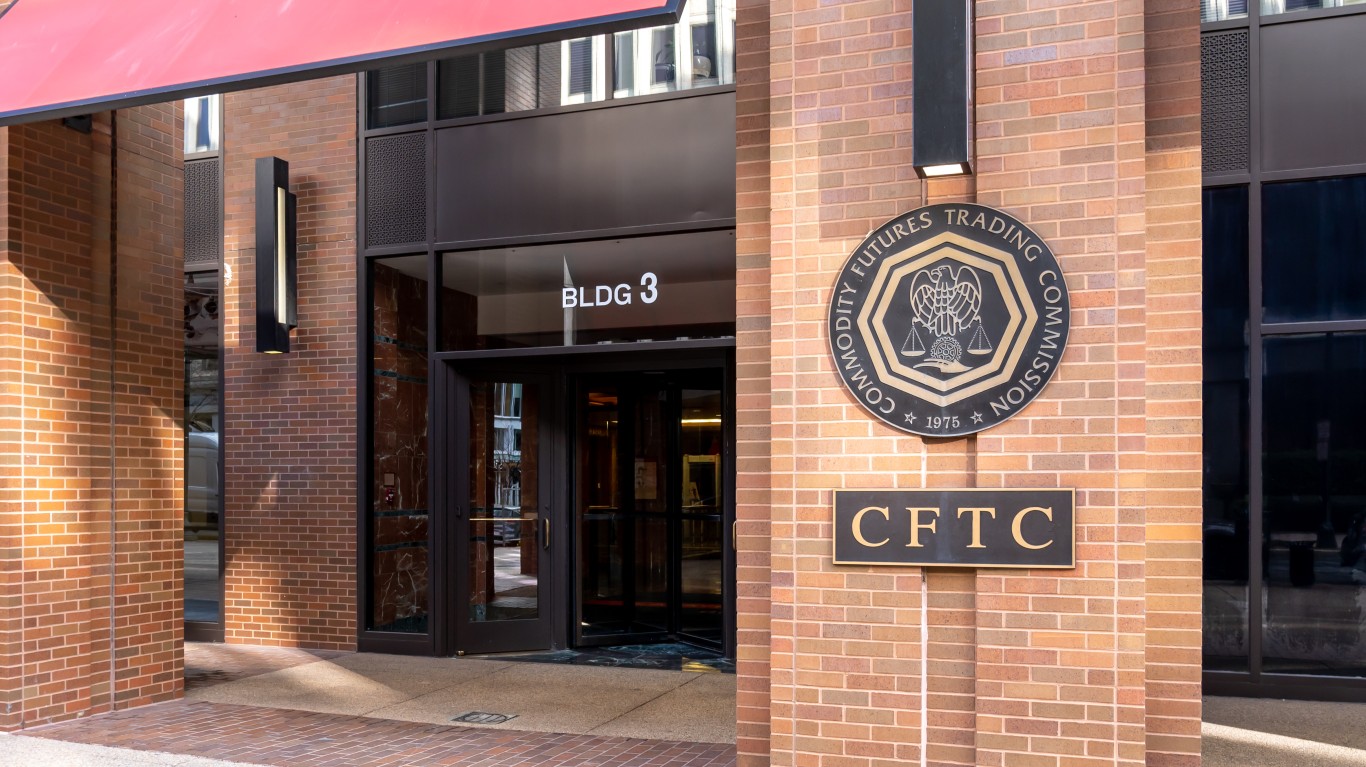
CFTC Chairman Michael Selig said on November 3 that stock perps could potentially trade for the first time on CFTC-registered exchanges also authorized by the SEC to handle security futures. He said these new products would give Americans regulated alternatives, rather than forcing them to turn to offshore, often unregulated venues.
The plaintiffs’ core argument turns on definitions. A futures contract promises delivery on a specific date, while a perp has no expiration date and does not culminate in an actual delivery. The plaintiffs argue that without an expiry, only cash payments based on the stock’s price remain, which fits the legal definition of a security-based swap.
This classification determines who can sell these financial products. Under the Dodd-Frank Act, retail investors may buy security-based swaps only on fully registered securities exchanges, and only with an SEC-approved disclosure document. If the court agrees with the plaintiffs’ classification, CFTC-regulated exchanges would not be able to offer stock perps to retail traders.
The lawsuit also questions the approval process itself. In September, Coinbase (NASDAQ: COIN), Bitnomial, and another CFTC-registered exchange submitted applications for stock perps. CFTC rules state that a product is considered approved if the agency does not object within 45 days. The CFTC raised no objections and issued no written order. A spokesperson said markets should operate under the rule of law, rather than be stymied by litigation.
What Cboe and Citadel Stand to Lose if Stock Perps Take Off

Both Cboe and Citadel have commercial interests in this matter. Cboe reported net revenue of $469.5 million in its options business for the third quarter, a 23% increase driven by record trading in zero-days-to-expiration (0DTE) options, which expire the same day they are traded. The firm estimates that retail investors made up 58% of the S&P 500 index’s 0DTE volume, marking them as a key audience for stock perps.
As a private market maker, Citadel Securities profits from continuously quoting buy and sell prices across stocks and options on SEC-regulated platforms. Thus, the investor-protection messages from both firms may partly stem from concerns about losing trading volume to stock perps.
Cboe CEO Craig Donohue voiced concerns during an earnings call on October 30, suggesting that with perpetual futures, “losses are unbounded and positions may get liquidated quickly if market conditions turn,” while simultaneously endorsing the options that Cboe offers.
He did mention “things like perpetuals” as potential products for Cboe Clear U.S., suggesting that Cboe’s opposition may stem partly from a contest over which regulator oversees the product.
Why the Lawsuit Would Slow Hyperliquid’s U.S. Rivals First
Selig’s approval is specific to CFTC-registered exchanges, and since Hyperliquid does not fall under this category, the lawsuit would first affect U.S. applicants like Coinbase and Bitnomial. If a judge halts trading, Hyperliquid’s offshore stock perps might face fewer regulated U.S. competitors in the short term.
However, Hyperliquid’s U.S. plans operate within the framework the lawsuit disputes. Intercontinental Exchange (NYSE: ICE), the parent company of the NYSE, has agreed to be “the exclusive operator of Trade XYZ’s regulated markets” and to invest in the company. Trade XYZ aims to develop perps on stocks and other traditional assets on Hyperliquid’s blockchain.
As ICE CEO Jeff Sprecher stated on October 29, “we need regulatory approval and to see what the CFTC is willing to allow.”
The lawsuit focuses solely on single-stock contracts, which limits its overall impact. As Sprecher pointed out, “at the moment, perpetual contracts are largely crypto-related,” indicating that a win for the plaintiffs could hinder the stock aspect of ICE’s plans, while crypto-related perps may continue as usual. ICE is not part of the lawsuit and has not publicly taken a position.
Contact [email protected] for any questions or corrections.
Sam Daodu is a crypto analyst and the editor of 24/7 Wall St.'s Crypto Desk, where he covers Bitcoin, XRP, Ethereum, Solana and the altcoins investors search for most. His work focuses on price levels, spot ETF flows, on-chain data and the regulatory decisions that move crypto markets, written so a first-time buyer and a seasoned trader can both use it.
Sam has written about crypto professionally since 2019 and has published more than 2,000 articles. Before joining 24/7 Wall St., he wrote for crypto media outlets and Web3 companies and ghostwrote for crypto founders and token launches. His analysis is syndicated on Yahoo Finance, MSN and AOL and has been cited by other crypto news sites. He also founded MacLabs Marketing, a content and personal branding agency for crypto founders and executives.
When he isn't reading charts, Sam is usually at the gym or watching One Piece, a series he maintains has better tokenomics than most altcoins.