Jim Cramer Says Costco Is Still a Great Value. Charlie Munger’s Rule Explains Why
Charlie Munger once said Costco is the one stock where you can look past the P/E. After a month-long rally, that exception faces its toughest test yet, and the business and the price may tell two different stories.

This post may contain links from our sponsors and affiliates, and Flywheel Publishing may receive compensation for actions taken through them.
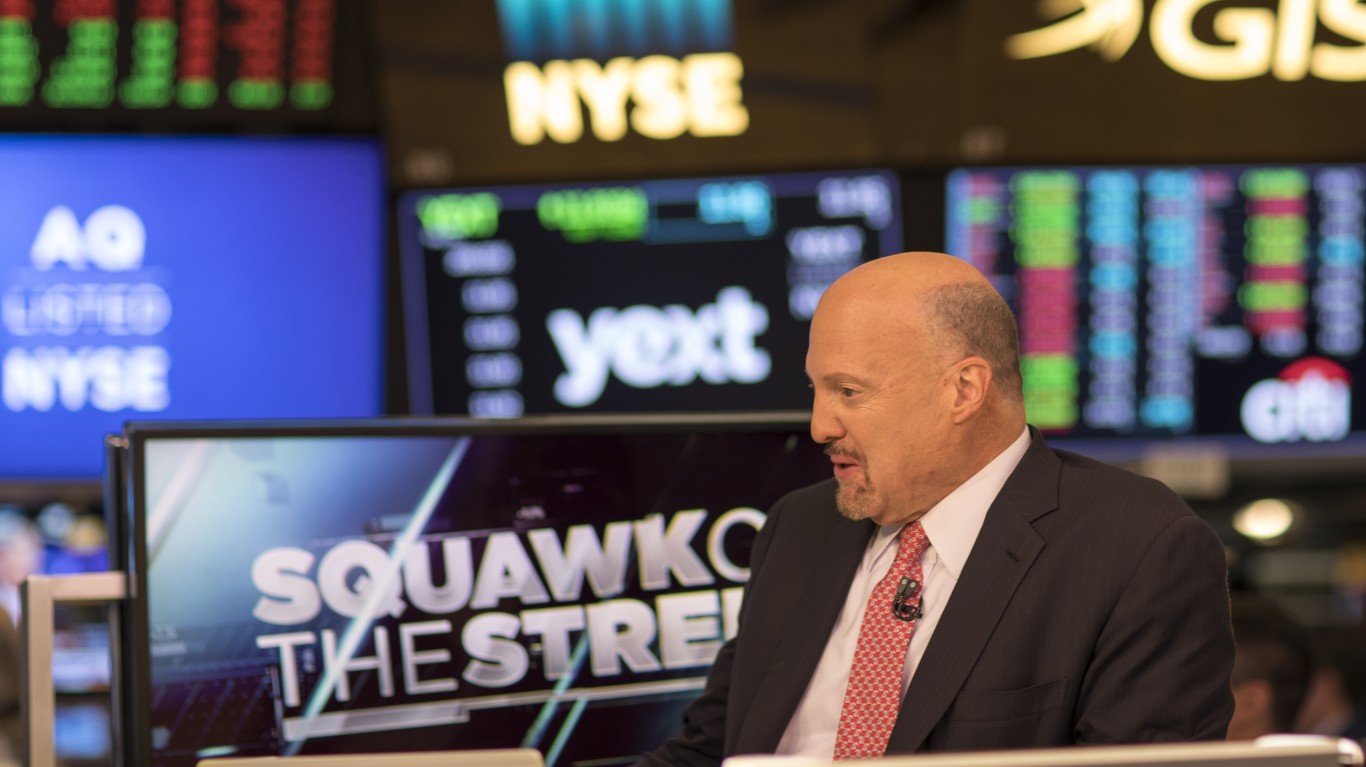
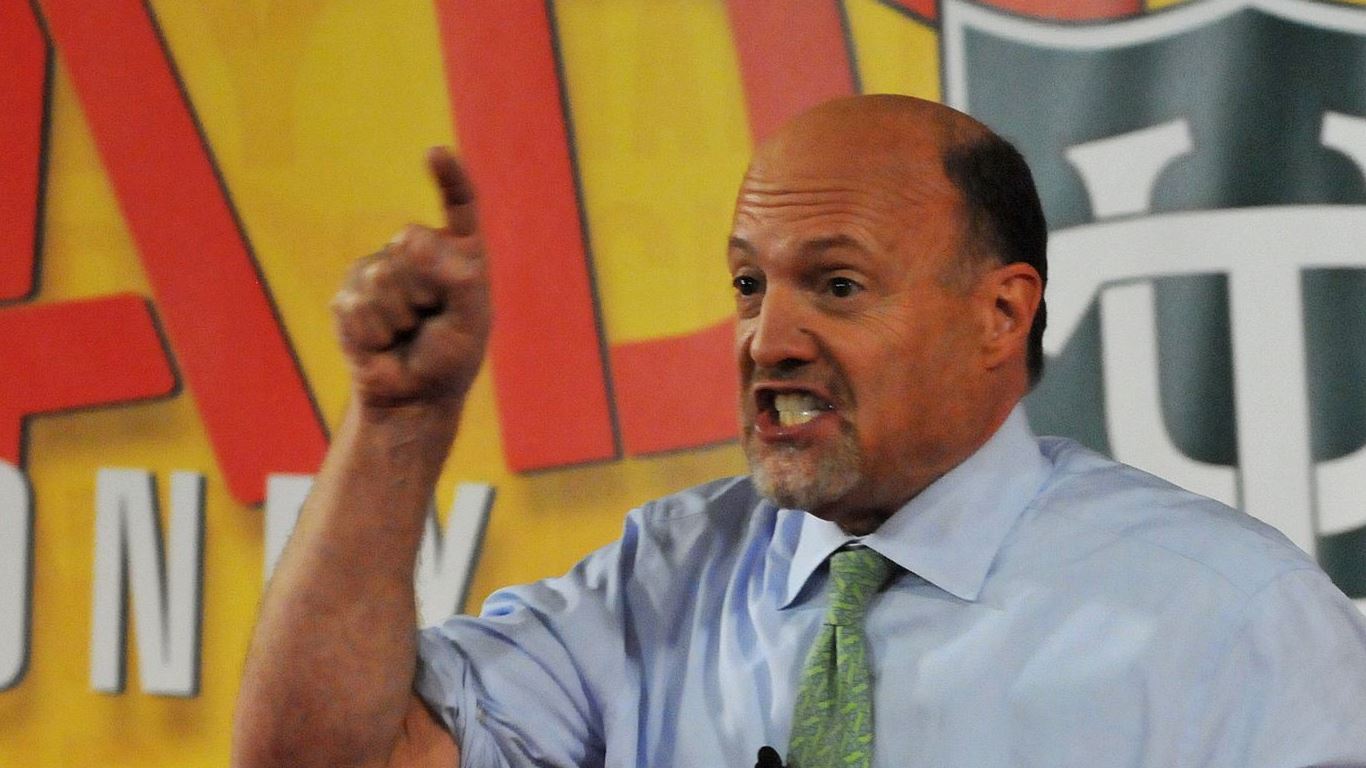
Jim Cramer went back to one of his longest-held beliefs on CNBC Thursday: “I continue to think that Costco represents great value.” The timing makes the claim worth testing. Costco (NASDAQ:COST | COST Price Prediction) traded at $1,068.77 Thursday morning, up 15.9% over the past month and 24.67% year to date.

Checking Cramer’s 8.1% Comp Claim Against Costco’s Books
In the CNBC segment, Jim Cramer said U.S. comparable sales came in at 8.1%, adding, “which is rather extraordinary.” The latest quarterly data available here does not break out that exact U.S. figure, but the company-wide trend lines up. In fiscal Q4, a 16-week quarter ended Aug. 30, comparable sales rose 9.4%, or 6.7% after stripping out gas prices and currency. Traffic increased 3.3%.
Revenue of $95.72 billion exceeded the $94.85 billion estimate, and EPS of $6.75 beat the $6.53 consensus, helped by a $0.15 one-time tariff refund benefit, according to the company’s 8-K filing. The CFO said adjusted comps have held in the “6% to 7% range as they’ve been pretty much consistently for a year now.” Gas inflation lifts the headline number, a point Cramer himself raised in October when he said monthly figures are “a little confusing given the fact that they sell gasoline.”

How the Membership Card Funds Low Prices
Cramer summed up the model this way: “Costco is a volume store. It’s not a price store. Their goal is to do a lot of volume and get the money from the card.” In plain terms, Costco sells goods at thin markups and takes in a reliable annual fee from every member. Q4 membership fee income reached $1.849 billion, up 7.3%, against net income of $2.998 billion.
Members keep paying. The worldwide renewal rate stands at 89.8%, and 92.3% in the U.S. and Canada. Paid Executive members rose 9.4% to 42.3 million. Costco also put tariff refunds into price cuts, dropping Kirkland Signature walnuts from $13.79 to $9.99. Charlie Munger praised this loop for years: lower prices drive volume, volume drives renewals, renewals fund lower prices.
The soft spot is member-base growth. In September, Cramer noted that total paid members of 84.1 million, up 3.8%, came in “below expectations.”
Munger’s P/E Exception Meets a 49x Multiple
Cramer leaned on the longtime Costco director: “The late Charlie Munger said this is the only stock in his whole lexicon that he felt you have to not pay that much attention to the P/E, and I’ve adopted that for a long time.” That rule now faces a trailing P/E of 49, a forward P/E of 45, and a PEG ratio of 5.1. The share price already trades at the average analyst target of $1,067.59, near the 52-week high of $1,093.14.

The case for paying up rests on consistency. Fiscal 2026 revenue grew 10.14% to $303.15 billion, net income rose 13.92%, and free cash flow increased 19.82% to $9.39 billion. Costco has exceeded EPS estimates for 6 consecutive quarters, and the stock has gained 787.26% over ten years. The risk is that a premium this rich leaves little buffer if membership growth keeps slowing while capex rises to roughly $7.5 billion in fiscal 2027.
Income investors get a modest payout: $5.54 per share annually, a 0.54% yield, with the next payment on Nov. 13.
Is Cramer Right About Costco?
On the business, yes. Excluding the tariff benefit, Q4 EPS still rose 12.4%, renewals are improving, and the cycle Munger admired is turning. On price, “great value” is a stretch at 49 times earnings after a 15.9% one-month run. Munger’s rule works only as long as Costco keeps compounding at double digits. Investors should watch paid member growth, the renewal rate, and progress on the 33 warehouse openings planned for fiscal 2027. Those numbers will show whether the multiple is earned.
Contact [email protected] for any questions or corrections.
Chris Lange is a financial and geopolitical writer with more than a decade of experience covering a myriad of topics. He has published thousands of articles for 24/7 Wall St., with past coverage focused heavily on stocks, IPOs, healthcare, defense, global affairs, and technology.
His work has been quoted, or referenced by a number of outlets including Business Insider, USA Today, Yahoo Finance, MSN, The Motley Fool, and many other publications. A graduate of Southwestern University, he studied business with a focus on investments and has previous experience in banking and startups.
When not reading or writing the news, he is following his passion for Lacrosse, playing chess, or building solar projects with his dad.