BlackRock’s Larry Fink Says America’s Workers Are Falling Behind Investors — and 25 Years of Data Explains Why
A shoe store kid turned the world's biggest money manager says a career used to be the bedrock of America. A quarter century of paychecks, stock returns, and who actually owns the market reveals what changed, and one claim of…

This post may contain links from our sponsors and affiliates, and Flywheel Publishing may receive compensation for actions taken through them.
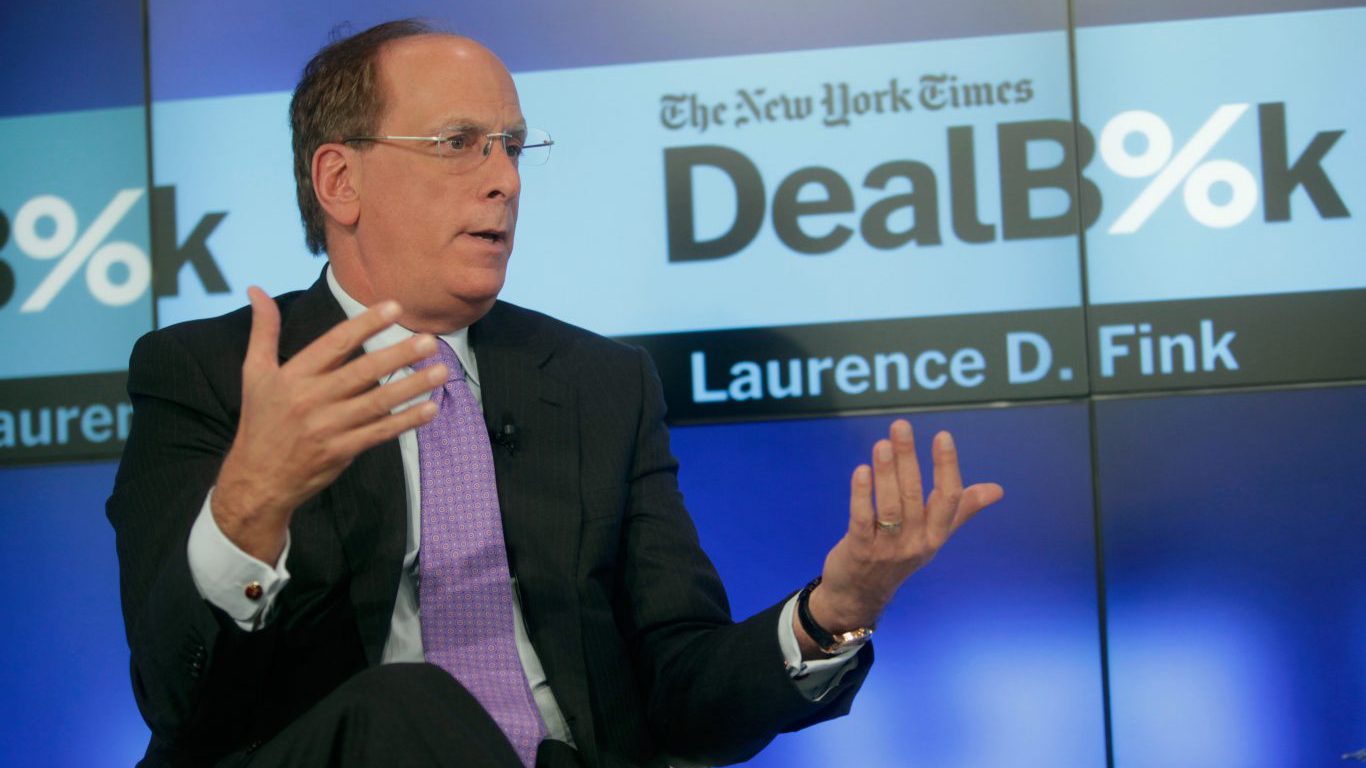
Larry Fink started working in his father’s shoe store at age 11. At the Accelerate forum hosted by Ford (NYSE:F | F Price Prediction) in Detroit on Sept. 30, the CEO of BlackRock (NYSE:BLK) used that memory to describe a split in the economy: “There is a big divide right now that those who have investment assets have done better than wages.” He added: “Over the last 25 years, you invested in the U.S. stock market, you earned a 10% compounded return. We have not seen that type of increase in wages.” A career, he said, was the “bedrock of America,” and “I think we lost that.”
$1 in Stocks Versus $596 a Week in Pay
Since late September 2001, the S&P 500 has returned about 10% a year with dividends reinvested, turning $1 into nearly $11. Over the same period, the median full-time worker’s pay went from $596 a week to $1,251 in the second quarter of 2026. That works out to about 3% a year, or about 12% after inflation across a full quarter century.
The gap is getting wider. Median weekly pay fell to $1,232 in the third quarter. Inflation-adjusted average hourly earnings slipped to $11.24 in September, down from $11.32 a year earlier. Corporate profits, meanwhile, reached a $4.7 trillion annual rate in the second quarter, up 20.8% from a year before.
A Small Group Owns Most of the Compounding
A 10% annual return helps only the people who own the asset. According to Federal Reserve distributional data, the top 1% of households held 50.9% of all corporate equities and mutual fund shares in the second quarter, worth about $32.9 trillion. The bottom 50%, about 67.6 million households, held 0.6%, or roughly $374 billion.
That concentration has built up over decades. In 1989 the top 1% held 42.8% of stocks. Today the top 0.1% alone holds 25%, the highest share in the series. Over the same period, the next 40% of households (the middle class with homes and 401(k)s) saw its share fall from 17.2% to 11.4%. Measured by total net worth, the top 1% now holds a record 32.5%. The bottom half holds 2.3%.
Why Wage Earners Struggle to Start Investing
Compounding starts with extra cash, and households have less of it. The personal savings rate dropped to 4.1% in the third quarter, down from 5.3% in the first. The bottom 50% carries 51.6% of all household consumer credit. The Fed’s Survey of Consumer Finances found that the share of families behind on loan payments rose from about 12% to almost 20% between 2022 and 2025. Vanguard reports that only 43% of eligible workers making under $15,000 contribute to their workplace retirement plan. Among those making more than $150,000, 95% do.
Fink’s point about lost careers is only in part right. Median job tenure actually rose to 4.1 years in January 2026, up from 3.5 years in 1983. The fall is concentrated among older men. For men aged 55 to 64, median tenure fell from 15.3 years to 9.6.
Two Data Releases That Will Show Whether the Gap Narrows
Fink’s proposed fix runs through the Alliance for America’s Skilled Trades, which Ford, BlackRock, Google (NASDAQ:GOOGL) and Carhartt formed in July. The group’s report projects about 1.7 million skilled-trades openings a year through 2035, with only 55 people trained for every 100 jobs. Better-paid trade jobs raise incomes. They close the ownership gap only if workers turn that extra income into invested savings.
Jobs are available: unemployment was at 4.1% in October. Pay is what’s lagging. Two releases will show where this goes next. The BLS fourth-quarter report on median weekly earnings will show whether the third-quarter dip reverses. The Fed’s third-quarter distributional accounts will show whether the top 1%’s record share continues rising. If pay stays flat while profits grow at a 20% rate, the divide Fink described will continues widening.
Contact [email protected] for any questions or corrections.
After two decades of patrolling the dark corners of suburbia as a police officer, Rich Duprey hung up his badge and gun to begin writing full time about stocks and investing. For the past 20 years, he’s been cruising the markets looking for companies to lock up as long-term holdings in a portfolio while writing extensively on the broad sectors of consumer goods, technology, and industrials. Because his experience isn’t from the typical financial analyst track, Rich is able to break down complex topics into understandable and useful action points for the average investor. His writings have appeared on The Motley Fool, InvestorPlace, Yahoo! Finance, Money Morning, and, of course, 24/7 Wall St. He has been featured in both U.S. and international publications, including MarketWatch, Financial Times, Forbes, Fast Company, and USA Today.