IonQ Surges 18% on Beat and Raised Guidance; Rigetti Computing Jumps 18%, D-Wave Quantum Surges 16%
IonQ's blowout quarter sent every quantum stock soaring, but a $2 billion stock sale, shrinking margins and swelling losses hide behind the record revenue. Can the rally survive the dilution question, and what do Rigetti and D-Wave have to prove…

This post may contain links from our sponsors and affiliates, and Flywheel Publishing may receive compensation for actions taken through them.

A third-quarter beat and a raised outlook from IonQ (NYSE:IONQ | IONQ Price Prediction) are lifting the whole quantum computing group. IonQ stock is at $31.09, up 18% in afternoon trading. Even with that jump, the stock is down 28% over the past month.
During that decline, the company sold $2 billion of stock in an equity offering that closed on October 16. Quarterly results from IonQ came out after the close on November 5, and the rally has since spread across the pure-play quantum names. Strong top-line growth at IonQ comes with dilution, acquisition-driven revenue and wider losses.
IonQ Tops Revenue Forecasts and Lifts Its 2026 Outlook
IonQ’s Q3 2026 revenue reached $173.8 million, up 336% from a year earlier and ahead of the $141.2 million analysts expected. Adjusted results at IonQ also beat forecasts, with a loss of 29 cents per share. On a generally accepted accounting principles (GAAP) basis, the company earned $1.42 per share, lifted by a non-cash $896 million gain on the valuation of its warrants. Management stated that gain “does not reflect the operating performance of our business.”

Full-year 2026 revenue guidance at IonQ now runs from $505 million to $515 million, up from the $450 million to $460 million range the company set in September. Inder Singh, IonQ’s chief operating officer and chief financial officer, described the target as “an industry record of more than half a billion dollars.”
Acquisitions and Wider Losses Temper IonQ’s Growth
SkyWater, the foundry IonQ acquired at the end of July, contributed $83.5 million of revenue in its first quarter under new ownership. Setting that aside, IonQ’s own Platform segment grew 127% to $90.3 million on Tempo deployments and Superion 256 demand.
Profitability at IonQ went the other way. The company’s gross margin fell to 21.9% from 24.9% last quarter. Its adjusted earnings before interest, taxes, depreciation and amortization (EBITDA) loss grew to $133.6 million from $48.9 million a year earlier.
Balance sheet strength offsets some of that pressure. IonQ’s combined backlog stands at $1.2 billion, and its pro forma liquidity after the October offering totals $3.7 billion.
That cash cushion came at a cost to stockholders. IonQ’s share count keeps climbing. With the October raise and the all-stock purchase of Zero Trust security firm Elisity, that’s the biggest risk for the stock.
Rigetti and D-Wave Ride IonQ’s Momentum
Rigetti Computing (NASDAQ:RGTI) stock is at $11.60, up 18%, a hair ahead of IonQ’s gain. Q3 2026 results from Rigetti are expected on November 10, after the close.
D-Wave Quantum (NASDAQ:QBTS) stock is at $10.48, up 16%, trailing IonQ and Rigetti. Before the open on November 10, D-Wave is expected to release its own quarterly results. IonQ’s call noted that SkyWater extended its multi-year foundry agreement with D-Wave, so D-Wave is a customer of the rival whose report triggered the rally.
Smaller photonics player Quantum Computing Inc. (NASDAQ:QUBT) rounds out the group. Broader conditions are helping too: the U.S. added 165,000 jobs in October, and growth stocks have rebounded, which supports demand for speculative tech names like Quantum Computing Inc.
How IonQ’s Trapped-Ion Model Stands Apart
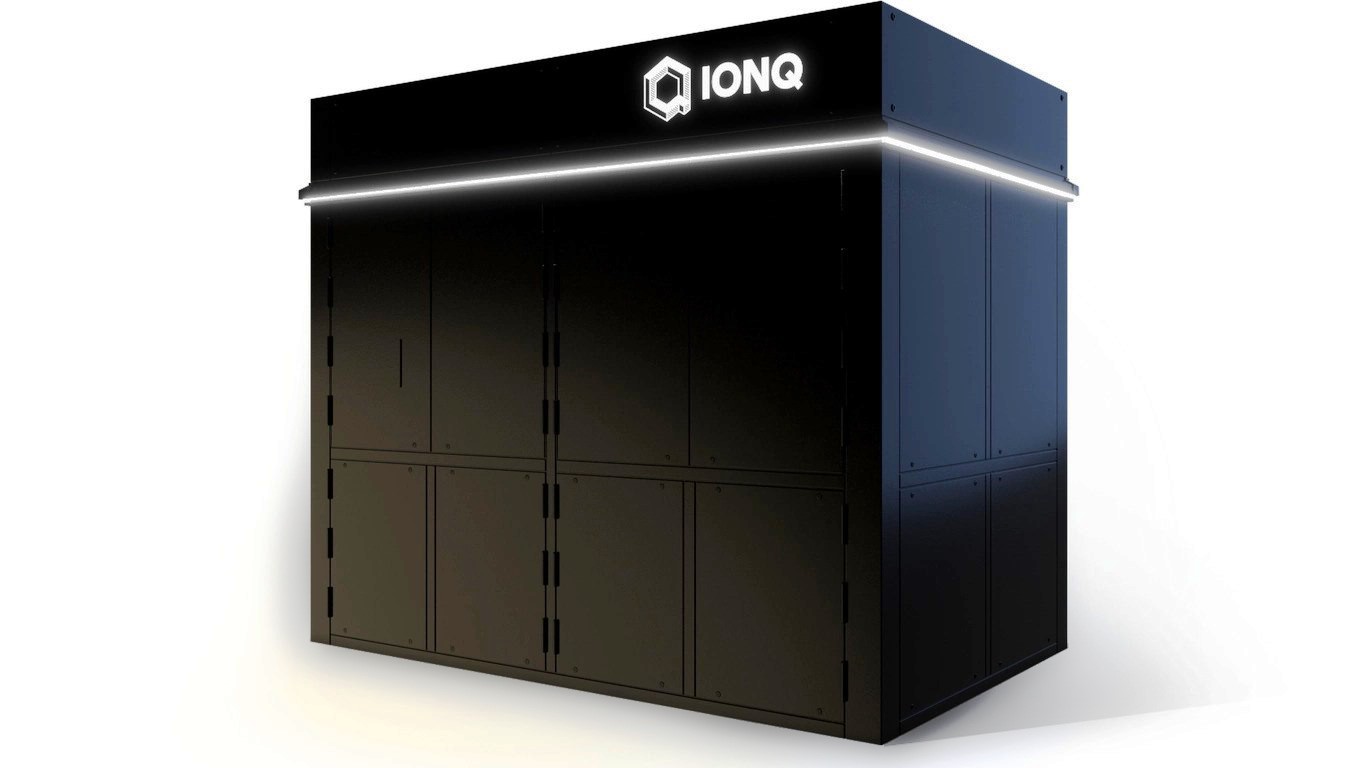
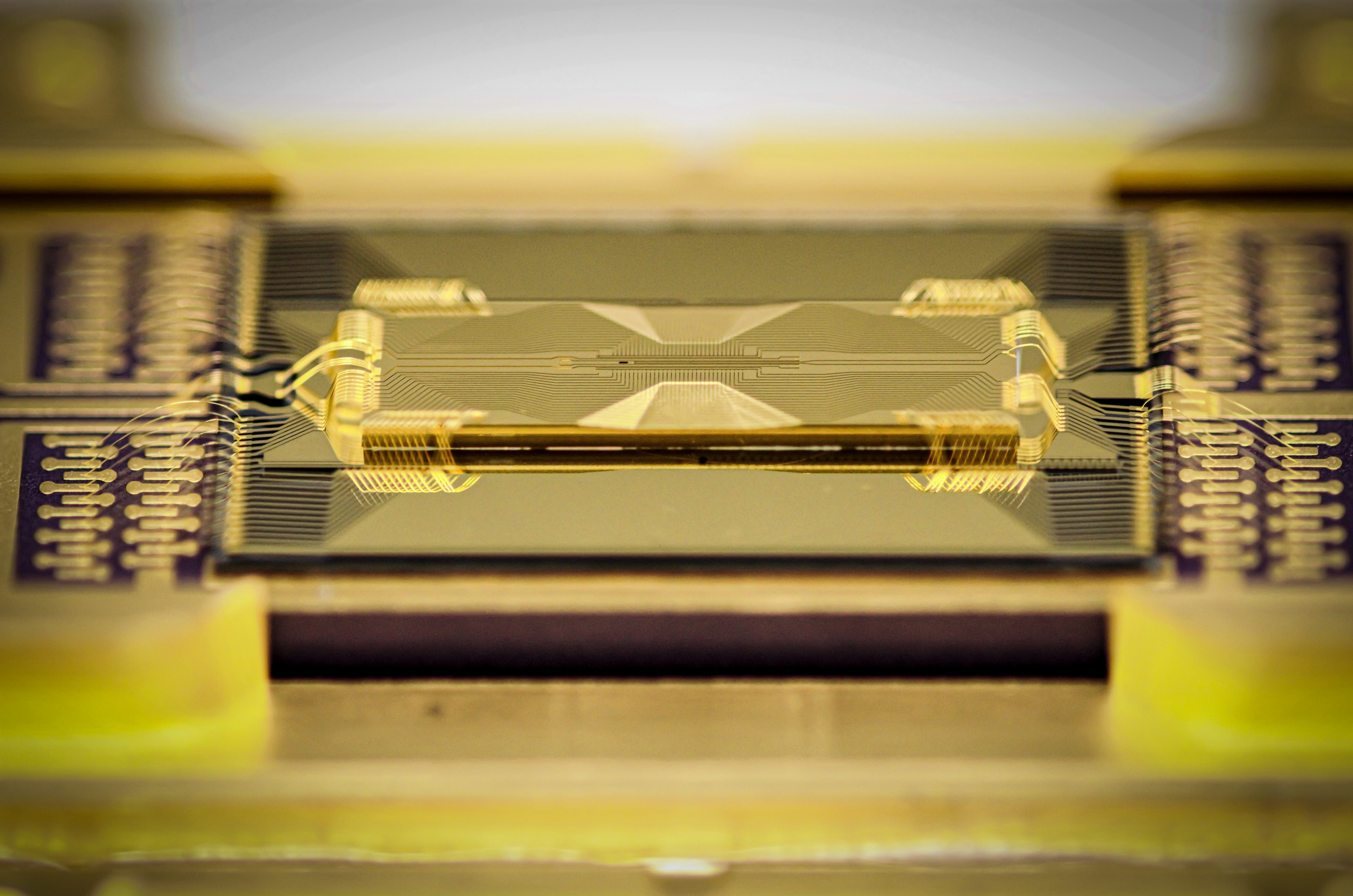
IonQ builds trapped-ion quantum computers and now does its own manufacturing through SkyWater, which gives the company tighter control over production timelines. NVIDIA (NASDAQ:NVDA) plans to install a Superion 256 system at its Accelerated Quantum Research Center, connected directly to its AI supercomputing infrastructure. Beyond computing, IonQ sells networking, sensing and security products, and management stated that customers buying more than one product made up a large share of its Platform revenue.
Rigetti takes a different path, with superconducting qubits, a chiplet-based scaling strategy and chips made at its own fab, while D-Wave stands apart as the only company pursuing both quantum annealing and gate-model systems. Quantum Computing Inc. relies on photonic hardware designed to run at room temperature, which the company says brings down complexity, cost and power needs.
What Comes Next for IonQ and the Quantum Rally
IonQ now faces the question of whether its 256-qubit system hits its year-end target, after management said the company has “sold out all of our 256 capacity in 2027.” Bulls have the raised outlook, a growing backlog and a deep cash reserve on their side. The bears, meanwhile, point to acquisition-driven revenue, grew losses and a share count that could keep rising.
Next week’s reports from Rigetti and D-Wave could show whether the sector’s rally has staying power, and stockholders can watch for any further IonQ equity raises, which would add to the share count. IonQ’s dilution question may remain a key concern for the stock until it settles.
Contact [email protected] for any questions or corrections.
David Moadel is financial writer specializing in stocks, ETFs, options, precious metals, and Bitcoin. David has written well over 1,000 articles for leading online publications, helping investors understand markets, income strategies, and risk.His work has appeared in The Motley Fool, InvestorPlace, U.S. News & World Report, TipRanks, ValueWalk, Benzinga, Market Realist, TalkMarkets, Finmasters, 24/7 Wall St., and others.With a master’s degree in education, David has taught at the elementary, high school, and college levels. That teaching background shapes his writing style: clear, educational, and practical. David has also built a loyal social-media audience by providing trustworthy financial content on YouTube, X/Twitter, and StockTwits.