AppLovin Jumps 8% as Post-Earnings Rally Extends; Unity Climbs 7%, Trade Desk Dips
AppLovin buyers keep piling in after a blowout quarter, yet the stock still sits far below where it started the year. Can a premium valuation survive the next test, and why are rivals Unity and Trade Desk heading in opposite…

This post may contain links from our sponsors and affiliates, and Flywheel Publishing may receive compensation for actions taken through them.
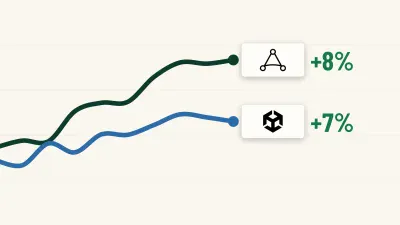
Buyers are still stepping in a day after AppLovin (NASDAQ:APP | APP Price Prediction) delivered a strong quarter. AppLovin stock is at $386.05, up 8% in afternoon trading. That gain adds to a 31% surge when markets closed Thursday. Even so, AppLovin stock remains down 43% year to date (YTD), a gap that helps explain why momentum buyers see room to run.
Before the report, AppLovin stock had traded near multi-month lows on concerns about mobile-game growth and competitive pressure. Those worries eased with the latest quarter at AppLovin, and analysts are lifting their price targets in response. A broader rebound in growth stocks is helping, too, after the U.S. economy added 165,000 jobs in October and the NASDAQ 100 bounced back.
AppLovin’s Q3 2026 Beat Keeps Buyers Coming Back
AppLovin reported Q3 2026 results on November 4 after the close, and the numbers cleared every bar. Quarterly revenue reached $2.18 billion, up 55.5% year over year (YoY), topping the $2.07 billion analysts surveyed by Bloomberg expected. Earnings per share came to $4.30, beating the $4.04 analysts cited by Yahoo Finance had projected.
AppLovin’s outlook is driving the follow-through. The company forecast its Q4 2026 revenue between $2.365 billion and $2.395 billion, well above the $2.25 billion analysts had expected. During the call, Adam Foroughi indicated more upside from AppLovin’s new ad models: “This was a partial rollout. The transition is still in front of us, and the new generation gives us meaningfully more room to optimize than the architecture it replaces.”
Profitability kept pace, with adjusted earnings before interest, taxes, depreciation and amortization of $1.84 billion at AppLovin, an 84% margin. Share buybacks at the company totaled $1.4 billion in the quarter, and the board added $3.2 billion to its buybacks authorization, bringing the total to $3.6 billion.

Wall Street Lifts AppLovin Targets as Valuation Questions Grow
BTIG raised its price target on AppLovin to $450 from $396 while keeping a Buy rating. Needham repeated its Buy rating on AppLovin with a $475 target. The average short-term price target from 30 analysts stands at $461.70.

On valuation, AppLovin trades at a price-to-sales ratio of 11.95x, far above the 1.83x industry average, although its forward price-to-earnings ratio is in line with its industry. That leaves momentum running up against a premium sales multiple.
Unity Rallies While Trade Desk Shares Lag
Mobile game ad rival Unity Software (NYSE:U) is rising alongside AppLovin. Unity stock is at $52.21, up 7%. On November 5, Unity reported its own Q3 2026 results, with revenue of $622.09 million, up 32.2% YoY, and its first profitable quarter under generally accepted accounting principles since going public. Vector, Unity’s AI-powered ad platform, grew 126% YoY.
Meanwhile, The Trade Desk (NASDAQ:TTD) is moving the other way. Trade Desk stock is at $12.74, down 0.6%. The Trade Desk’s most recent report, on August 6, showed Q2 2026 revenue up only 3% YoY, and its Q3 2026 guidance called for revenue of at least $650 million. That split suggests investors may be rewarding mobile ad platforms over open-internet ad buying.
How AppLovin’s Ad Engine Differs From Unity and The Trade Desk
AppLovin runs a mobile app advertising platform that leans on AI models to target ads, pairing its gaming core with a fast-growing consumer advertising business. Unity combines a game development engine with its Vector ad network, drawing on runtime data from games built with its tools. For The Trade Desk, the business centers on a demand-side platform that buys programmatic ads across the open internet, including connected TV.
AppLovin’s Fourth-Quarter Test Comes Next
Whether AppLovin’s two-day rally holds into next week remains the key question. Driving the bullish case is accelerating gaming growth, triple-digit consumer advertising growth and a model launch that’s still in progress. Management at AppLovin hasn’t committed to a timeline for that launch, and the bears also cite seasonal swings in e-commerce ad spending and a sales multiple far above the industry’s.
Execution against AppLovin’s Q4 guidance is the bigger question, so watch for signs of consumer advertiser demand through the holiday season. It’s probably wise to wait to see how AppLovin’s Q4 test resolves before drawing any firm conclusions.
Contact [email protected] for any questions or corrections.
David Moadel is financial writer specializing in stocks, ETFs, options, precious metals, and Bitcoin. David has written well over 1,000 articles for leading online publications, helping investors understand markets, income strategies, and risk.His work has appeared in The Motley Fool, InvestorPlace, U.S. News & World Report, TipRanks, ValueWalk, Benzinga, Market Realist, TalkMarkets, Finmasters, 24/7 Wall St., and others.With a master’s degree in education, David has taught at the elementary, high school, and college levels. That teaching background shapes his writing style: clear, educational, and practical. David has also built a loyal social-media audience by providing trustworthy financial content on YouTube, X/Twitter, and StockTwits.