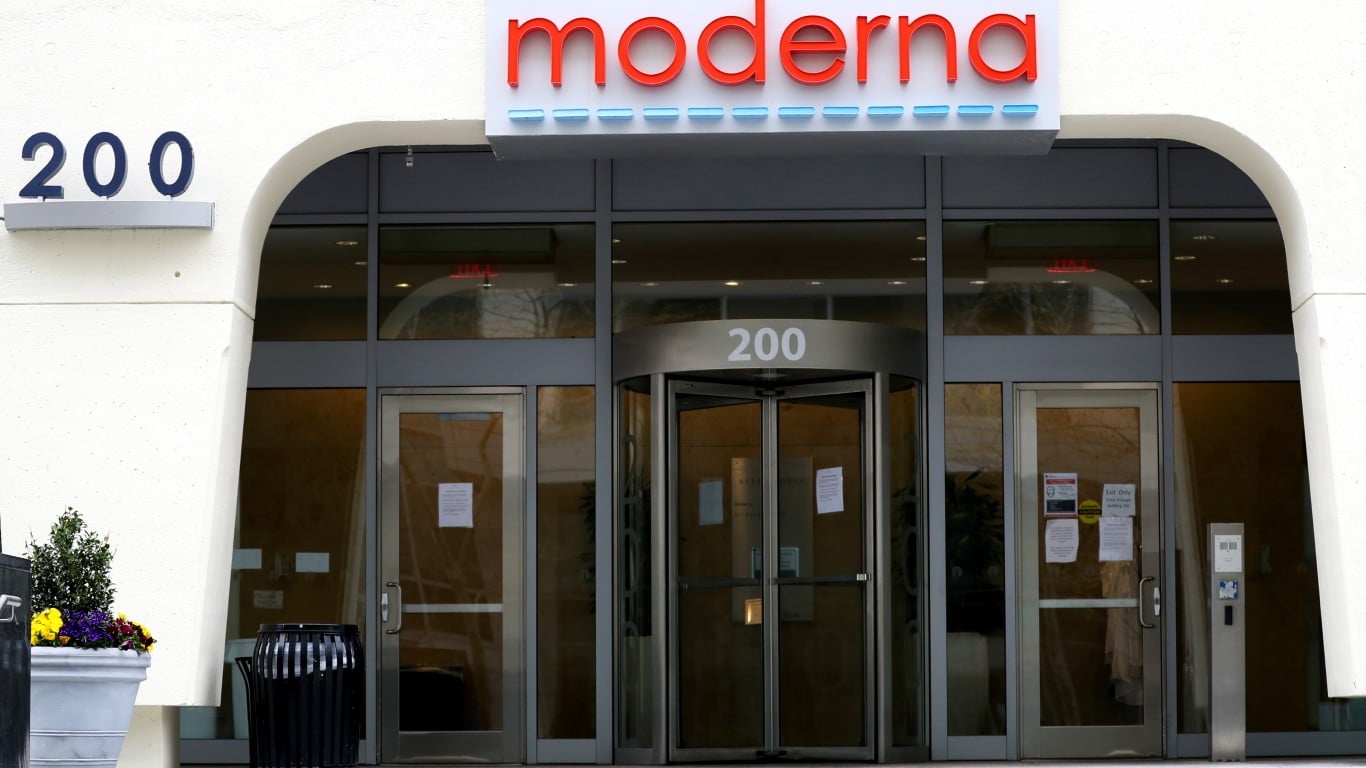
Moderna Climbs 5% as Surprise Profit and Raised Outlook Beat Forecasts; Pfizer Dips, BioNTech Edges Higher
Moderna flipped a forecasted loss into a profit, yet part of the first pop has already faded while bigger rivals barely budge. What is holding back the rally, and which open question could decide the stock's next move?

This post may contain links from our sponsors and affiliates, and Flywheel Publishing may receive compensation for actions taken through them.
A quarter that produced a surprise profit and a bigger 2026 forecast is sending Moderna (NASDAQ:MRNA | MRNA Price Prediction) higher again. Moderna stock is at $254.07 in morning trading, up 5%. The stock has climbed 762% year to date, driven largely by enthusiasm for the company’s cancer vaccine work.
Part of the stock’s initial reaction to the report has faded, which isn’t surprising after a run this large. Larger vaccine rivals are barely moving, which makes this a company-specific story built on Moderna’s own numbers.
Moderna Swings to a Profit on Overseas Vaccine Demand
Moderna reported Q3 2026 results before the open on November 6, posting earnings per share of $0.38. The consensus forecast had called for a $1.28 loss per share. Revenue rose to $1.31 billion from $1.01 billion a year earlier, well ahead of the $891.31 million consensus. Higher international COVID-19 vaccine sales under long-term government partnerships drove the increase.
U.S. revenue at Moderna totaled $780 million, while international revenue reached $533 million. On the bottom line, the company swung to net income of $162 million from a net loss of $200 million in the year-ago quarter. Spending on research and development (R&D) at Moderna fell 27% year over year to $583 million.

Chief executive Stéphane Bancel discussed Moderna’s numbers. He tied them to the company’s pipeline progress: “We delivered 29% revenue growth in the third quarter, alongside the U.S. approval of mFLUSIVA, our fifth approved product globally, and positive Phase 3 results for intismeran in melanoma.” Intismeran is being developed with Merck (NYSE:MRK), and the two companies are preparing regulatory submissions.
Moderna Raises Its Revenue Outlook and Trims R&D
Moderna now expects 2026 revenue growth of 15% to 25%, up from its prior forecast of up to 10%. On the earnings call, chief financial officer Jamie Mock credited a strong start to the season and visibility into the fourth quarter.
Cash and investments at Moderna are expected to reach $8.1 billion to $8.3 billion by year-end, up from an earlier range of $4.7 billion to $5.2 billion. Proceeds of about $2.6 billion from a $3 billion convertible notes offering helped build that reserve. Full-year R&D spending is now forecast by Moderna at approximately $2.7 billion, down from $2.9 billion.
Pfizer and BioNTech Barely Budge as Moderna Rallies
Pfizer (NYSE:PFE) stock is at $29.16, down 1%. The drugmaker reported its Q3 results on November 3, so its move doesn’t reflect a fresh earnings reaction. COVID-19 products are shrinking for Pfizer, with Comirnaty sales down 30%, while Eliquis and Padcev carry its growth.
BioNTech (NASDAQ:BNTX) stock is at $86.48, up 0.7%. Moderna’s closest messenger RNA (mRNA) rival reported on November 3, and its earnings beat leaned on one-time out-licensing revenue from a cancer drug partnership. Without that boost, the quarter rested on COVID-19 vaccine revenue that fell 35%.
Novavax (NASDAQ:NVAX), a smaller COVID-19 vaccine maker, also reported results recently. On the macro front, the October jobs report showed U.S. employers added 165,000 jobs, exceeding expectations, while the unemployment rate edged down to 4.1%.
How Moderna’s Business Model Differs From Pfizer and BioNTech
Moderna focuses exclusively on mRNA technology, with a commercial portfolio of respiratory vaccines such as Spikevax, mRESVIA and mFLUSIVA. That concentration ties the company’s results closely to vaccination seasons and government contracts. Pfizer runs a diversified portfolio covering oncology, specialty care and primary care, which cushions the impact of any single franchise.
BioNTech shares an mRNA foundation with Moderna, but its only marketed product is Comirnaty, sold with Pfizer, and the German company is steering its future toward cancer treatments such as bispecific antibodies and antibody-drug conjugates. Cancer is part of Moderna’s plan too, though its respiratory franchise remains the revenue engine.
What Comes Next for Moderna’s Profit Turnaround
The next test for Moderna is whether its international vaccine demand proves durable. Management noted that some of the Q3 strength reflected shipment timing. The U.S. mFLUSIVA launch is limited because approval came after the annual contracting cycle.
Moderna has five approved products, a far larger cash reserve and falling costs working in its favor. But Moderna’s norovirus vaccine missed early success criteria in a Phase 3 interim analysis, a $950 million litigation settlement is due, and revenue still leans heavily on COVID-19 shots and government contracts.
An update on the intismeran filing is expected at Moderna’s Analyst Day on November 12. Investors may want to stay cautious while the question of Moderna’s overseas vaccine demand remains open.
Contact [email protected] for any questions or corrections.
David Moadel is financial writer specializing in stocks, ETFs, options, precious metals, and Bitcoin. David has written well over 1,000 articles for leading online publications, helping investors understand markets, income strategies, and risk.His work has appeared in The Motley Fool, InvestorPlace, U.S. News & World Report, TipRanks, ValueWalk, Benzinga, Market Realist, TalkMarkets, Finmasters, 24/7 Wall St., and others.With a master’s degree in education, David has taught at the elementary, high school, and college levels. That teaching background shapes his writing style: clear, educational, and practical. David has also built a loyal social-media audience by providing trustworthy financial content on YouTube, X/Twitter, and StockTwits.