Palantir Shed Nearly 20% Over 12 Months: This Wall Street Desk Predicts 76% Gains Moving Forward
Palantir crushed earnings, raised guidance, and still got hammered while rival software names held their yearly gains. What spooked investors, and which warning signs in the details could decide whether the bulls or the bears are right?

This post may contain links from our sponsors and affiliates, and Flywheel Publishing may receive compensation for actions taken through them.

Palantir (NASDAQ:PLTR | PLTR Price Prediction) trades at $154.45, and Wall Street’s average price target is $217.97. That implies 41.1% upside to where analysts think it should be.
Palantir sells data-integration and AI software (Foundry, Ontology and AIP) to governments and, more and more, to corporations. Wall Street keeps watching because of the pace of its growth. Revenue rose 95.9% year over year last quarter to $2.31 billion.
Some desks see much more upside. Barclays raised its target from $265 to $273 and kept its Overweight rating. That target implies 76.8% upside. A consensus gap above 40% shows a wide split between the market price and analyst models.
A Blowout Quarter Ran Into a 21% One-Week Slide
Valuation fatigue is the main reason the stock fell. It met a risk-off market right after a record earnings report. Shares fell 10.05% on the day and 21.37% over the past week. Yet the results beat estimates. Adjusted EPS of $0.44 exceeded the $0.41 consensus, and management raised full-year revenue guidance to $8.530 billion to $8.534 billion. Axios summed up the mood with the headline “Palantir loses its wow factor”.
Bears zeroed in on a few weak spots. Total contract value grew only 6% year over year. Stock-based compensation rose to $318.9 million from $172.3 million. Accounts receivable jumped to $1.883 billion from $1.042 billion at the end of 2025. At roughly 82x forward earnings, even small defects get hurt.
The broader market fell too. The S&P 500 dropped 4.22% in the session and 4.53% over the week. Palantir fell much further.
Bulls Say the Commercial Boom Is Just Getting Started
The optimistic case starts with U.S. commercial revenue. It reached $984 million, up 148%, and passed U.S. government revenue of $953 million for the first time. Barclays argues that AIP has moved from proof-of-concept bootcamps to enterprise-wide production. Palantir closed 64 deals worth $10 million or more, and U.S. commercial remaining deal value rose 79% to $6.517 billion.
Profitability is the second factor. The adjusted operating margin reached 62%, the Rule of 40 score hit 158%, and full-year adjusted free cash flow guidance stands at $4.8 billion to $5.0 billion.
Analysts are mostly bullish. Of 33 covering analysts, 22 rate the stock Buy or Strong Buy, 9 say Hold, and 2 rate it Sell or Strong Sell. Revisions are trending up. The average 2027 EPS estimate rose to $2.3503 from $2.0945 over the past 90 days. Barclays frames its call over 12 months. Keep in mind that price targets are model outputs, and these models assume premium multiples will hold.
Software Sold Off Together, but Only Palantir Is Down for the Year
This week the whole software group sold off. This year, though, Palantir is the clear laggard.
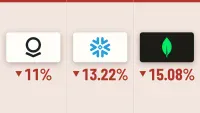
Snowflake (NYSE:SNOW) fell 18.39% over the week but is still up 22.88% year to date. At $270.73 against a $426.50 target, analysts see 57.5% upside. 45 of 52 analysts rate it Buy. That consensus upside is larger than Palantir’s.
CrowdStrike (NASDAQ:CRWD) lost 22.11% over the month, yet it is still up 85.34% this year. At $217.39 against a $248.45 target, the implied upside is only 14.3%. 40 of 53 analysts rate it Buy.
Snowflake has the biggest consensus upside of the three, and Barclays’ Palantir call exceeded them all. Palantir is the only one of the three down for the year.
Palantir Badly Trails the S&P 500 This Year
Palantir trades at $154.45. The average target from 33 analysts is $217.97, which implies 41.1% upside. Barclays’ $273 target implies 76.8%.
The stock is down 13.11% year to date, while the S&P 500 is up 7.71%. Over 12 months, Palantir has lost 17.8% while the index gained 8.4%. Over the past year the shares have traded between $106.37 and $212.94.
What Could Push Palantir Toward the Analyst Targets
The optimistic case improves if U.S. commercial growth keeps beating the government business and receivables turn into cash on schedule. If that happens, the higher guidance supports the analyst targets. Palantir looks like a value trap if the 6% growth in total contract value is an early sign of slowing demand, or if rising stock-based compensation keeps diluting shareholders. At this valuation, a single soft quarter could drag the stock back toward its 52-week low.
Revenue growth, margins and raised guidance remain strong, and this selloff looks driven more by the broader market and valuation concerns than by the business. Barclays’ 76.8% call depends on investors paying premium multiples again. The consensus target is the more realistic marker to watch.
Contact [email protected] for any questions or corrections.
Alex Sirois is a financial writer with experience spanning both retail and institutional investing. He has written for InvestorPlace and held roles at BNY Mellon and Bernstein, giving him a perspective that bridges Main Street portfolios and Wall Street analysis.
Alex holds an MBA from George Washington University and has built his career across multiple industries, including e-commerce, education, and translation — a breadth of experience that informs how he breaks down complex financial topics for everyday investors. His writing is conversational, actionable, and grounded in long-term, buy-and-hold investing principles.
At 247 Wall St., Alex focuses on delivering analysis that is both accessible and useful, with a clear emphasis on helping readers make more informed decisions with their money.