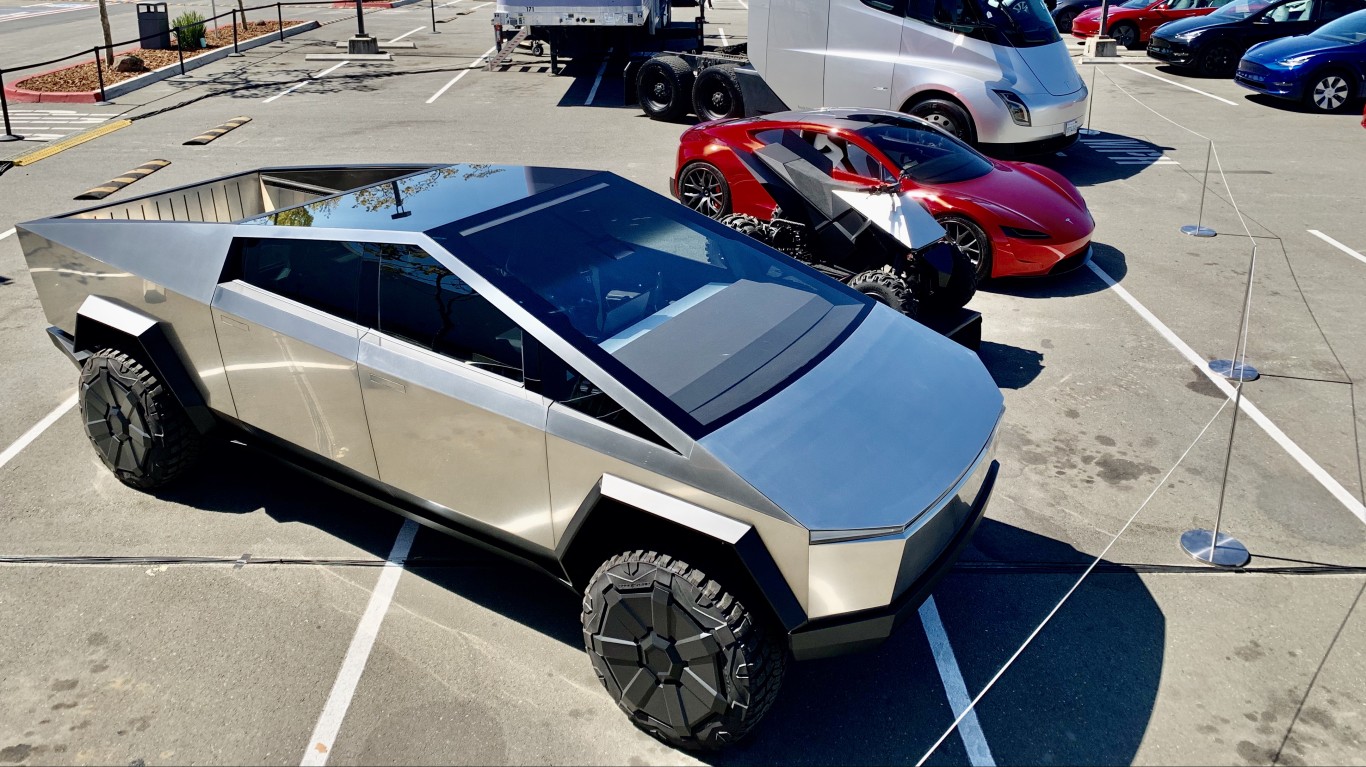
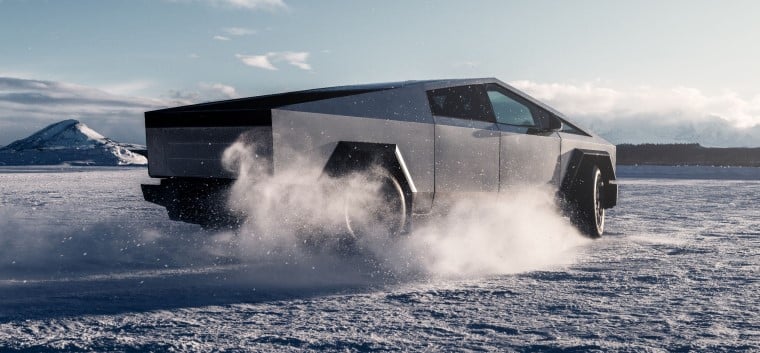
RIP Cybertruck. Musk Says Tesla Winding Down Production Months After It Was Called The “Biggest Flop In Automotive History”
Elon Musk once dreamed of selling hundreds of thousands of Cybertrucks a year. Now the plant that builds it is being handed to something else entirely, and the sales gap behind that decision echoes one of Detroit's most famous failures.

This post may contain links from our sponsors and affiliates, and Flywheel Publishing may receive compensation for actions taken through them.
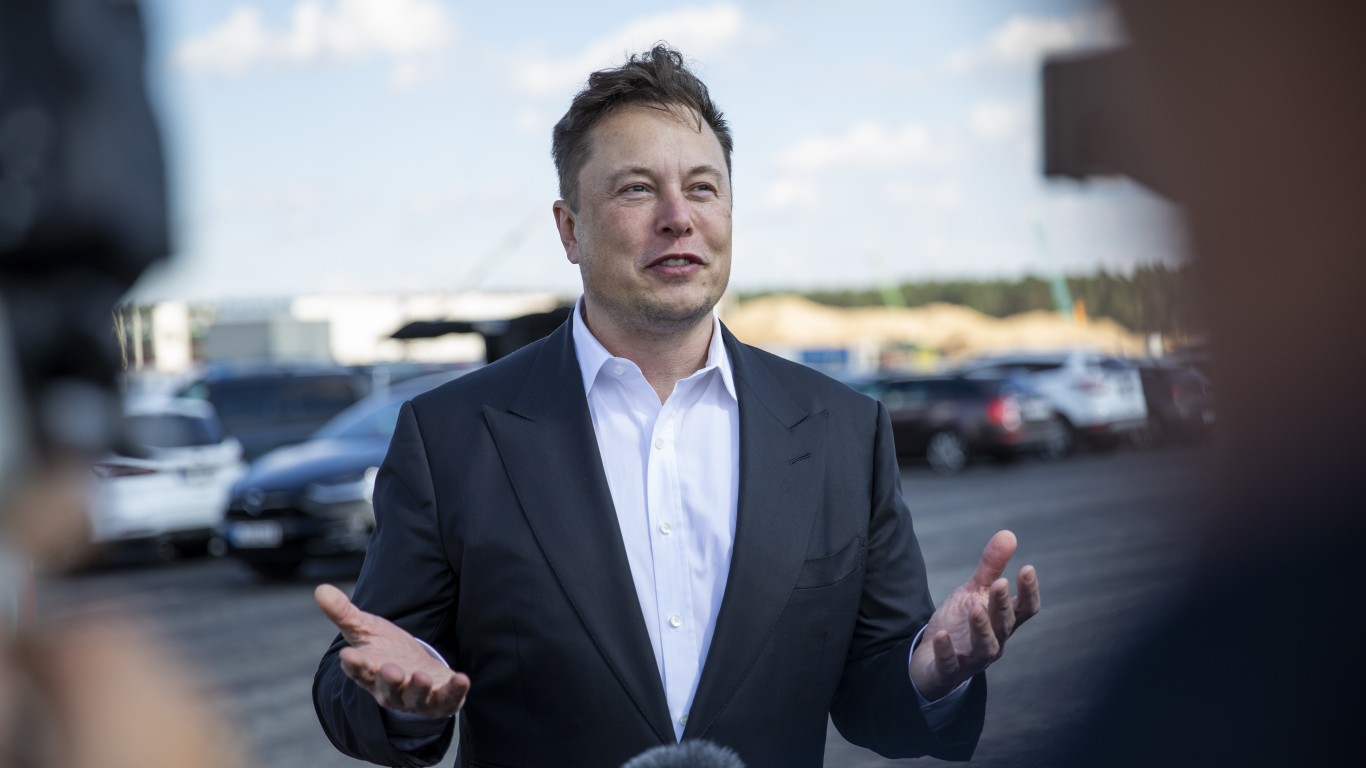
Elon Musk said on X early Friday that Tesla (NASDAQ:TSLA | TSLA Price Prediction) will wind down Cybertruck production at Gigafactory Texas around the middle of 2027 to make room for more Cybercab production. Reuters, Benzinga and others reported the post. Reuters framed the move as coming while the truck “struggles to win appeal.” According to Forbes, the Texas plant is the only one that builds the truck. Musk also reshared a post from Cybertruck lead engineer Wes Morrill that described the truck as a technology development platform whose work carries on through the Cybercab.
For now this is a slow goodbye. The truck stays in production until around mid-2027, and Musk did not say whether production stops entirely.

Sales Numbers Behind the Wind-Down
Tesla puts the truck into a broader reporting category, so outside counts tell the story. In May 2023, Musk estimated Tesla could eventually sell 250,000 to 500,000 trucks a year, per Forbes and Bloomberg. Cox Automotive counted 38,965 sold in 2024 and 20,237 in 2025, a 48.1% decline, followed by a record low of 3,519 in the first quarter of 2026. S&P Global Mobility totaled 7,133 U.S. registrations through May 2026.
The third quarter brought no recovery. According to Electrek, Tesla’s “Other Models” category, which effectively tracks the Cybertruck, delivered 8,295 units, compared with 15,933 a year earlier. Electrek estimated 7,000 to 8,000 Cybertruck deliveries in the quarter, a pace equal to about 13% of the 250,000 goal cited by Bloomberg.
How the Truck Earned the Edsel Comparison
On July 22, 2026, Bloomberg compared the Cybertruck with the Edsel on the gap between target and actual sales. Ford Motor (NYSE:F) introduced the Edsel in 1957, predicted 200,000 units in its first year and sold less than a third of that, per Bloomberg. Bloomberg put Tesla’s annual target at 250,000 and noted the truck failed to crack 40,000 in its first year. Futurism and other publications summing up that analysis called it the “biggest flop in automotive history.”
Pricing hurt too. The National reports the price rose from an initial $39,900 to as high as $100,000. Electrek reported a $5,000 increase in August that put the dual-motor model at $74,990. Forbes notes the truck has also faced multiple recalls and quality issues. CFRA Research’s Garrett Nelson told Bloomberg the truck is more likely to “fade away” than be discontinued completely.
Cybercab Claims the Floor at Giga Texas
The swap shows where Tesla’s money is going. Cybercab joined the unsupervised Robotaxi fleet in Austin on Sept. 3, 2026. On the October earnings call, vehicle engineering chief Lars Moravy said Cybercab production had begun on the Texas line, with output going to Tesla’s own Robotaxi fleet. CFO Vaibhav Taneja described how store visits have changed: “They’re not asking for 3, Y, or Cybertruck. They’re saying, ‘Can we get an FSD drive?'”
Tesla has not confirmed its current Cybercab volume plans. Research and development spending reached $2.76 billion in the third quarter, up from $1.63 billion a year earlier. Musk said Robotaxi would be “probably a big deal by Q3 or Q4 of next year.”
Tesla shares closed down 10.77% on Thursday during a broad tech selloff. As of 5:35 AM ET Friday, the stock traded at $350.40 in premarket trading, up 1.95%.


What to Watch Before Mid-2027
- Timing and terms: the exact date of the wind-down and how output declines before then.
- Full stop or fade: whether production ends entirely or the truck continues, as Nelson expects.
- Financial impact: how the change shows up in the “Other Models” line and in Tesla’s quarterly results, after third-quarter deliveries that already looked weak.
- Second life: whether the truck’s technology lives on in another form, as Morrill’s post suggests.
Contact [email protected] for any questions or corrections.
AJ spent 10 years writing about financial markets at The Motley Fool. His coverage centers on technology stocks and the broader macroeconomic trends, from interest rates to geopolitics, that shape where markets are headed next. AJ is drawn to the stories where big-picture economics and individual companies collide.