Musk Says His Terafab Chip Plant Could Cost $1 Trillion
A billionaire investor floated a staggering number for Elon Musk's chip venture, and Musk didn't flinch. Only a sliver of the bill has an official price tag, and nobody has said whose shareholders will cover the rest.

This post may contain links from our sponsors and affiliates, and Flywheel Publishing may receive compensation for actions taken through them.
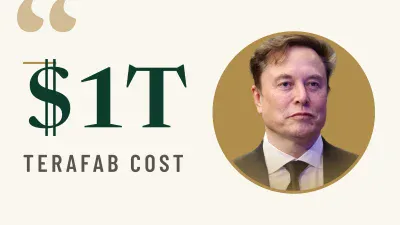
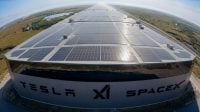
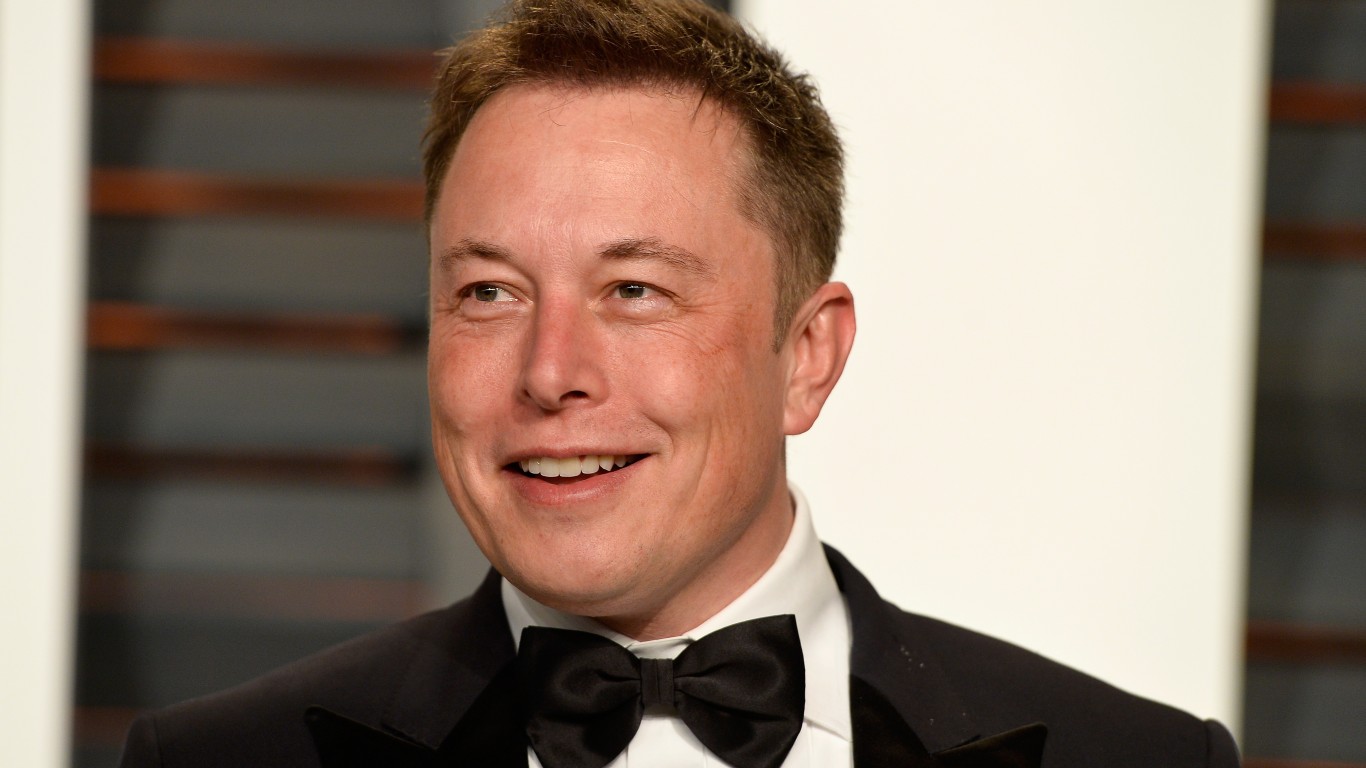
Ron Baron put a price on Elon Musk’s chip ambitions, and Musk accepted it. At the Baron Investment Conference on November 6, 2026, Baron said Terafab, the chip venture of Tesla (NASDAQ:TSLA | TSLA Price Prediction) and SpaceX (NASDAQ:SPCX), would cost $1 trillion. Musk, speaking by video, replied that it probably will over time, although the money will be spent in phases. That account comes from transcripts of the livestream.
Tesla rose 4.22% to $358.20. SpaceX gained 8.53% to $134.16, and Intel (NASDAQ:INTC) climbed 7.75% to $56.30. No source ties those gains to the remarks, which came after a post-election selloff in all three stocks. For shareholders, Musk backed a trillion-dollar figure nobody has funded, for a plant that makes no chips yet.
Musk Agreed to Baron’s Number
Musk said Terafab aims to produce a terawatt of AI chips a year, a goal he called “terrifyingly large.” He estimated 2026 global AI chip output at around 20 to 25 gigawatts and 2027 output at roughly 35 to 45 gigawatts.
He said a terawatt would be about 30 times 2027 production. His own range implies 22 to 29 times, so his figure is approximate.
On SpaceX’s October 20 earnings call, Musk targeted a first SRAM test chip (a simple memory chip used to check the line) around May or June 2027. He set volume production for the third quarter of 2028 and called those dates “very aggressive.”
Meanwhile, SpaceX buys Nvidia (NASDAQ:NVDA) GB300s at a pace of roughly 200,000 a month. Nvidia, worth $4.51 trillion, reports on November 17.
A $16.8 Billion First Phase Is the Only Official Cost
On August 6, 2026, Texas Gov. Greg Abbott’s office estimated the first phase at Gibbons Creek in Grimes County at more than $16.8 billion, on a 100-million-square-foot site. An earlier published estimate put Terafab’s total cost at more than $100 billion.
The plan uses a research fab at Gigafactory Texas in Austin to test chip processes, and whatever works moves to Grimes County. Musk said this could cut a process cycle from about a year to about a month, and he acknowledged the plan could fail.
A process cycle is the time it takes to run a change through the line and see whether it increases yield, which is the share of working chips per wafer. Shorter cycles let a fab fix defects and lower costs faster.
Who Pays for the Later Phases
Tesla’s Q3 free cash flow fell 61.63% while capex rose 110.5%. SpaceX earned $4.40 billion in Q3, but it guided Q4 capex to $35 billion to $40 billion. If either company raises equity, existing shareholders are diluted.
Intel said in April it would join Terafab, which gives its foundry a high-profile customer. That means a unit that lost $1.85 billion in Q3 helps build a rival.

Tesla trades at a P/E near 373x after Q3 operating income fell 55.79%. Terafab adds an open-ended claim on its capital.
Tesla and SpaceX special committees discussing a combination have not agreed on terms, so it is still unclear which company’s shareholders will pay for Terafab.
Contact [email protected] for any questions or corrections.
Omor Ibne Ehsan is a writer at 24/7 Wall St. He is a self-taught investor with a focus on growth, cyclical, and dividend equities that have strong fundamentals, value, and long-term potential. He also has an interest in high-risk, high-reward investments such as penny stocks.