3 Stocks Built on Recurring Revenue That Could Keep Growing for Decades
You probably can't name the company that services your office elevator, treats your baseboards, or hauls your dumpster. That anonymity hides businesses customers rarely leave, yet two of these three stocks stumbled this year. What went wrong?

This post may contain links from our sponsors and affiliates, and Flywheel Publishing may receive compensation for actions taken through them.
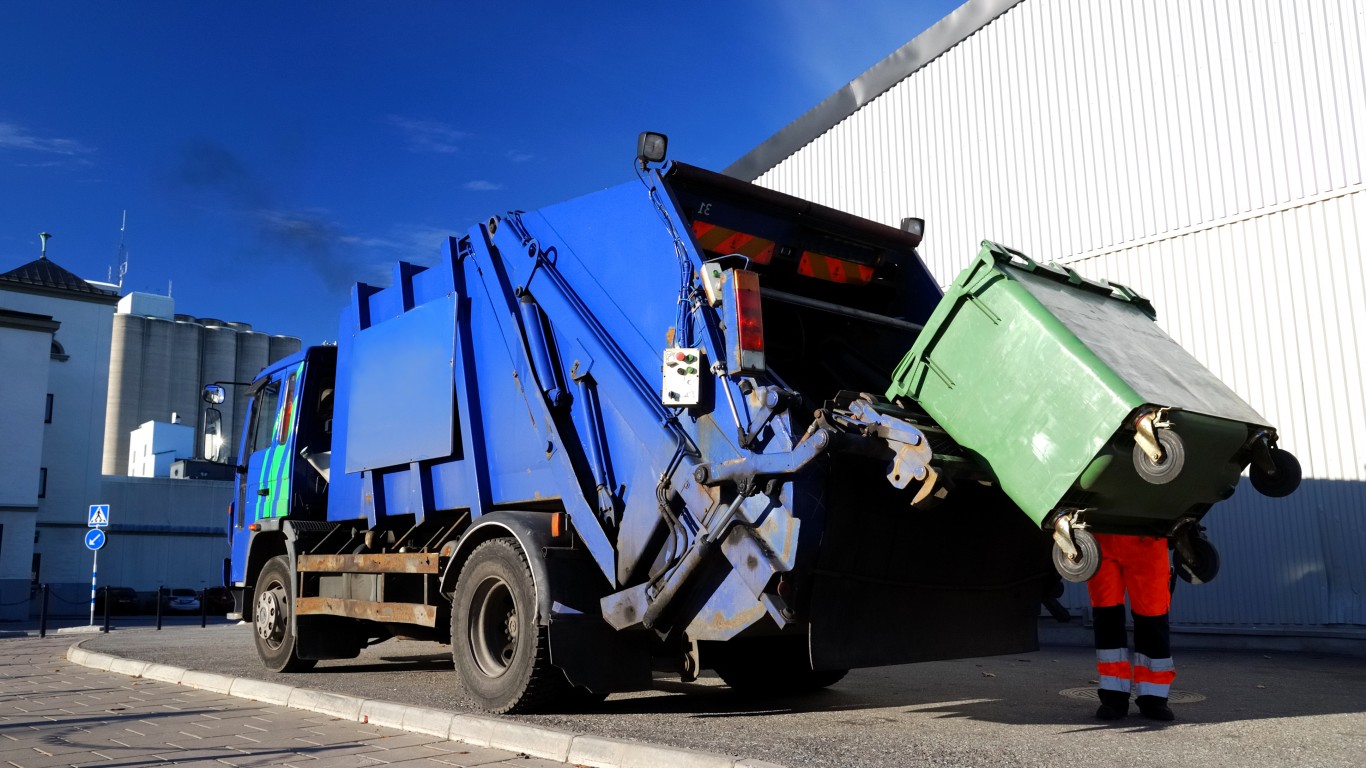
Most investors can’t name the company that maintains their office elevator, sprays their kitchen baseboards, or empties their dumpster. That’s part of the appeal. Once these providers are in place, replacing them is slow and inconvenient, and the service keeps getting paid for whether the economy is growing or not. One example of how big that sticky base can get: Otis Worldwide (NYSE:OTIS | OTIS Price Prediction) maintains about 2.5 million customer units worldwide, and service makes up about two-thirds of sales. Below are three businesses whose customers tend to stay put, plus what could go wrong with each.
Otis Worldwide: Elevator Maintenance Contracts That Can Run for Decades
Otis makes and installs elevators and escalators, but the steadier business comes after installation. Once an Otis elevator is in a building, Otis usually keeps the multi-decade service and modernization contract. Makes owners can’t skip inspections or repairs, and moving a fleet of elevators to a new servicer means switching technicians, parts, and liability arrangements. Most landlords would rather not.
China has been a live test of that split. The property market there has been weak, and Otis’s New Equipment sales in China declined more than 20% in the third quarter. Service revenue still grew 8% to $2.616 billion in the same quarter. Organic modernization sales rose 20%, and organic maintenance and repair rose 4%. Adjusted EPS came in at 1.05, the same as 1.05 a year earlier, even with the cost of new equipment.
Pricing power is also evident. Otis said favorable pricing helped service operating profit, and the service margin improved 100 bps sequentially to 24.2%. Chief Executive Judy Marks pointed to “AI-enabled pricing” as support for modernization and repair growth.
The stock has been less steady than the business. Shares are down 11.48% over the past year. Measured on an adjusted basis from March 19, 2020, soon after the spin-off, they’re up 93.29%.
Risk: Profitability is under pressure. The adjusted operating margin slipped 110 bps to 16.0% due to higher labor costs and an unfavorable mix, and management cut its free cash flow outlook to about $1.5 billion. The balance sheet shows negative book equity of -$5.43B, a result of the spin-off capital structure.
Rollins: Pest Control Routes Built on Scheduled Visits
Rollins (NYSE:ROL) sends technicians to homes and businesses to deal with termites, rodents, and insects. It runs Orkin and a group of regional brands, including HomeTeam Pest Defense, Clark and Western Pest Services. It serves more than 2.8 million customers. Much of the work is recurring: scheduled service plans, termite bonds and commercial contracts. A restaurant with a health inspection coming up has little reason to experiment with a new exterminator.
The downturn record is the strongest part of the case. Chief Executive Jerry Gahlhoff Jr. cited 100 consecutive quarters of revenue growth in the third-quarter release. That streak goes back before the 2008 market crash and continues through the 2020 pandemic lockdowns. Termites and rats don’t wait for a recovery.
Over time, the stock has done well. Shares returned 212.52% over the past 10 years on an adjusted basis. Quarterly dividends go back to 1999, and since 2023 the regular payment has risen each year, from 0.13 to the latest 0.2 per share.
Risk: This has been a rough year. Shares are down 36.05% year to date, and Rollins has missed EPS and revenue estimates in two straight quarters. Organic residential growth slowed to 2.3% as the leads that used to come from search shift toward AI-driven discovery. The adjusted operating margin contracted 140 bps to 21.2%. Customers already on a route are still sticky. The harder problem right now is signing up new ones.
Republic Services: Trash Pickup Under Long-Term Contracts
Republic Services (NYSE:RSG) picks up trash and recycling from homes, businesses, and job sites, then hauls it to sorting facilities and landfills, many of which it owns. Much of the work runs under municipal franchise agreements and large, long-term collection, transfer, and disposal contracts. Route density and landfill ownership make it hard for a rival to underbid without losing money. Chief Executive Jon Vander Ark said “customer retention remained high at more than 94%” in the third quarter.
The best evidence of pricing power is that price keeps rising when volume doesn’t. Third-quarter volume was slightly negative (-0.6%), yet revenue grew 8.24% to $4.559B. Core price added 5.3% to total revenue, and management said average yield continued to exceed internal cost inflation. The total adjusted EBITDA margin was 31.8%. Vander Ark described the core business as “very repeatable and predictable.”
In 2020, a year when many companies cut or suspended payouts, Republic raised its quarterly dividend from 0.405 to 0.425. The rate has stepped up every year since then and now stands at 0.67 per quarter. The payout itself is modest. The consistency is the point. Over 10 years, shares returned 453.59% on an adjusted basis, and they’re up 22.31% over the past year.
Risk: Some volume is leaving on purpose, and some isn’t. Residential collection volume fell 4.3%, partly because Republic walked away from municipal contracts that missed its return targets. Construction and demolition landfill volume dropped 38.2%. Management also expects about $200 million in losses from unconsolidated equity-method investments this year. After last year’s gain, investors are paying for much of that strength up front.
What Ties These Three Together
Each of these companies makes most of its money from work customers can’t easily skip and would rather not re-bid. That doesn’t protect the shares from falling, as Otis and Rollins showed this year. For a long-term core holding, the contract structure, price increases, and margin trends deserve more attention than the latest quarter’s stock move.
Contact [email protected] for any questions or corrections.
Chris Lange is a financial and geopolitical writer with more than a decade of experience covering a myriad of topics. He has published thousands of articles for 24/7 Wall St., with past coverage focused heavily on stocks, IPOs, healthcare, defense, global affairs, and technology.
His work has been quoted, or referenced by a number of outlets including Business Insider, USA Today, Yahoo Finance, MSN, The Motley Fool, and many other publications. A graduate of Southwestern University, he studied business with a focus on investments and has previous experience in banking and startups.
When not reading or writing the news, he is following his passion for Lacrosse, playing chess, or building solar projects with his dad.