5 Dividend Stocks Hiding in Boring Businesses Customers Cannot Live Without
Some of the steadiest compounders in the market spend their days hauling trash, killing bugs, and stocking factory shelves, and their customers almost never leave. Here is why that kind of boring turns into decades of uninterrupted dividend raises.

Boring is a strategy. The names below run essential services their customers cannot easily walk away from, and the compounding shows up in decades of small, regular dividend increases rather than in headlines. One data point sets the tone: Republic Services (NYSE:RSG | RSG Price Prediction) has returned 423.98% over the past ten years on an adjusted basis, and it did that hauling trash.
Republic Services: Route Density and Long Contracts
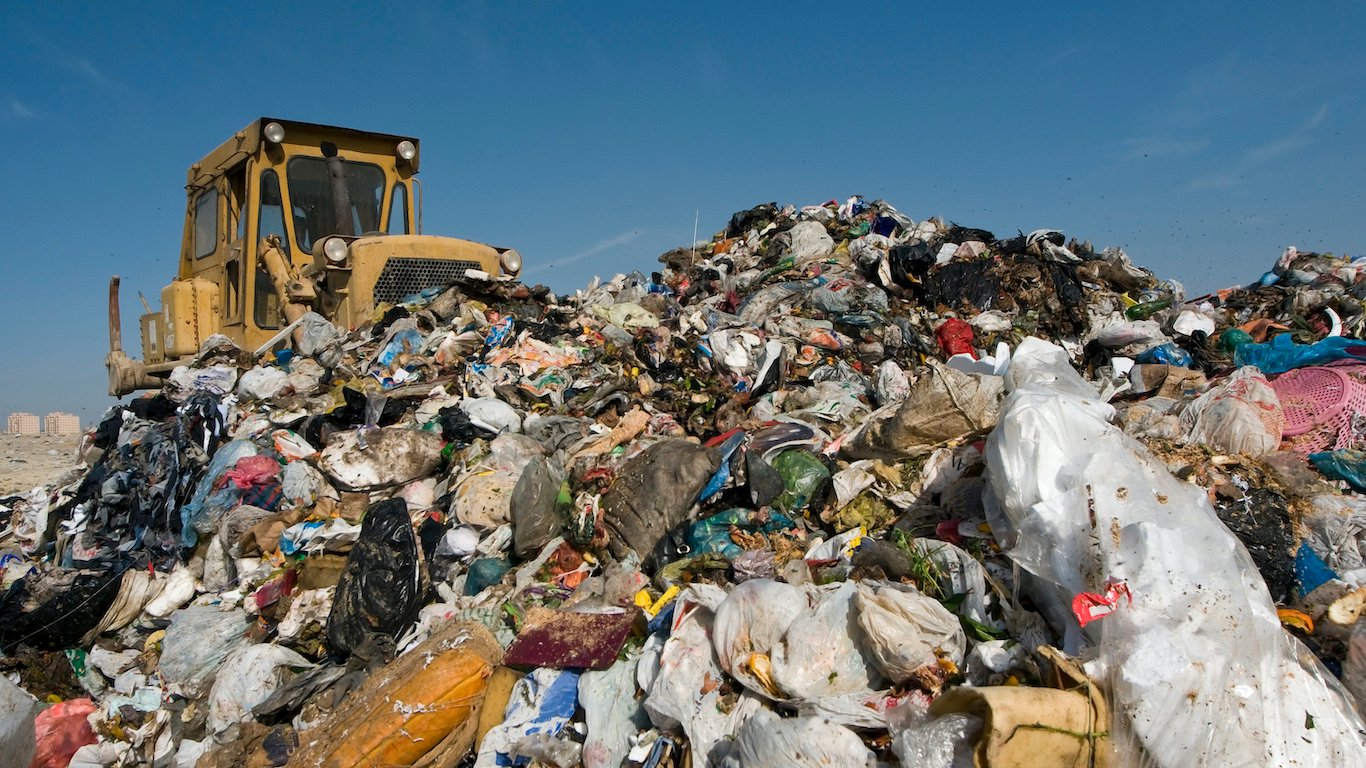
Republic is the second largest provider of non-hazardous solid waste collection, transfer, disposal, recycling, and energy services in the United States. The business is unglamorous by design: trucks on fixed routes, transfer stations, landfills, and multi-year municipal and commercial contracts. Garbage gets picked up in expansions and recessions alike, and customers rarely re-bid a working route.
In the second quarter, core price on total revenue was 5.3%, with open market pricing of 7.8% and small-container pricing of 8.1%. Management said plainly, “This level of pricing exceeded our cost inflation, which drove margin expansion in the underlying business.” Adjusted EBITDA margin ran at 32.1%. Customer retention was more than 94%.
On the payout, Republic announced an increase to its dividend for the 23rd consecutive year. The quarterly rate has moved from $0.58 in 2024 to $0.625 in 2025, with the latest declared amount at $0.67. The yield is modest at 1.13%; the point is the reliability of the raise.
In terms of risk, organic volume was down 1.9% on related revenue in the quarter, and 2025 saw $56 million in labor disruption costs. Recycled commodity prices and fuel remain swing factors.
Rollins: Recurring Routes for a Non-Discretionary Service
Rollins (NYSE:ROL) runs Orkin and roughly 20+ brands across residential, commercial, and termite services. The work is route-based and contract-renewing: a homeowner on a quarterly plan or a restaurant on a monthly commercial contract does not shop the service every year, and infestations do not wait for better economic conditions. Management describes the model as “a recession resilient business model” supported by “strong customer relationships, a significant recurring revenue base”.
Total revenue rose 7.9%, organic growth was 5.7%, and termite and ancillary grew 10.5%. Management stated that “We’ve not seen any hesitancy from our customers on pricing” and that “our customer retention remains strong.” Free cash flow conversion was “above 115% for the quarter.”
The dividend does what a boring dividend is supposed to do. The quarterly rate has stepped from $0.15 through mid-2024, to $0.165, then to $0.1825 on the November 2025 ex-dividend payment, where it has stayed through the August 2026 ex-dividend date. The dividend history in the source goes back to February 1999. Current yield is 2.06%.
Risk: consumer-initiated leads have been softer. The stock is down 41.47% year to date, reflecting one-time residential categories going “negative, you know, low to mid-single digits” and margin compression: adjusted EBITDA margin was 21.9%, and GAAP operating margin fell 110 basis points in the quarter. The recurring book has held up better than the one-time work.
W.W. Grainger: The Supply Closet for American Industry
W.W. Grainger (NYSE:GWW) sells industrial maintenance, repair, and operating supplies to manufacturers, government agencies, healthcare facilities, and commercial buildings. It is the plumbing behind the plumbing: gloves, motors, fasteners, filters, safety gear. Grainger is stickiest where it is embedded, running vendor-managed inventory, on-site vending, and integrated procurement systems that a customer would have to unwind to switch.
Pricing power showed up as gross-margin expansion despite tariff-driven cost inflation. Second-quarter gross margin was 39.5%, up 100 basis points year over year, with operating margin at 16.1% and diluted EPS of $12.01, up over 20%. Management framed the discipline this way: “We continue to manage the business with the goal of maintaining price-cost neutrality over time.” Full-year pricing is now expected “around 4%”, at the high end of the prior range.
On capital return, Grainger sent $341 million back to shareholders in the quarter through dividends and buybacks, and announced a 10% quarterly dividend increase earlier in the year. The quarterly rate has stepped from $2.05 in 2024, to $2.26 in 2025, to $2.49 in the most recent payments, and the record shows quarterly payments going back to February 1999 with progressively higher amounts. The yield is small at 0.73%, which is the whole point of the framing here.
The implied risk here is that Grainger is a proxy for industrial activity. Tariff refunds gave gross margin a 90 basis point tailwind that will not repeat, and management expects third-quarter operating margins to fall into the mid 15% range. The company also disclosed a CFO transition effective September 4th, 2026.
Verdict
These three compound quietly rather than reprice on a product cycle. The pitch is straightforward: contracts that renew, routes that repeat, and price increases the customer accepts because switching is more trouble than it is worth. The yields are small and are meant to be. The record of raises, quarter after quarter and year after year, is the actual product (if that kind of multi-decade raise streak is what you are after, we ranked ten of the longest by valuation in a free Dividend Kings report).
Contact [email protected] for any questions or corrections.
Chris Lange is a financial and geopolitical writer with more than a decade of experience covering a myriad of topics. He has published thousands of articles for 24/7 Wall St., with past coverage focused heavily on stocks, IPOs, healthcare, defense, global affairs, and technology.
His work has been quoted, or referenced by a number of outlets including Business Insider, USA Today, Yahoo Finance, MSN, The Motley Fool, and many other publications. A graduate of Southwestern University, he studied business with a focus on investments and has previous experience in banking and startups.
When not reading or writing the news, he is following his passion for Lacrosse, playing chess, or building solar projects with his dad.