Why Nvidia at 13 Times Expected Earnings Still Isn’t Cheap
Nvidia's earnings multiple looks like a bargain next to its AI growth, yet a few shaky assumptions could erase that discount fast. Three signals in the upcoming earnings report will show whether the cheapness is real or an illusion.

This post may contain links from our sponsors and affiliates, and Flywheel Publishing may receive compensation for actions taken through them.
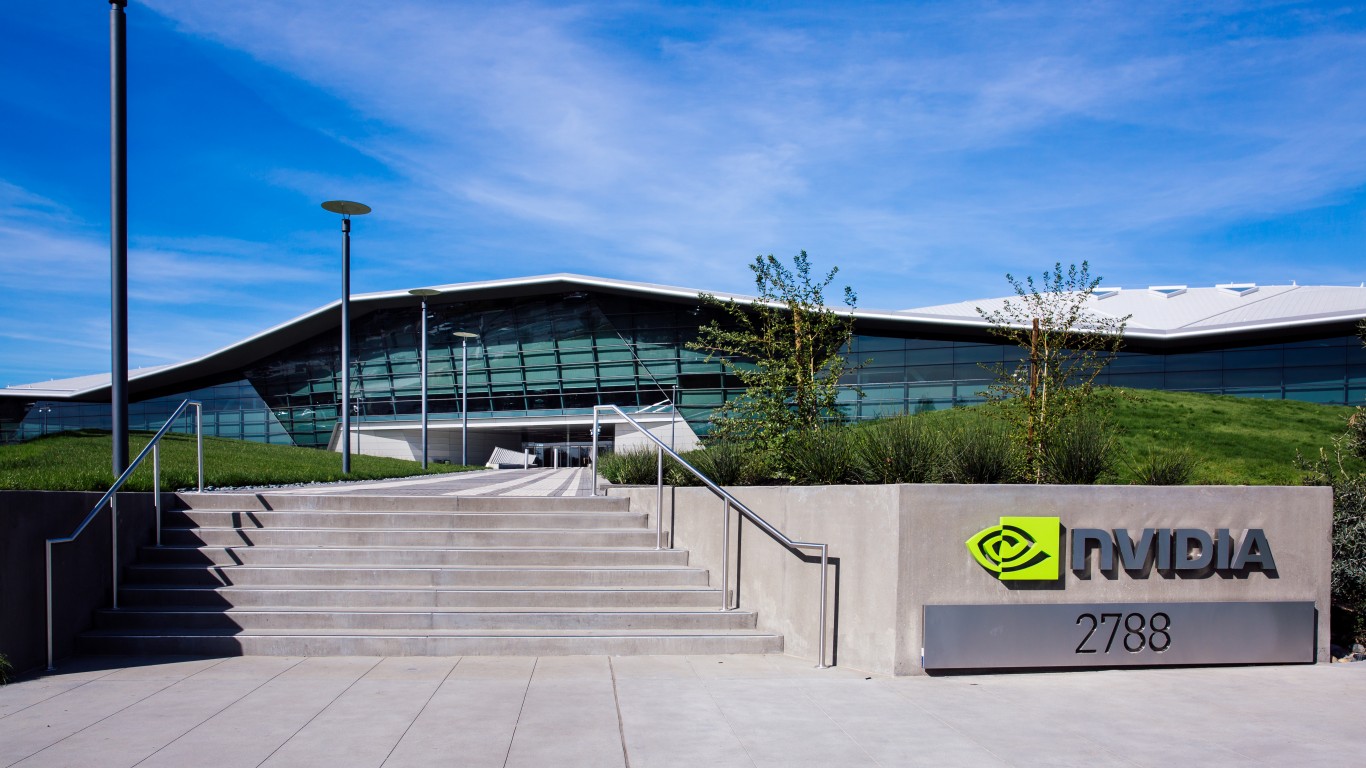
Nvidia (NASDAQ:NVDA | NVDA Price Prediction) trades at $186.64. A forward multiple near 13 only looks cheap if Wall Street’s earnings forecasts hold up through the next phase of the AI expansion.
Nvidia makes the accelerators, networking gear and CUDA software at the center of AI data centers. Fiscal second-quarter revenue reached $96.22 billion, up 105.8%, and Data Center sales rose 117% to $89.02 billion. Still, the stock fell 21.4% over the past month during a broad chip selloff that Barron’s described as leaving chip stocks at fire-sale prices.

Demand Outruns Supply at 13x Forward Earnings
Bulls point to estimates that keep rising. The consensus for fiscal 2028 EPS is $15.9146 from 52 analysts, up from $12.8148 90 days ago, with zero downward revisions in the past month. Management expects revenue to grow about 70% in fiscal 2028 and calls that outlook supply-constrained, because customer demand is growing roughly 100%.
Vera Rubin raises revenue per gigawatt to $40 billion from $25 billion for Blackwell. Nvidia has also beaten EPS and revenue estimates in six straight quarters and has $99 billion left on its buyback authorization.

Forecasts Built on Financing Can Reset Quickly
A forward P/E rests on forecasts, and Nvidia’s forecasts depend on AI infrastructure spending continuing at a historic pace across Microsoft, Alphabet, Amazon, Meta and Oracle. If expected earnings fell 30% with the share price unchanged, the multiple would rise to about 18. A 40% cut would push it to about 21. The low-end fiscal 2028 estimate of $12.8484 already implies roughly 15 times earnings.
The balance sheet is also taking on more risk. Supply commitments rose to $279 billion, guarantee obligations reach $108.5 billion, and days sales outstanding stretched to 60 days from 45. Nvidia has invested nearly $50 billion in frontier AI labs, an arrangement CEO Jensen Huang acknowledged some call “circular financing.” Gross margin is expected to bottom at 71% to 72% in the fiscal fourth quarter, and the outlook includes no China data center compute revenue. Microsoft’s reported decision against extending an Oracle cloud arrangement built on older Nvidia chips shows how fast computing needs turn over.
Third-Quarter Results Will Settle the Debate
Execution remains strong, while the growing role of financing raises valuation risk. The fiscal third-quarter earnings report later this month tests revenue against guidance of $108.0 billion, gross margin against 74.0%, and whether management confirms its fiscal 2028 growth target.
Analysts See 75% Upside as Shares Lag the S&P 500
The average analyst target of $327.14 implies about 75% upside from $186.64. Targets are one data point and guarantee nothing. Of 62 analysts covering the stock:
- Strong Buy: 10
- Buy: 49
- Hold: 2
- Sell: 1

Nvidia is up 0.31% so far this year, and the S&P 500 has gained 7.83%. Over one year, the stock is down 0.53% against the index’s 9.69% gain. Its beta of 2.247 means the stock tends to move more than twice as much as the broader market.
Estimates Must Prove Durable Before Nvidia Looks Cheap
At $186.64, Nvidia’s valuation depends on whether estimates hold.
The multiple only looks low if the estimates behind it hold. Readers should look for three signals in the upcoming earnings report: revenue above guidance, gross margin tracking toward management’s floor, and days sales outstanding no longer rising. If all three appear and fiscal 2028 estimates keep rose, the case for owning the stock improves. If guidance falls, or more of the business depends on Nvidia’s own balance sheet, the bear case improves.
Upside surprises can move the stock fast. A strong report could quickly lift a stock that has dropped 8.8% in a week. Evaluating the stock before the report means relying on forecasts that can be cut far faster than the business can rebuild them.
At 13 times forecasts that depend on borrowed AI capital, one more quarter of results will show whether the stock is truly cheap.
Contact [email protected] for any questions or corrections.
After two decades of patrolling the dark corners of suburbia as a police officer, Rich Duprey hung up his badge and gun to begin writing full time about stocks and investing. For the past 20 years, he’s been cruising the markets looking for companies to lock up as long-term holdings in a portfolio while writing extensively on the broad sectors of consumer goods, technology, and industrials. Because his experience isn’t from the typical financial analyst track, Rich is able to break down complex topics into understandable and useful action points for the average investor. His writings have appeared on The Motley Fool, InvestorPlace, Yahoo! Finance, Money Morning, and, of course, 24/7 Wall St. He has been featured in both U.S. and international publications, including MarketWatch, Financial Times, Forbes, Fast Company, and USA Today.