Nvidia Just Delivered 106% Revenue Growth. What Could NVDA Stock Do Next?
NVIDIA just doubled its revenue while the stock barely moved, and now Wall Street and independent models disagree sharply on what comes next. The path to $350 exists, but it depends on three things going right at exactly the right…

NVIDIA (NASDAQ:NVDA | NVDA Price Prediction | NVDA Price Prediction) just reported fiscal second-quarter revenue of $96.22 billion, up 105.85% year over year, with Data Center sales of $89.02B.
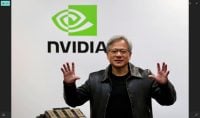
CEO Jensen Huang put it simply: “AI has reached its inflection point. It’s doing useful work. Its tokens are productive and profitable. Now, compute is revenue.”
Even so, the stock is up only 20.73% year to date. Revenue doubled and the stock didn’t. So here’s my question: can NVIDIA reach $350 per share in 2027?

What’s Holding NVIDIA Back Right Now
Investors are worried about margins, supply and financing. Management expects gross margins to bottom in Q4 at 71% to 72% as memory costs rise. Supply commitments rose to $279 billion, and guidance leaves out China Data Center compute entirely.
Bloomberg noted a valuation warning sign this week, and Barron’s reported the stock fell after Huang’s comments on AI regulation (September 22 and 24).
Shares rose 2.42% over the past week and 5.56% over the past month. They remain below the $236 52-week high. At a beta of 2.217, NVIDIA moves much more sharply than the market.
Wall Street Sees 46.3% Upside. Our Model Says 18.9%
The consensus target is $327.7, which means 46.3% upside. Analysts rate the stock 9 Strong Buy, 48 Buy, 2 Hold and 1 Sell. Our base case is $266.42, or +18.9%. The full range runs from $230.75 to $310.1, with high confidence of 0.9.

I think our model is too conservative. It credits earnings growth with just 0.03, while 95% of analysts are bullish. On the earnings call, the CFO forecast for “approximately 70% in fiscal 2028. This is a supply-constrained outlook.” Huang added, “Our demand is much higher than that.”
Here’s What It Takes for NVIDIA to Reach $350
Reaching $350 from today’s price of $223.99 would require a gain of 56.3%.
Forward EPS is $13.0579, so $350 works out to a forward P/E of 27x. Our $266.42 base case means about 20x. Getting to the bold target takes roughly 6x more multiple expansion.
The catalysts are specific. Vera Rubin should make up about 20% of Q3 Data Center revenue. It raises revenue per gigawatt to $40 billion, up from $25 billion for Blackwell. AWS is adding 2 million GPUs, and Q3 guidance is $108 billion.
If earnings keep rising at 70% revenue growth, the forward multiple shrinks on its own, and 27x starts to look reasonable. The main risk is that memory costs cut into margins before the price increases take effect in Q1.

Where NVIDIA Trades Today vs Its Earnings Power
NVIDIA sells at about 17x forward earnings. That’s cheap for a business with 60.38% operating margins.
Shares sit near the top of a 52-week range that runs from $163.9 to $236. Over 10 years, the stock has returned 14,130.99%. At today’s multiple, the bull case doesn’t need aggressive estimates.
Is $350 Realistic? Here’s My Take
Getting to $350 takes a 56.3% gain. It’s a stretch, but a credible one. Three things have to go right. Vera Rubin has to ramp on schedule. Fiscal 2028 gross margins need to settle at 72% to 73%. And investors have to pay about 27x for 70% growth.
A sharp cut in hyperscaler capex would halt it (the power, cooling, and networking names riding that same capex wave are the subject of a free report we put together here). Returns at this level shouldn’t be expected every year, but we’ve outlined the plan for how NVIDIA could reach $350 in 2027.
Contact [email protected] for any questions or corrections.
Vandita Jadeja is a financial publisher with over a decade of experience writing about financial topics, including investment, savings, retirement, insurance and banking. Vandita is a Chartered Accountant who loves to debunk financial concepts for readers.
Her work has appeared on sites that include The Motley Fool, InvestorPlace, and Benzinga. She covers investing and focuses on stock picks and price prediction for 24/7 Wall St.
When not looking for the next stock investment opportunity, she can be found traveling, reading, chasing sunsets and enjoying her iced latte.