Voters Called the Economy Broken. Fed Data Shows Older Americans With Assets Pulled Ahead Anyway
Jobless claims hit multidecade lows, yet voters handed the party in power a landslide loss. Three market voices offered competing explanations, but Fed data points to a dividing line that could decide how your retirement fares.

This post may contain links from our sponsors and affiliates, and Flywheel Publishing may receive compensation for actions taken through them.
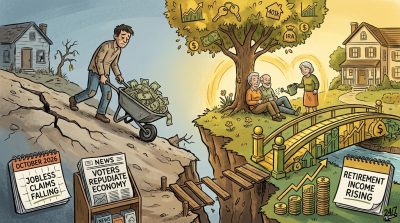
Initial jobless claims fell to 189K for the week ending October 31, 2026, and the unemployment rate was 4.1% in October. Days later, voters delivered what NBC News called a Democratic landslide. An Arkansas Advocate write-up of the AP Voter Poll said Republicans were punished in the midterms for Trump’s economic policies.
Over the weekend, three prominent market voices tried to explain the gap. Their answers point to a split that matters most for people at or near retirement. Over the past few years, having assets has paid off, and living on a paycheck has paid much less.
A Billionaire Investor Admits He Misread Voters
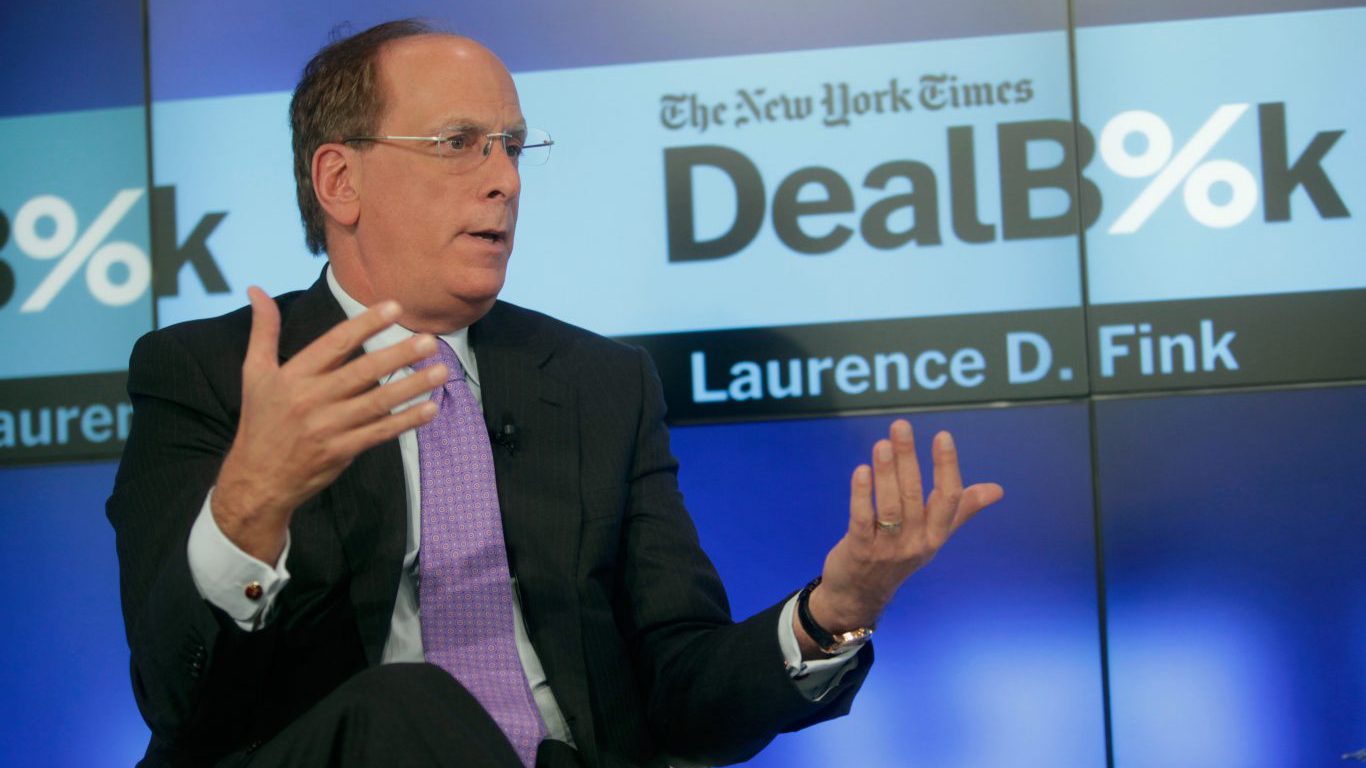
Chamath Palihapitiya posted on X: “When I’m wrong, I’m wrong. I thought when unemployment was low, GDP was hi, household income rose, it meant everyone was winning.” He added: “This was a complete and total repudiation about the state of the economy. The economy is broken.” In a follow-up, Palihapitiya argued that the American economy has decoupled the economic progress of asset owners from wage earners.
David Sacks gave a different diagnosis on X: “Republicans lost the midterms because of the war and its economic consequences. The good news is that job growth and GDP growth are still strong, and inflation will drop quickly if the war is ended now.” That inflation call is a forecast, and it depends on the war ending. Charlie Bilello noted that jobless claims had fallen to their lowest levels since the summer of 1969.
All of that can be true at the same time. Real average hourly earnings for private workers were $11.26 in September 2026 (preliminary), in inflation-adjusted dollars. That was below the $11.32 recorded a year earlier. The University of Michigan’s consumer sentiment index registered 48.1 in September, well under the level the index treats as recessionary.
Fed Survey Reveals Who Pulled Ahead
A report from the Federal Reserve, Changes in U.S. Family Finances from 2022 to 2025, shows the long-run background; it does not measure this year. Real median net worth rose 2% while mean net worth rose 7%, which means the gains were concentrated near the top. Families that usually have less wealth, including young families, renters and families without a high school diploma, saw their wealth decline. Older families and top earners posted some of the largest gains. Families 75 and older saw notable increases in net worth, and growth in retirement income played a key role.
Ownership caused the split. The share of families holding stock slipped from 58% to 56%, and the decline came from families outside the top 10% of earners. Among families that held stock, median holdings grew 36%, from $56,900 to $77,400. Retirement accounts were held by 54.9% of families. Their median balance reached $106,000, up 11%. Median net housing value for homeowners rose 5% to $230,000.
Older Households With Assets Keep Pulling Away
Recent Fed distributional data shows the trend speeding up. Households 70 and older held 33.6% of household net worth in the second quarter of 2026. Their net worth grew 17.9% from a year earlier, the fastest of any age group, and their stock and mutual fund holdings rose 33%. Households under 40 held just 6.5%.
Retirees with a brokerage account, a 401(k) and a paid-down home have risen with the market. Renters living on wages have paid higher prices out of paychecks that are flat after inflation. Many retirees, however, own few assets and depend mostly on Social Security. Its 3.6% cost-of-living adjustment will increase the average retired worker’s monthly check to $2,170 in 2027.
The practical lesson is that having assets did the heavy lifting for this generation of retirees. Near-retirees should add up how much of their wealth comes from stocks, retirement accounts, and home equity, and how much of it a market drop could wipe out in the first years of withdrawals. (That early-retirement sequence risk is the whole subject of a free guide we put together here.) Over the next two quarters, keep an eye on two numbers: whether real hourly earnings start rising again, and whether the next Fed distributional release shows older households’ share still growing.
Contact [email protected] for any questions or corrections.
Trey has been an editor and author at 24/7 Wall St. for more than a decade, where he has published thousands of articles analyzing corporate earnings, dividend stocks, short interest, insider buying, private equity, and market trends. His comprehensive coverage spans the full spectrum of financial markets, from blue-chip stalwarts to emerging growth companies.
Beyond 24/7 Wall St., Trey has created and edited financial content for Benzinga and AOL's BloggingStocks, contributing additional hundreds of articles to the investment community.
Trey's editorial expertise extends across multiple publishing environments. He served as production editor at Dearborn Financial Publishing and development editor at Kaplan, where he helped shape financial education materials. Earlier in his career, he worked as a writer-producer at SVE. His freelance editing portfolio includes work for prestigious clients such as Sage Publications, Rand McNally, the Institute for Supply Management, the American Library Association, Eggplant Literary Productions, and Spiegel.
Outside of financial journalism, Trey writes fiction and has been an active member of the writing community for years, moderating workshop sessions at regional conventions.