ServiceNow Just Dropped 30% in a Month: Stay the Course, or Just Stay Away?

This post may contain links from our sponsors and affiliates, and Flywheel Publishing may receive compensation for actions taken through them.
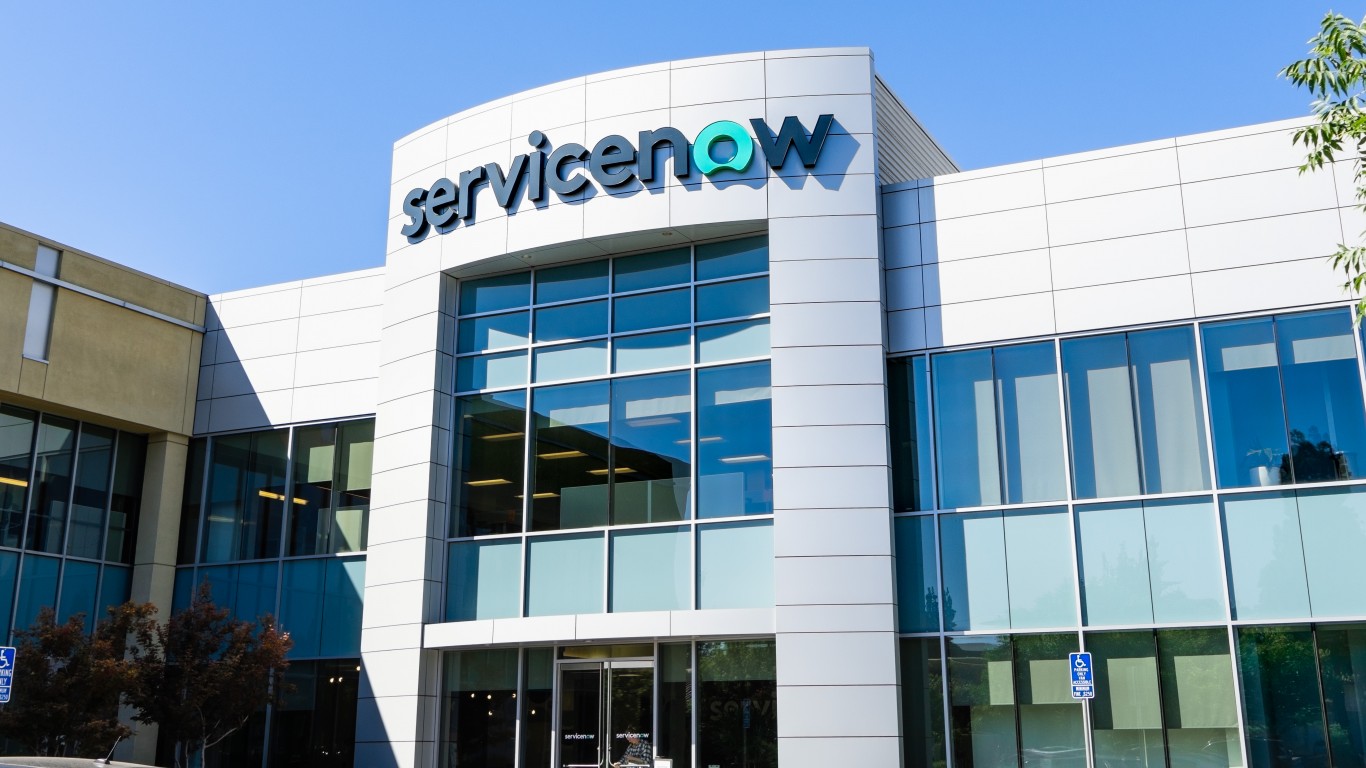
Rising AI adoption at ServiceNow (NYSE:NOW | NOW Price Prediction) hasn’t kept the market from marking the shares down hard. ServiceNow stock trades at $97.93, down 5%. That leaves ServiceNow stock down 30% over the past month, with most of the damage arriving after the company’s Q3 2026 report on October 28.
At its peak, ServiceNow stock reached a 52-week high of $175, a reminder of how much optimism it once carried. The debate over ServiceNow now centers on whether the slide is an overreaction to a noisy quarter or an early warning about growth.
How ServiceNow’s October 28 Report Sparked the Selloff

On October 28, ServiceNow reported Q3 revenue of $4.11 billion, up 20.5% year over year (YoY) and ahead of the $4.09 billion consensus estimate. ServiceNow’s adjusted earnings per share (EPS) of $1 missed expectations of $1.02, ending a six-quarter run of beats.
Moreover, acquisition costs pressured the company’s GAAP operating margin to 9.5% from 17% a year earlier. Sellers moved quickly, taking ServiceNow stock from $154.60 when the results came out to $105.12 a day later.
ServiceNow Fell Far Harder Than Salesforce and Workday
Two large enterprise software names offer a useful benchmark for ServiceNow. Salesforce (NYSE:CRM) stock is down 8% over the past month to $210.92. Meanwhile, Workday (NASDAQ:WDAY) stock is up 0.6% over the past month to $187.68. That gap suggests ServiceNow’s drop goes beyond a sector-wide selloff, even though Salesforce also lost ground.
ServiceNow sells a workflow platform that began in IT service management and now reaches into security, customer service, employee experience and AI governance, while customer relationship management remains the core of Salesforce, which is pushing its Agentforce agents across sales, service and marketing. Human resources and finance software keeps Workday focused on back-office functions, and pricing also sets ServiceNow apart, since it pairs seat-based subscriptions with consumption fees tied to AI usage.
Why ServiceNow Bulls Say Stay the Course
Bulls start with ServiceNow’s contracted backlog. Its cRPO grew 20.5% to $13.65 billion. The company’s current remaining performance obligations, meaning contracted revenue expected over the next year, matched the pace of revenue, while total remaining performance obligations reached $29.7 billion. According to president and chief financial officer Gina Mastantuono, ServiceNow’s renewal rate held at 98%. A total of 680 customers pay the company more than $5 million in annual contract value (ACV).
Management raised ServiceNow’s 2026 AI net new ACV target to $1.7 billion, its second increase this year, and agentic AI consumption in production is up more than 13x YoY. CEO Bill McDermott said, “This was more than another beat-and-raise quarter for ServiceNow, this was the inflection point for ServiceNow as the Super Intelligence Control Tower.”. An expanded OpenAI partnership, including a ServiceNow plug-in for ChatGPT, broadens the company’s reach. Lower capital spending helped ServiceNow lift its full-year free cash flow margin outlook to 36%.
After the drop, ServiceNow trades at a forward price-to-earnings (P/E) ratio of 21x. Wall Street remains upbeat on ServiceNow, with 9 Strong Buy and 35 Buy ratings against 3 Hold, 1 Sell and 1 Strong Sell. Analysts’ average price target on the company is $155.82.


Why ServiceNow Bears Say Stay Away
Skeptics zero in first on the EPS miss and ServiceNow’s Q4 2026 guidance, which calls for cRPO growth to slow to 18.5%. Mastantuono attributed that outlook to strong early renewals that pulled deals into Q3, a higher mix of on-premises deals and accounting effects. On top of that, ServiceNow absorbed $198 million of purchased intangible amortization and $87 million of severance in Q3, and its interest expense jumped to $81 million from $6 million on higher debt.
Large acquisitions such as Armis and Veza add integration risk for ServiceNow, and its goodwill rose to $10.01 billion. Fears that AI could erode traditional seat-based software pricing have weighed on the group throughout 2026. A trailing P/E of 73x still leaves ServiceNow little room for error if growth cools.
What Could Settle the ServiceNow Debate
ServiceNow now faces the question of whether Q4 subscription revenue lands within its guidance of $4.245 billion to $4.255 billion. Beyond that, cRPO trends in 2027, progress on the AI ACV target and margin recovery as acquisition costs decline could decide which camp proves right.
A conservative investment approach could make sense while watching to see how the debate over ServiceNow’s growth outlook resolves.

Contact [email protected] for any questions or corrections.
David Moadel is financial writer specializing in stocks, ETFs, options, precious metals, and Bitcoin. David has written well over 1,000 articles for leading online publications, helping investors understand markets, income strategies, and risk. His work has appeared in 24/7 Wall St., The Motley Fool, InvestorPlace, U.S. News & World Report, TipRanks, ValueWalk, Benzinga, Market Realist, MarketScreener, TalkMarkets, Finmasters, and others. With a master’s degree in education, David has taught at the elementary, high school, and college levels. That teaching background shapes his writing style: clear, educational, and practical. David has also built a loyal social-media audience by providing trustworthy financial content on YouTube, X/Twitter, and StockTwits.