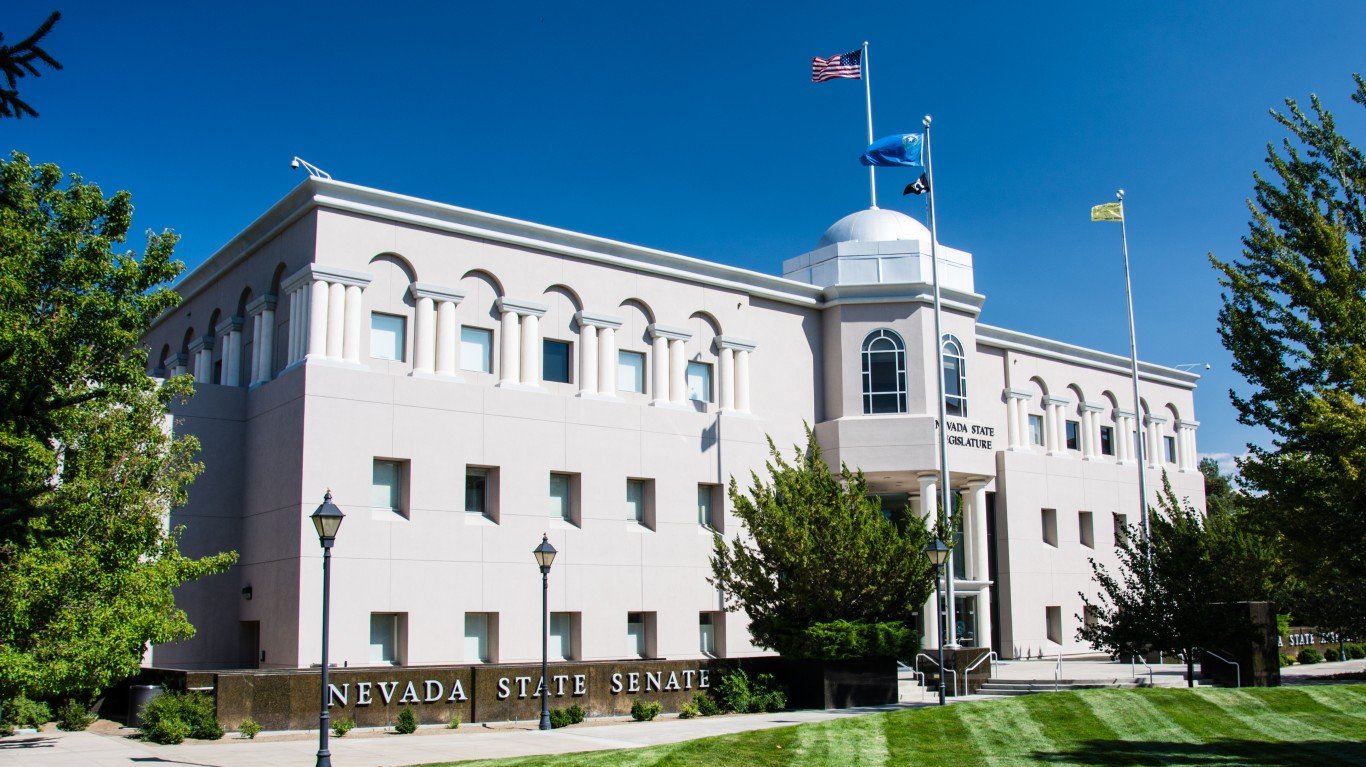
The Senate Voted 73-25 to Start Debate on a Bill Making Data Centers Pay Their Own Power Bills

This post may contain links from our sponsors and affiliates, and Flywheel Publishing may receive compensation for actions taken through them.

Senators voted 73-25 on the evening of November 9, 2026, to take up the Bipartisan American Affordability and Jobs Act. That cleared the 60-vote threshold with room to spare.
The package speeds federal permits for energy and infrastructure projects. It also requires AI companies and data center developers to pay for the power they use and for the grid upgrades they need.
The vote was cloture on the motion to proceed, a routine step that opens debate and passes nothing, and the bill still needs a final Senate vote, approval in the House, and President Trump’s signature.
The State Street Utilities Select Sector SPDR ETF (NYSEARCA:XLU) closed at $43.79 on November 9, up 1.53%, although no source tied that move to the vote. The fund is up 5.75% over the past month and 4.71% year to date.
The bill pulls utility owners in two directions. Protecting households from data center costs helps. It reduces political risk around rate cases, but higher costs for developers could slow the load growth that drove the sector’s rally.
What the Motion to Proceed Locks In and Leaves Open
Senators Shelley Moore Capito, Mike Lee, Martin Heinrich and Sheldon Whitehouse wrote the bill, and beyond the data center rules, it rewrites environmental review and transmission approval rules.
The data center provisions work through pricing. The agency would have 90 days after passage. A bill summary from MLQ.ai says FERC (the Federal Energy Regulatory Commission) must make data centers pay their share of the grid plus the new costs they cause. Earlier summaries gave a different deadline.
New data centers could not pass added costs on to other customers. They would keep paying if they leave early, and they would post financial guarantees before a utility builds for them.
FERC could also issue backstop permits for lines of 230 kV or more after one year of state inaction. The window to sue under NEPA, the federal environmental review law, would shrink from six years to 150 days.
Why Regulated Utilities Gain More Than They Lose
Regulated utilities earn a set return on what they build. Faster transmission permits therefore mean more rate base, which is the investment regulators allow them to profit on.
The financial guarantees reduce the risk of building for data center demand that never shows up. The cost-shift protection also eases voter anger that has threatened rate increases, and the Edison Electric Institute, which represents investor-owned utilities, supports the bill.
Wind, Title III and a Harder House Threaten the Bill
Brattle Group estimates data centers would pay about $35 billion more over a decade than under current law. Rhodium Group projects household bills $50 to $78 a year lower in 2040. That cost could slow some projects. The largest cloud companies already spend heavily on AI buildouts, and the power, cooling and networking suppliers behind those sites are the ones we profiled in a free report on seven AI infrastructure stocks that aren’t chipmakers.
President Trump called the bill a “BIG WIN” in a Sunday post. On Monday, he said he would not approve wind turbines and that the bill was not fully agreed. Sen. Catherine Cortez Masto said she would vote against final passage if Title III stays in.
House Democratic leader Hakeem Jeffries, who is expected to become speaker in January, said the bill falls short. The market barely responded, which makes sense for a bill that has cleared only one routine vote.
What the Bill Means for XLU and GRID Holders
XLU is a broad tool, though, because it also holds gas, water, and merchant power companies such as Atmos Energy (NYSE:ATO | ATO Price Prediction) and American Water Works (NYSE:AWK). The First Trust NASDAQ Clean Edge Smart Grid Infrastructure Index Fund (NASDAQ:GRID) is a more direct way to own transmission spending. It rose $6.72 to $160.93 on November 9.
Up to 30 more hours of debate remain, and more Senate votes are expected later in the week of November 9. This view is wrong if the Senate fails to pass the bill or removes the FERC pricing provision.
Contact [email protected] for any questions or corrections.
Omor Ibne Ehsan is a writer at 24/7 Wall St. He is a self-taught investor with a focus on growth, cyclical, and dividend equities that have strong fundamentals, value, and long-term potential. He also has an interest in high-risk, high-reward investments such as penny stocks.