Jim Cramer Says Micron Isn’t Going Away. Here’s Why He Picks It Over Sandisk

This post may contain links from our sponsors and affiliates, and Flywheel Publishing may receive compensation for actions taken through them.
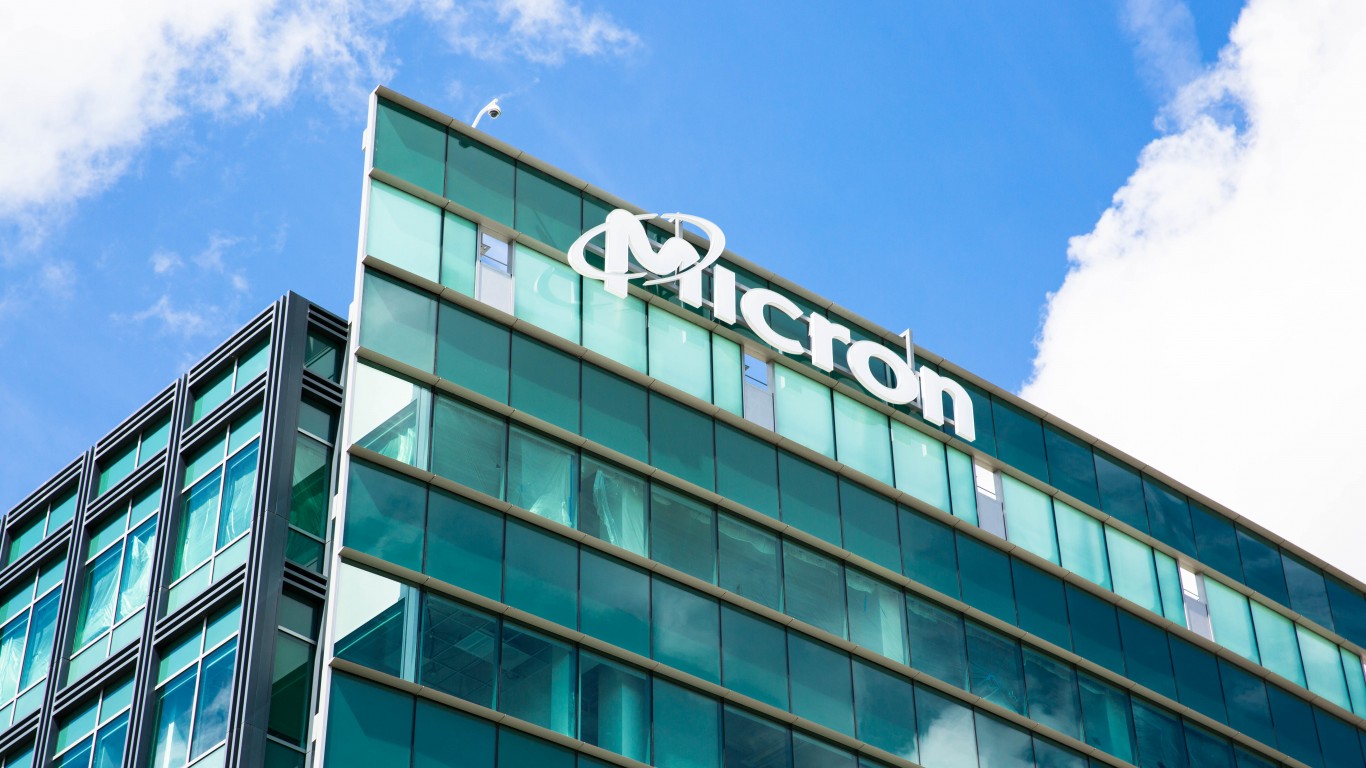
Memory stocks snapped back on Wednesday, and Jim Cramer used the rebound to pick a side within the group. He said on CNBC on November 11, 2026: “This group is not going away. SK Hynix is not going away. Micron is not going away.” Then he named his pick: “I’m not a SanDisk fan. I’m a Micron fan.” This is a long-held view. In July he told viewers, “I’ve liked Micron for ages.”
The timing matters. Micron Technology (NASDAQ:MU | MU Price Prediction) traded at $819.29 late Wednesday morning, up 12.99% on the day, after results from CoreWeave (NASDAQ:CRWV) eased fears about the AI trade. Even after that jump, Micron sits 20.37% below its level a month ago. SanDisk (NASDAQ:SNDK) rose 16.34% on the day but is still down 36.75% over the past month.
Why Memory Sits at the Center of the AI Buildout
An AI chip is only as fast as the memory feeding it data. Accelerators rely on stacked high-bandwidth memory (HBM), while servers running AI agents need standard DRAM and solid-state storage. On its fiscal Q4 call, Micron management called DRAM “the principal constraint versus logic or power to the data center” and said it has “no line of sight to when supply and demand balance.” It expects tight conditions through 2028.
Micron’s Results Support Cramer’s Preference
Micron has beaten EPS estimates for eight consecutive quarters. In its fiscal Q4 2026 earnings release, revenue reached $54.23 billion against a $50.97 billion estimate, up 379.3% year over year. Non-GAAP EPS of $33.42 beat the $31.35 estimate, and gross margin expanded to 87.0% from 45.7% a year earlier. Full-year free cash flow totaled $62.31 billion.

Guidance for fiscal Q1 2027 calls for revenue of $61.5 billion ± $1.5 billion and EPS of $38.15 ± $1.00. On fiscal 2026 non-GAAP EPS of $75.52, the stock trades at about 11x trailing earnings.

What Micron Has That SanDisk Lacks
Micron sells DRAM, HBM, and NAND. SanDisk sells NAND flash and storage only, so it has no exposure to HBM, the highest-value layer of AI memory. Micron is co-designing a custom HBM4E product with NVIDIA (NASDAQ:NVDA), which management called the first major custom HBM product in the market. It has also signed 26 strategic customer agreements through 2030 that cover about 35% of sales by then.
SanDisk has a structural dependency: “All of our flash memory wafers are currently obtained from Flash Ventures,” its joint venture with Kioxia. Its Consumer revenue growth came in at -39%.
Counterargument Carries Real Weight
SanDisk has outperformed. It is up 321.49% year-to-date, compared with 187.28% for Micron. Datacenter revenue rose 61% sequentially to $4,802 million, and fiscal Q2 2027 guidance calls for a GAAP gross margin of 84.4%-85.4%. Micron itself expects NAND industry growth in the mid-20% range in 2027 and 2028.
Doubts about Micron are spreading too. Barron’s reported that Goldman Sachs prefers other memory stocks, and bears on X have described a chain of data center cancellations that would hit Micron before NVIDIA. Memory has always been cyclical. Micron’s Idaho fab should produce first wafers in mid-calendar 2027, and new clean rooms come online in late 2028 and beyond. When that supply arrives, pricing power could fade.
What to Watch Before Micron’s Next Report
Management expects prices to keep rising at a more moderate pace. Investors should track whether Micron hits its fiscal Q1 targets, whether more customers sign multi-year agreements, and how the NVIDIA HBM4E program advances. Cramer is paying up for breadth and contracted visibility. SanDisk holders are counting on enterprise SSD demand to keep accelerating. The past month shows both stocks can fall fast when fears of a return to AI spending return.
Contact [email protected] for any questions or corrections.
Chris Lange is a financial and geopolitical writer with more than a decade of experience covering a myriad of topics. He has published thousands of articles for 24/7 Wall St., with past coverage focused heavily on stocks, IPOs, healthcare, defense, global affairs, and technology.
His work has been quoted, or referenced by a number of outlets including Business Insider, USA Today, Yahoo Finance, MSN, The Motley Fool, and many other publications. A graduate of Southwestern University, he studied business with a focus on investments and has previous experience in banking and startups.
When not reading or writing the news, he is following his passion for Lacrosse, playing chess, or building solar projects with his dad.