Wall Street’s Newest Teradyne Bull Just Sent a $2 Billion Signal That the Stock’s 56% Crash Went Too Far

This post may contain links from our sponsors and affiliates, and Flywheel Publishing may receive compensation for actions taken through them.

Teradyne (NASDAQ: TER) jumped 8.3% to $265.78 on Wednesday after Jefferies, the newest Wall Street firm to rate the chip-testing company a buy, started coverage with a $284 price target and a note that puts Nvidia on the way to becoming a revenue stream of more than $2 billion a year for Teradyne by around 2029, a call on a stock that had crashed 56% between its June 30 record close of $483.84 and last Thursday’s close of $212.74. Jefferies analyst Dushyant Ailani put the case in one line: “AI has made TER a compute test company. We initiate at BUY, $284.00 PT.”
In after-hours trading at 6:05 PM ET, Teradyne was at $260.19, 2.1% below Wednesday’s close, as Nvidia fell about 8% on a New York Times report of a second Jensen Huang affair.
Jefferies’ call reads as a verdict that the selloff went too far: the firm called a stock that had fallen about half from its summer record an attractive entry point and put a target above the price. The limit of that reading is the size of the call. The $284 target sits about 7% above Wednesday’s close and more than $100 below the average target of the analysts already covering the stock, and the $2 billion Nvidia figure in the note is a projection for 2029 against about $50 million this year.
For a retiree who owns the stock, Wednesday was a $20,380 day. Consider a 67-year-old retired test engineer in Massachusetts, where Teradyne is based, who bought 1,000 shares in January 2016 at $20.34 and still holds them in a taxable brokerage account alongside a $1.5 million rollover IRA. He and his wife are a scenario built to show the decision; the share prices are the stock’s real closes, and every figure below is computed from them.
What Jefferies sees
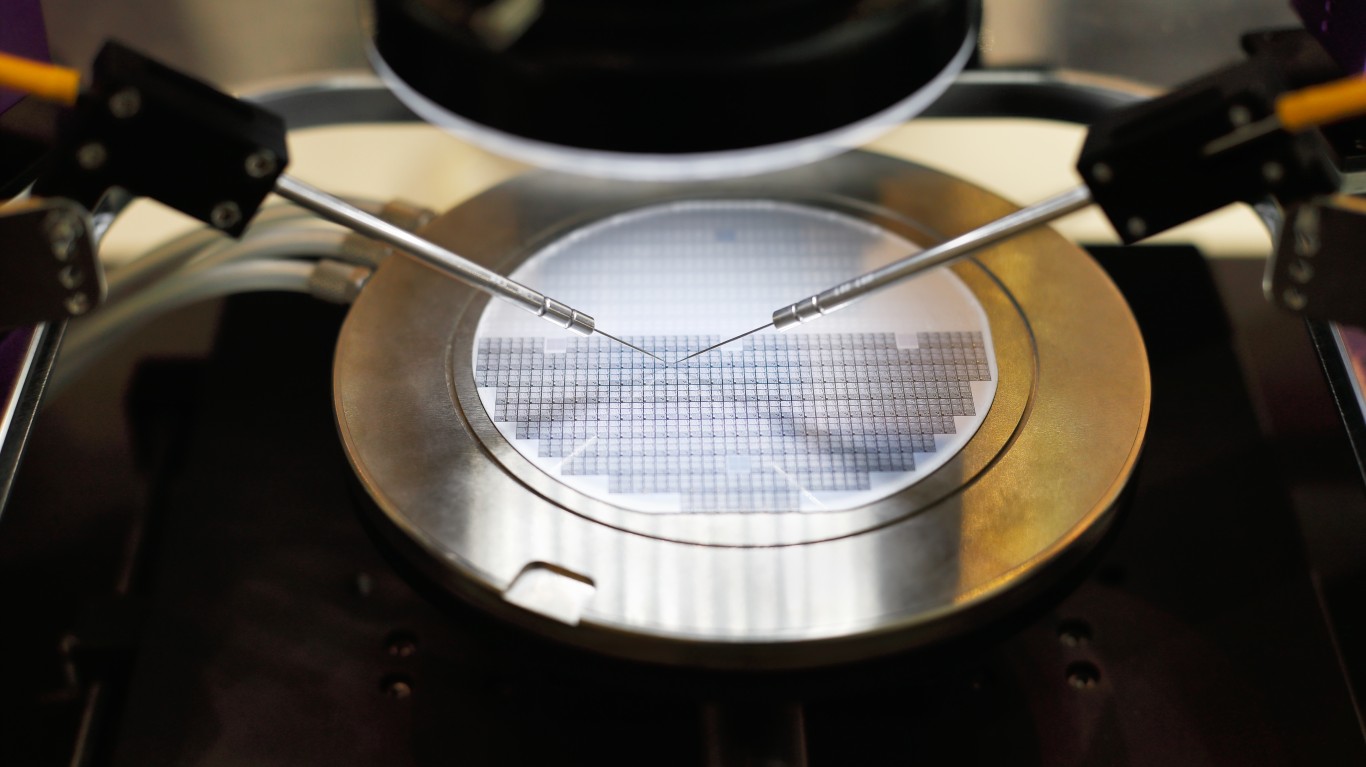
The note makes Teradyne a way to own the testing step of the AI build-out. Every advanced chip is tested before it ships, and Jefferies expects the automated test equipment market to grow from about $9 billion in 2025 to about $25 billion by 2030. It expects Teradyne’s share of the system-on-chip test market to rise from about 27% to about 34% as Nvidia and the big cloud companies add a second supplier of test equipment, which would take Teradyne’s system-on-chip revenue from about $1.9 billion to about $6.9 billion over the same period.
Nvidia is the specific bet. Jefferies estimates Teradyne could win about 30% of Nvidia’s test equipment spending by around the end of 2029, a revenue stream of more than $2 billion, against about $50 million in 2026. That is 40 times this year’s figure, and it rests on contracts that have not been won yet. For 2027 and 2028, Jefferies forecasts revenue of $6.7 billion and $8.5 billion, about 2% and 5% above the Street.
The company’s own numbers give the call its footing. In the third quarter, reported October 27, revenue rose 70% from a year earlier to $1,306 million, adjusted earnings came to $2.29 a share, and AI-related revenue was about $500 million. Teradyne guided fourth-quarter revenue to $1.25 billion to $1.35 billion and the full year to about $5.2 billion with adjusted earnings of $9.41 a share at the midpoint, which puts Wednesday’s close at about 28 times this year’s earnings.
What the call leaves out is the gap between Jefferies and everyone else. The average target among the analysts already covering Teradyne is $397.73, according to MarketBeat, about $114 above Jefferies’ number and roughly 50% above Wednesday’s close. Jefferies is a new bull with a target more than $100 below the Street average.
The round trip that made the stock cheap
Teradyne ended 2024 at $125.92 and closed at a record $483.84 on June 30, a gain of 284% in 18 months. From there it fell 56% to $212.74 by November 5, a day it lost 15.2% in the chip selloff. It then rose 12.7% on Monday and 8.3% on Wednesday. From the November 5 close it is up 24.9%, it is up 37.3% for the year and 50% over 12 months, and it is still 45% below the record.
This is a stock that moves in lurches. In 217 sessions this year it has closed 8% or more away from the prior day 25 times, 13 up and 12 down, about one session in nine. The biggest gain was 14.4% on July 30 and the biggest loss was 19.4% on April 29.
What history says after a jump this big
Since 2010 the stock has jumped 8% or more in a session 37 times, including Monday and Wednesday. Of the 24 jumps with a full year of data behind them, the stock was higher a month later 20 times, with a median gain of 4.8%; higher three months later 16 times, median 11%; and higher a year later 18 times, with a median gain of 18.5%.
This year’s record is the other side of that coin. Teradyne jumped 8% or more 11 times before this week. A month after those jumps it was higher 6 times, with a median move of 0.4%. Three months after, it was higher 4 times, with a median loss of 2.9%. And Wednesday’s close sits below the closing price on every one of those 11 days, because the jumps came on the way up to a peak the stock has since lost nearly half of.
| Jump day | Gain that day | Close | A month later | Three months later |
|---|---|---|---|---|
| February 3 | 13.4% | $282.98 | 8.0% | 26.2% |
| February 6 | 10.7% | $300.11 | -1.2% | 19.9% |
| March 9 | 8.6% | $296.44 | 20.9% | 26.4% |
| April 8 | 11.8% | $358.29 | 0.4% | -1.9% |
| April 30 | 12.1% | $343.47 | 7.6% | 6.4% |
| May 26 | 8.6% | $389.14 | 21.3% | -5.8% |
| June 11 | 9.7% | $381.40 | -10.6% | -2.9% |
| June 25 | 10.5% | $471.96 | -29.1% | -17.9% |
| July 21 | 12.1% | $374.04 | 2.4% | -10.0% |
| July 30 | 14.4% | $365.49 | -4.3% | -18.9% |
| August 4 | 10.3% | $403.56 | -16.1% | -33.3% |
The long record favors the buyer, and this year’s record says a single big day settles nothing. Both are true, and the second one is the reason to size the position before deciding whether Jefferies is right.
What 1,000 shares are worth to him
| Date | Price | 1,000 shares | Change |
|---|---|---|---|
| January 4, 2016 (bought) | $20.34 | $20,340 | |
| June 30 (record close) | $483.84 | $483,840 | 24% of the couple’s money |
| November 5 | $212.74 | $212,740 | $271,100 below the record |
| November 10 | $245.40 | $245,400 | |
| November 11 | $265.78 | $265,780 | $20,380 on the day |
| At Jefferies’ $284 target | $284.00 | $284,000 | $18,220 more |
| At the Street’s $397.73 average | $397.73 | $397,730 | $131,950 more |
The shares are worth 13 times what he paid, and with the IRA they make up 15% of the couple’s $1,765,780. The dividend is $0.13 a quarter, declared November 9 and payable December 16, so the position pays $520 a year, a yield of 0.2%. Nobody owns Teradyne for the check; they own it for the next leg, and the question is how much of their retirement should ride on it.
Sell, trim or hold
Assume the couple has $100,000 of other income from a pension and Social Security and $65,000 of taxable income after deductions. Selling all 1,000 shares at Wednesday’s close brings $265,780 and a long-term gain of $245,440. On 2026 federal rates for a joint return, the first $33,900 of the gain fills the rest of the 0% bracket, which ends at $98,900 of taxable income, and the remaining $211,540 is taxed at 15%, or $31,731. The sale also lifts their income to $345,440, so the 3.8% net investment income tax applies to the $95,440 above $250,000, another $3,627. The federal bill is $35,358, before any state tax, and they keep $230,422. That income also crosses the Medicare surcharge line, which is $218,000 for a couple on this year’s brackets, so their Part B premiums two years out would carry a surcharge.
Selling 500 shares brings $132,890 on a gain of $122,720. The tax is $13,323 with no surtax, and they keep $119,567 in cash plus 500 shares worth $132,890. That is $22,035 less tax than the full sale, and it cuts the stock to about 8% of their money. Their income lands at $222,720, just over the surcharge line, and selling 480 shares instead ($127,574) keeps it under. A retiree who wants out of more than that has a calendar to use: 480 shares in December and the rest in January keeps each year’s income under the line.
Holding all 1,000 shares is a bet on the long record and on Jefferies. The $284 target is worth $18,220 more; the Street average is worth $131,950 more. A repeat of November 5 would take $40,504 in a session. Nothing in Wednesday’s note changes the fact that a 15% position in one stock that moves 8% every nine sessions is a decision about the whole retirement, and it is the kind of decision that is easier to make on a day the stock is up than on the day it is down.
The bottom line
Jefferies started Teradyne at buy with a $284 target, the stock jumped 8.3% to $265.78, and it is still 45% below its June record. The note says AI has turned the company into a compute test business with a possible $2 billion Nvidia revenue stream by 2029, and it also carries a target more than $100 below the Street average. For a retiree holding 1,000 shares bought at $20.34, Wednesday added $20,380 and the position sits at $265,780. History since 2010 says a jump this size is usually followed by more gains; 2026 says the opposite happened 11 times running. Selling half costs $13,323 in federal tax and takes the stock to 8% of the couple’s money; selling 480 shares keeps them under the Medicare surcharge line; holding all of it keeps $265,780 on the table for a stock that can lose $40,504 in a day. Decide the size first. Let Jefferies argue about the target.
Contact [email protected] for any questions or corrections.
I've been writing about stocks and personal finance for 20+ years. I believe all great companies are tech companies in the long run, and I invest accordingly.