Warren Buffett Says His Favorite Holding Period Is Forever. A Secretary Who Paid $180 for 3 Shares in 1935 and Never Sold Died Worth $7 Million. Here’s What Her Rule Does for $600,000 in One Stock Today

This post may contain links from our sponsors and affiliates, and Flywheel Publishing may receive compensation for actions taken through them.
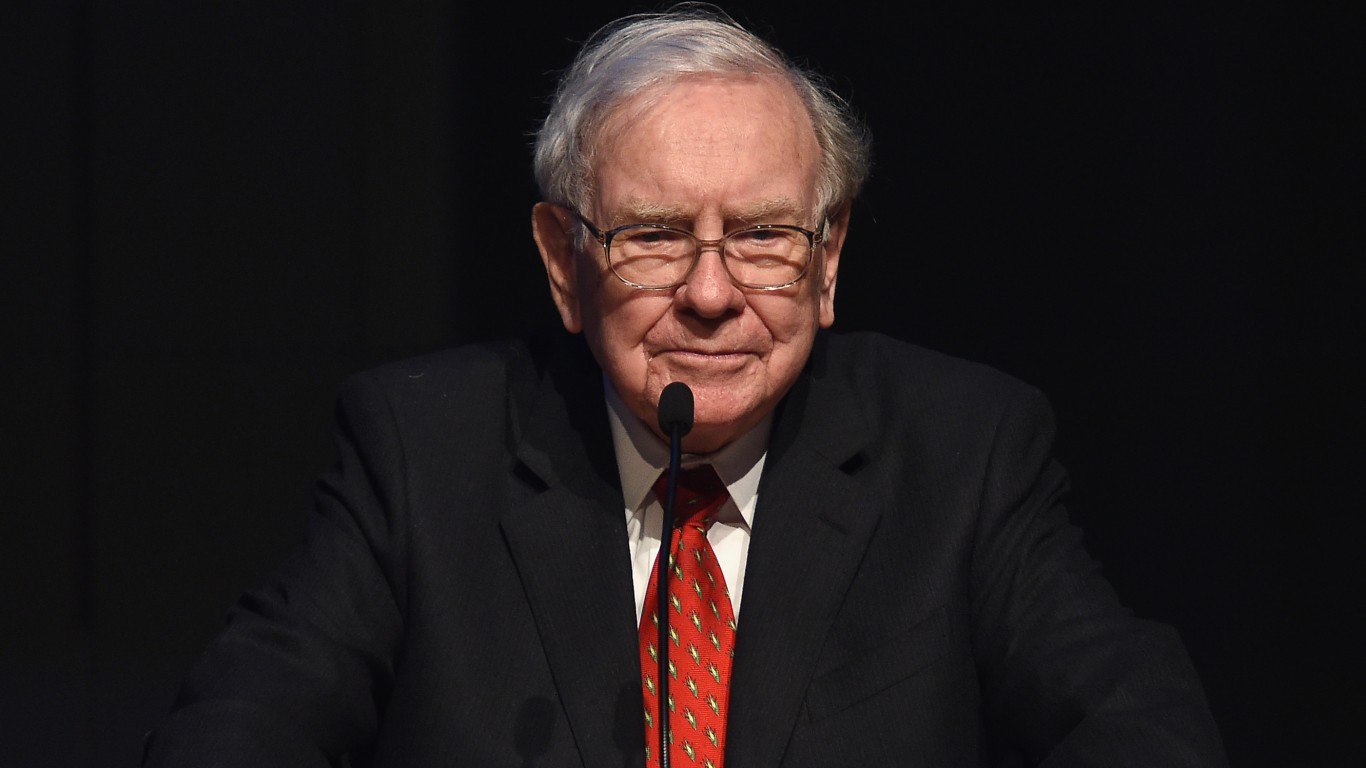
Warren Buffett wrote in his 1988 letter to Berkshire Hathaway shareholders that "when we own portions of outstanding businesses with outstanding managements, our favorite holding period is forever." The best proof of that rule was a secretary in Lake Forest, Illinois, named Grace Groner. In 1935 she paid $180 for three shares of Abbott Laboratories, the company that employed her. She never sold a share and reinvested every dividend. When she died in January 2010 at 100, her estate came to $7 million, and she left it all to Lake Forest College, her alma mater, through a foundation she had set up for the purpose.
The Chicago Tribune told her story in March 2010: 43 years as a secretary at Abbott, a one-bedroom cottage that had been willed to her, clothes from rummage sales, no car. "Oh, my God," the college’s president, Stephen Schutt, said when he learned the amount. About 1,300 students have since taken internships and study abroad on her money.
Her $7 million reads as the strongest case anyone has made for Buffett’s rule that the best holding period is forever, and the limit of that reading is that she held one company that kept raising its dividend for 54 straight years, so the rule only did its work because the company did. Here is what her $180 became, where the money came from, what the same rule costs, and what it would do for a reader holding one old stock today.
What $180 Became, and Where It Came From
Three shares at $60 in 1935, $7 million in January 2010: that is a multiple of 38,889 times over 75 years, or 15.1% a year compounded. The same $180 in the S&P 500 with every dividend reinvested, from the start of 1935 through the end of 2009, would have grown to about $341,282, by Damodaran’s annual return series at NYU Stern, which is 10.6% a year. She beat the index 21 times over.
The part most retellings skip is where the money came from. Abbott’s own investor site lists eight stock splits since she bought in, one 3-for-1 in 1964 and seven 2-for-1 splits between 1975 and 1998, a factor of 384. Splits alone would have turned her three shares into 1,152 shares. At Abbott’s $53.99 close on December 31, 2009, those were worth $62,196. Price appreciation by itself gave her 346 times her money, or 8.1% a year.
Everything else, 99.1% of the estate, came from the dividends she reinvested, and from the dividends those new shares paid in turn. At $53.99 a share, $7 million is about 129,654 shares, 113 times what the splits alone would have left her. The dividend, reinvested without a break for 75 years, was the engine. The stock price was the fuel.
Her $180 in 1935 is about $4,426 in today’s dollars, by the consumer price index. Leave $4,400 alone for 40 years at the index’s 10.6% and it becomes about $246,396.
How She Lived
Groner and her twin sister were born on a farm in Lake County in 1909 and orphaned at 12. A local family, the Andersons, took them in and paid for Lake Forest College, where both graduated in 1931. She went to work at Abbott the same year and bought her shares four years later. The foundation’s own page says she "lived humbly and kept her wealth a secret." She gave $180,000 to help start a scholarship fund at the college while she was alive and went to its football games. Her longtime friend and lawyer, William Marlatt, told the Tribune that "she did not have the (material) needs that other people have." The $7 million works out to $162,791 for every year she worked at Abbott. She never earned anything like that. Her shares did.
The Part Her Story Leaves Out
Abbott has paid 410 consecutive quarterly dividends since 1924 and has raised its payout for 54 straight years. Its current dividend is $2.52 a year, $0.63 a quarter, a 6.8% raise over last year, which at Wednesday’s close of $109.29 is a 2.3% yield. On the 129,654 shares her estate held in 2010, today’s dividend would be about $326,727 a year. The stock has doubled since the end of 2009.
That record is the reason her rule worked, and it is also why the rule is dangerous in the wrong hands. Every company that paid a dividend in 1935 looked solid to the secretary who typed its letters, and many of them are gone. Even Abbott, on month-end prices with dividends reinvested, fell 36.8% between January 2002 and February 2003. She was 93 that year, with everything she owned in one stock. She did nothing, and that was the right call for her, because she had a pension and Social Security and no plan to spend the shares.
What Her Rule Does for a Reader’s Dollars Today
Take a retired engineer, 67, and his wife, 66, with $2.4 million, who did a smaller version of what she did: $60,000 of one dividend stock bought through an employee plan in the 1990s, now worth $600,000, 25% of everything they own, paying $13,800 a year. He draws $70,000 a year from his IRA and the couple collects $40,800 in Social Security. The stock is their only concentrated position, and the question that comes up every December is whether to sell it. If you hold something like it, the numbers below are yours too.
Groner’s rule says hold, and the tax code agrees with her more than most holders realize. Selling the whole position this year realizes a $540,000 long-term gain and lifts their adjusted gross income from $118,480 to $658,480. The $12,000 senior deduction they get as a couple over 65 phases out completely. The gain stacks on top of their ordinary income, most of it at 15% and the last $9,280 at 20% above the $613,700 line, for $79,076 of capital gains tax. The 3.8% net investment income tax, which starts at $250,000 of income for a couple, adds $15,522. Their federal bill goes from $6,366 to $102,404, so the sale costs $96,038 in federal tax, 16% of the position, before any state tax, and it puts their 2028 Medicare premiums into the surcharge tiers that begin at $218,000 of joint income.
If they hold the shares until the second of them dies, the $540,000 gain is never taxed: their children inherit the stock with its cost basis stepped up to the market value on that date. Groner’s route did the same thing a different way. Her foundation received the shares, and no capital gains tax was ever paid on 75 years of compounding. For a long-held position, her rule is a tax plan as much as an investment plan.
The cost of the rule is the one she accepted and most retirees should not. A 36.8% fall in the stock, Abbott’s own worst stretch this century, would take their $600,000 position to $379,209, a $220,791 loss and a 9% hit to the whole portfolio in a year when they also need to draw $70,000 from it. That is survivable at 25% of your money. It would not be at 80%.
The middle path uses her patience and the tax code together. The 0% rate on long-term gains runs to $98,900 of taxable income on a joint return. After their ordinary income and dividends, the couple has room for $27,920 of gains a year at 0%, so they can sell $31,022 of the stock each year and pay no federal tax on it, without touching the senior deduction or the Medicare lines. At that pace the position is half its size in 10 years, the rest waits for the step-up or goes to a charity, and the dividend keeps coming the whole time.
The Bottom Line
Grace Groner turned $180 into $7 million by buying three shares of one good company in 1935, reinvesting every dividend, and never selling through a world war, a string of recessions and a 36.8% fall in her nineties. Splits made her three shares 1,152. Dividends made them 129,654. The same $180 in the index would have been $341,282. Buffett’s forever rule is the right description of what she did, and the honest footnote is that it needs a company that lasts and a holder who never needs the money. If you hold one old stock worth $600,000, holding saves about $96,038 in federal tax against selling it all this year, and selling $31,022 a year under the 0% line keeps the rule and loses the risk.
Contact [email protected] for any questions or corrections.
I've spent more than 15 years inside enterprise software, working alongside the finance, sales operations, and HR leaders who run the revenue engines at some of the largest tech companies in the country.
My day job is helping enterprise executives make smarter decisions about retention, compensation, and growth. These are the same operational levers that show up in every earnings report investors actually read. That perspective shapes my writing for 24/7 Wall St.
The headline numbers are easy. The interesting stuff is underneath: how companies make money, what executives are worried about, and what any of it means for the person checking their 401(k) on a Sunday afternoon. I write about personal finance and business as someone who has spent her career inside the rooms where these decisions get made.