Divided Government Is Back: 4 Steady Passive Income Dividend Stocks to Own

This post may contain links from our sponsors and affiliates, and Flywheel Publishing may receive compensation for actions taken through them.
Voters handed Democrats control of both the House and the Senate while the White House remains under Republican control, according to the post-election landscape. Divided government usually means legislative gridlock, and gridlock favors companies whose cash flows depend on customers, state regulators, and operating discipline. Companies that need a new law to pass have a harder time. Each of the four picks below comes from a different sector: insurance, water utilities, packaged food, and railroads. All four pass a dividend-safety test, and one has raised its payout for 44 consecutive years.
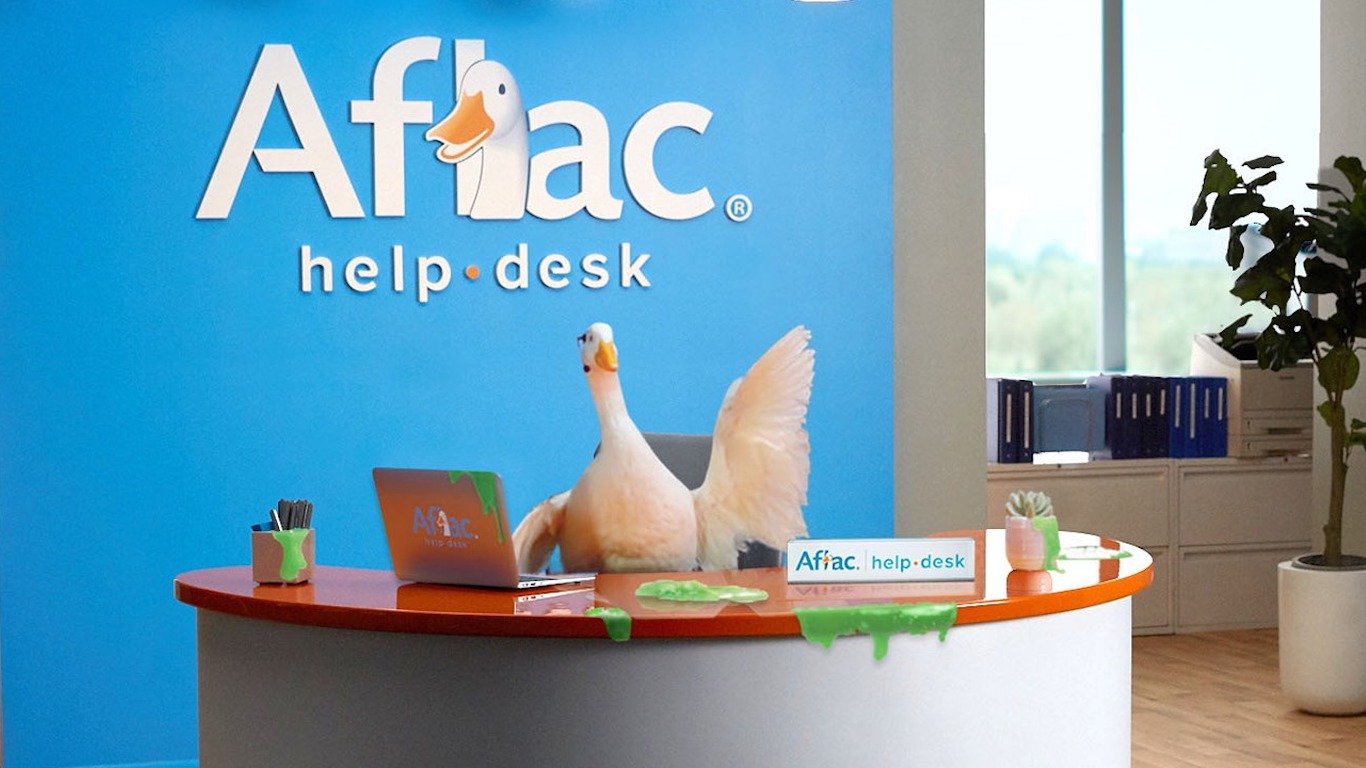
Aflac: 44 Years of Raises Backed by Fortress Capital
Aflac (NYSE: AFL | AFL Price Prediction) yields 1.92%, the lowest in this group. Its safety profile is the reason it belongs here. The annual dividend of $2.41 per share uses about 35% of trailing EPS of $6.85, which leaves a wide buffer. In the third quarter alone, Aflac returned $1.1 billion to shareholders: $804 million in buybacks and $305 million in dividends.
The balance sheet supports that pace. Available liquidity stood at $2.7 billion, and adjusted leverage of 22.6% falls inside the company’s 20% to 25% target range. Combined RBC was slightly above 575%. The quarterly payout rose from $0.58 to $0.61 this year, and the chief executive said, “We treasure our 2026 milestone of 44 consecutive years of dividend increases.”
Washington angle: States and Japan do most of the regulation for Aflac’s products. A Democratic Congress will likely keep health care costs at the center of oversight hearings, but a split government makes sweeping changes to the employer benefits market unlikely. Rising costs also feed demand. Management noted that “rising health care costs continue to place pressure on household budgets, increasing the need for supplemental insurance solutions.”
Bull case: U.S. sales rose 3.5%, group earned premium grew 17%, and a Japan reinsurance transfer should release about $1 billion of capital over time. The stock trades at 15 times forward earnings.
Risk: Japan concentration exposes reported results to yen weakness. The yen averaged 158.49 per dollar in the quarter.
American Water Works: A Regulated Monopoly Targeting 7% to 9% Dividend Growth
American Water Works (NYSE: AWK) yields 2.31%. The dividend uses about 60% of trailing EPS of $5.78, a typical level for a regulated utility. The quarterly payout rose to $0.895 from $0.8275. The company’s dividend history shows an annual increase in a record going back to 2009, when the quarterly payment was $0.20.
Free cash flow is thin by design. Utilities fund pipe replacement with debt and equity, and American Water plans to invest more than $20 billion from 2026 through 2030. State regulators reimburse that spending through rates, and the company has secured $284 million of additional annualized revenues so far this year. Debt-to-capital was 58%, and management expects that ratio to improve as forward equity settles. The company narrowed adjusted EPS guidance to $6.07 to $6.12 and set next year’s standalone range at $6.53 to $6.63.
Washington angle: State utility commissions set water rates, so federal gridlock barely touches the earnings engine. Lawmakers from both parties have historically supported funding for drinking water infrastructure. A Democratic Congress is likely to defend PFAS and lead-pipe standards, and American Water already includes that compliance work in its long-term plan.
Bull case: Chief Executive John Griffith said, “We are again affirming our long-term targets, including 7% to 9% EPS and dividend per share growth.” That gives income investors a dividend growth path tied to rate base growth.
Risk: The pending water utility merger still needs final approvals. The deal is expected to close by the end of the first quarter of 2027, and settlement talks in New Jersey were still ongoing.
Hormel Foods: A 5.25% Yield and 392 Straight Quarterly Payouts
Hormel Foods (NYSE: HRL) is the high-yield name in this group at 5.25%, and its coverage needs a closer look. Trailing GAAP EPS of $0.62 falls short of the $1.168 annual dividend. One-time items drove that gap: a $56 million Brazil sale loss, a $48.2 million Indonesia impairment, and a $37.5 million litigation settlement. Measured against raised adjusted EPS guidance of $1.45 to $1.51, the dividend uses roughly 77% to 81% of earnings.
Cash flow is stronger than the GAAP line. Operating cash flow reached $240.6 million, up 54%, against capital spending of $68 million. Hormel held $840 million of cash. Management noted it had reached its “392nd consecutive quarterly payout.” Raises have been small, though: the quarterly dividend went from $0.29 to $0.2925.
Washington angle: A Democratic Congress has the most influence on Hormel through the farm bill, nutrition assistance funding, and antitrust scrutiny of protein processors. Gridlock tends to keep food assistance programs running at current levels, and that supports grocery demand. Tariff policy remains mostly with the White House.
Bull case: Foodservice posted its 12th consecutive quarter of organic growth, and adjusted operating margin expanded to 9.0% from 8.4%. The stock trades at 14 times forward earnings. Incoming CEO John Ghingo said, “The dividend continues to be very important to us.”
Risk: Management described consumers as stressed, and net sales fell 2.4%. If volumes keep slipping, dividend coverage gets tighter.
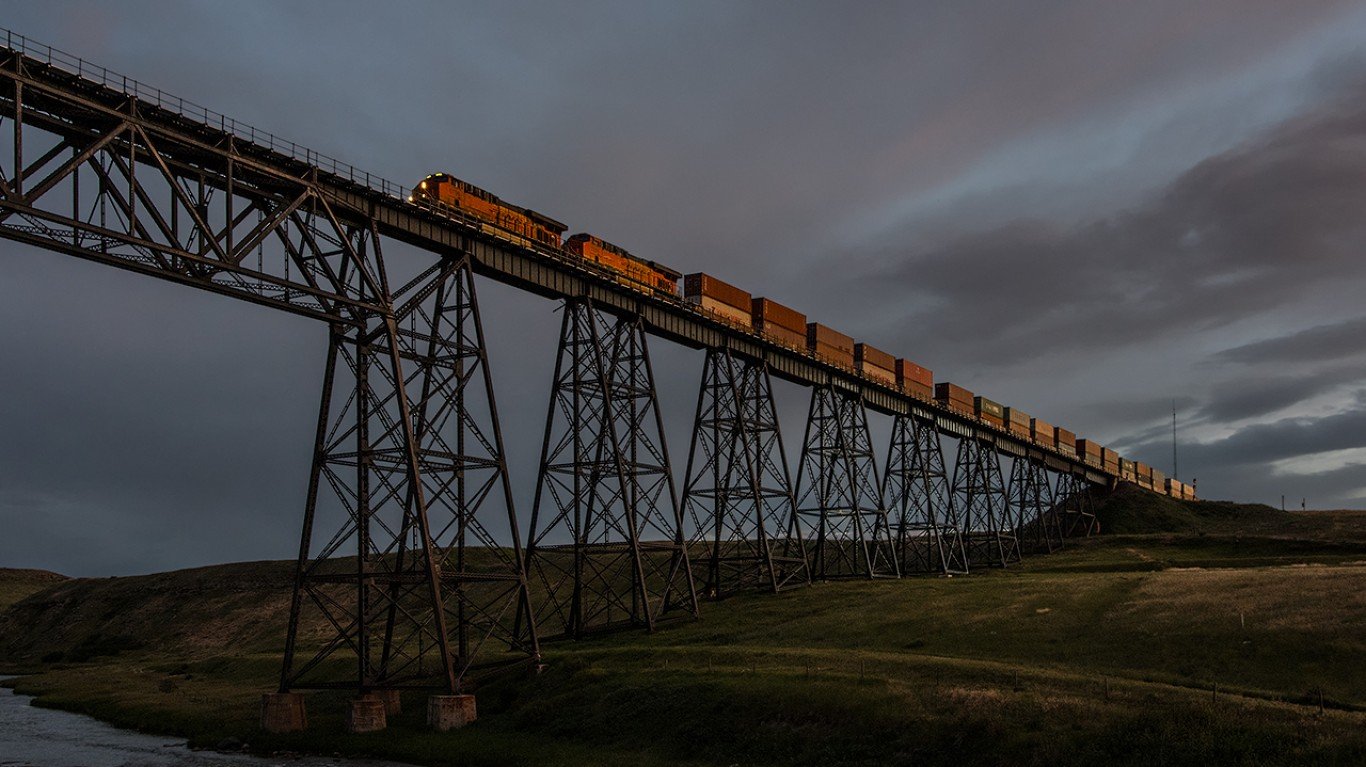
Union Pacific: 20 Straight Annual Raises Powered by Record Productivity
Union Pacific (NYSE: UNP) yields 1.87%, and its dividend uses only about 43% of trailing EPS of $12.98. The railroad raised its quarterly dividend 3% to $1.42. That marked its 20th consecutive year of annual dividend increases.
The cash flow is substantial. Cash from operations rose 18% to $8.3 billion, and free cash flow totaled $2.4 billion. The company held $3.1 billion in cash and short-term investments, with adjusted debt-to-EBITDA of 2.4x. Buybacks fell to $26 million through nine months, compared with $2.679 billion a year earlier, as the company saves cash for its pending railroad merger. Pausing buybacks keeps more cash available to protect the dividend.
Washington angle: The Surface Transportation Board decides on the merger. Democratic-led committees could still hold oversight hearings on rail consolidation and push rail safety bills. Gridlock makes it hard for any sweeping rail legislation to reach the president’s desk.
Bull case: Revenue climbed 15.3% to $7.197 billion, and adjusted EPS of $3.53 beat estimates. CFO Jennifer Hamann said, “Our quarterly pricing gains continue to exceed our inflation dollars.”
Risk: Debt taken on for the pending acquisition could put pressure on the credit rating, and integrating the two railroads carries execution risk.
Gridlock-Proof Income Across Four Sectors
These four companies earn their cash from sources a split Congress has little power to disrupt: Japanese and American policyholders, state utility commissions, grocery and foodservice demand, and freight contracts priced above inflation. Aflac and Union Pacific have the widest payout buffer, and American Water offers the clearest dividend growth target. Hormel pays the most current income while it works through charges tied to portfolio restructuring. Together, they show how dividend payers can keep paying while Washington remains stuck.
Contact [email protected] for any questions or corrections.
Lee Jackson has covered Wall Street analysts' equity and debt research and equity strategy daily for 24/7 Wall St. since 2012. His broad, diverse career, including a stint as creative services director at an NBC affiliate in Austin, Texas, gives him unique insight into the financial industry.
Lee Jackson's journey in the financial industry spans more than 30 years, including nearly two decades as an institutional equity salesperson at Bear Stearns, Lehman Brothers, and Morgan Stanley. His career spanned pivotal sell-side Wall Street events, from the dot-com rise and bubble to the Long-Term Capital Management debacle, 9/11, and the Great Recession of 2008. This reflects his resilience and adaptability amid market volatility.
Lee Jackson’s practical financial industry experience, gained through a career at some of the biggest banks and brokerage firms, is complemented by a lifetime of writing across various platforms. This unique combination allows him to shed light on the intricacies of Wall Street in a way only someone with deep insider experience and knowledge can. Moreover, his extensive network across Wall Street continues to provide direct access for him and 24/7 Wall St., a privilege few firms enjoy.
Since 2012, Jackson’s work for 24/7 Wall St. has been featured in Barron’s, Yahoo Finance, MarketWatch, Business Insider, TradingView, Real Money, The Street, Seeking Alpha, Benzinga, and other media outlets. He attended the prestigious Cranbrook Schools in Bloomfield Hills, Michigan, and has a degree in broadcasting from the Specs Howard School of Media Arts.