4 Dividend Stocks That Can Thrive Under a Democratic Congress

This post may contain links from our sponsors and affiliates, and Flywheel Publishing may receive compensation for actions taken through them.
Democrats now control both the House and the Senate, and a Republican still holds the White House (divided government). Divided government usually produces gridlock: sweeping tax revisions stall, oversight hearings increase, and new spending programs struggle to pass. For income investors, that setting favors companies that fund dividends from recurring cash flow and need no new law to keep growing. Each of the four stocks below comes from a different sector, and each pairs well-covered payouts with a verified record of dividend growth. One of them has raised its dividend for 49 consecutive years[1].
Texas Instruments: Domestic Chip Capacity Funds a 23-Year Raise Streak
Texas Instruments (NASDAQ: TXN) | TXN Price Prediction yields about 2.02%, based on its annualized forward dividend of $6.08 per share and a recent price of $300.60. In September, the company raised the quarterly payout to $1.52[2], which the CFO called “our 23rd consecutive year of dividend increases.”
Dividend safety: Free cash flow over the trailing 12 months reached $8.4 billion, up from $2.4 billion[2] a year earlier, and TI returned $5.8 billion[3] to shareholders over that period. Trailing dividends of $5.78 equal about 75% of trailing EPS of $7.75. That ratio is high but falling as earnings recover. Free cash flow rose because capex dropped to $463 million from $1,197 million once the 300mm wafer expansion wound down. TI holds $8.1 billion[2] in cash and short-term investments against $13.65 billion of debt carrying a 4.11% weighted average coupon.
The Congress angle: TI’s trailing free cash flow includes $1.6 billion of CHIPS Act incentives[2]. The CHIPS Act passed with bipartisan support, and the investment tax credit is already law. A deadlocked Congress would struggle to repeal it, so the credit is more likely to stay in place than to be cut back. The CEO stressed the value of “geopolitically dependable capacity, meaning usually factories outside of China and Taiwan,”[2] and both parties support that goal.
Bull case: Third-quarter revenue rose 27.69%[3] to $6.055 billion, and fourth-quarter guidance calls for $5.80 billion to $6.30 billion. Management’s stated goal is to “return all free cash flow to owners over time,”[2] so dividend growth should track cash generation.
Risk: Chip demand is cyclical, and the stock reflects a recovery already underway. It trades at about 38 times trailing earnings and 26 times forward earnings after a 98.22% one-year gain.
Ecolab: Water Treatment Demand Persists Through Any Political Cycle
Ecolab (NYSE: ECL) yields about 0.97% on a forward dividend of $2.92 for $301.92. The appeal here is dividend growth more than current yield. The quarterly payout has risen from $0.08 in 2004 to $0.73 today, and the most recent step-up was from $0.65 to $0.73.
Dividend safety: The forward dividend uses about 40% of trailing GAAP EPS of $7.35 and roughly 36% of the low end of this year’s adjusted EPS guidance of $8.10 to $8.20[4]. That leaves plenty of room for further raises. Leverage is the weak spot: net debt compared with adjusted EBITDA rose to 2.9x from 1.6x[4] after the CoolIT acquisition. The CEO named deleveraging “closer to the 2x we talked about”[5] as a priority.
The Congress angle: Ecolab sells water treatment, hygiene and infection prevention, and that demand holds up whichever party controls Congress. Democratic committee chairs are likely to hold more oversight hearings on water quality and data center resource use. The CEO said that data center water and power usage is “creating political challenges as well.”[5] Ecolab sells the fix, including chip fab systems; it says they recycle more than 80% of the water used. Closer scrutiny would boost sales.
Bull case: Global Water sales rose 21%[4] to $2.481 billion, Global High-Tech organic sales grew 63%, and pricing sped up to 5%. Management expects next year’s adjusted EPS growth to meet or exceed its 12% to 15% long-term target[4].
Risk: Investors pay a premium for that growth. The stock trades at about 42 times trailing earnings and 33 times forward earnings, so any slip in integrating the acquisitions could hit the share price hard.
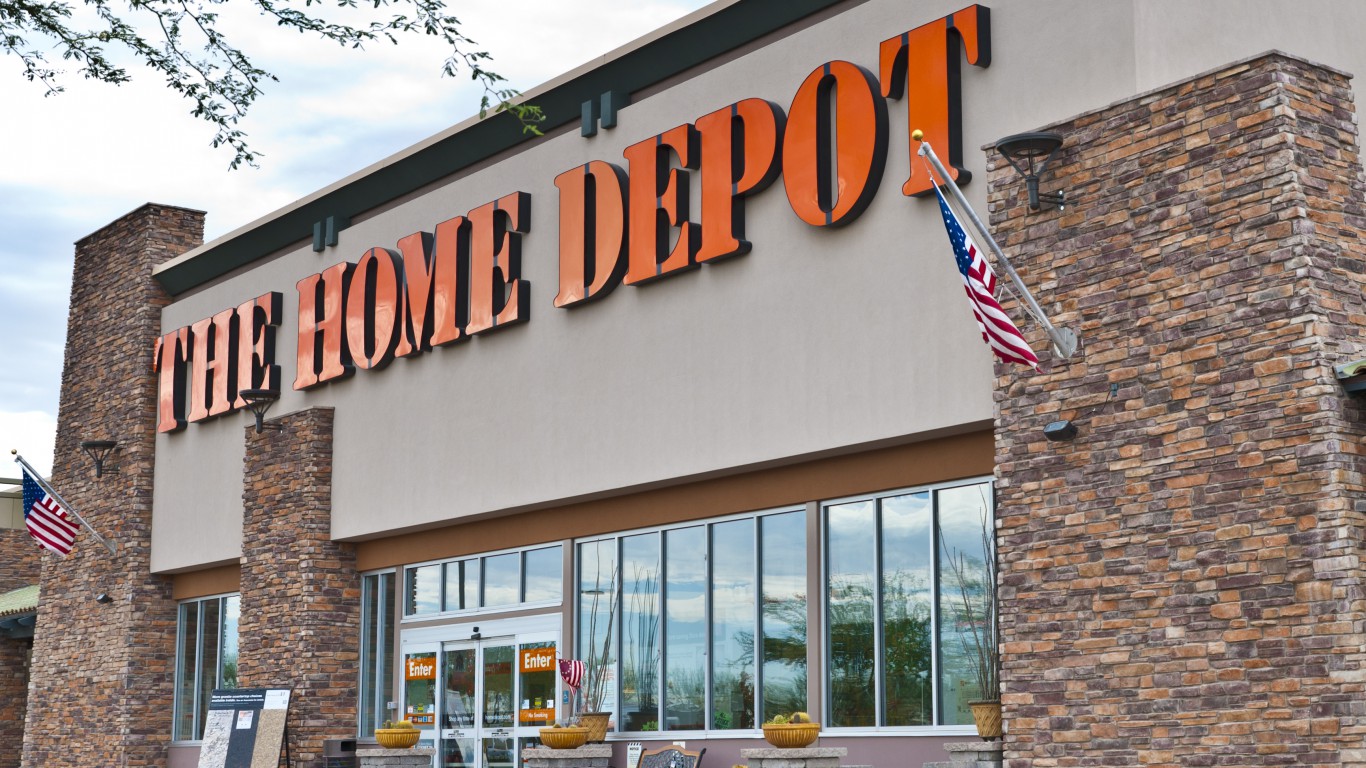
Home Depot: High-Yield Income Tied to an Aging Housing Stock
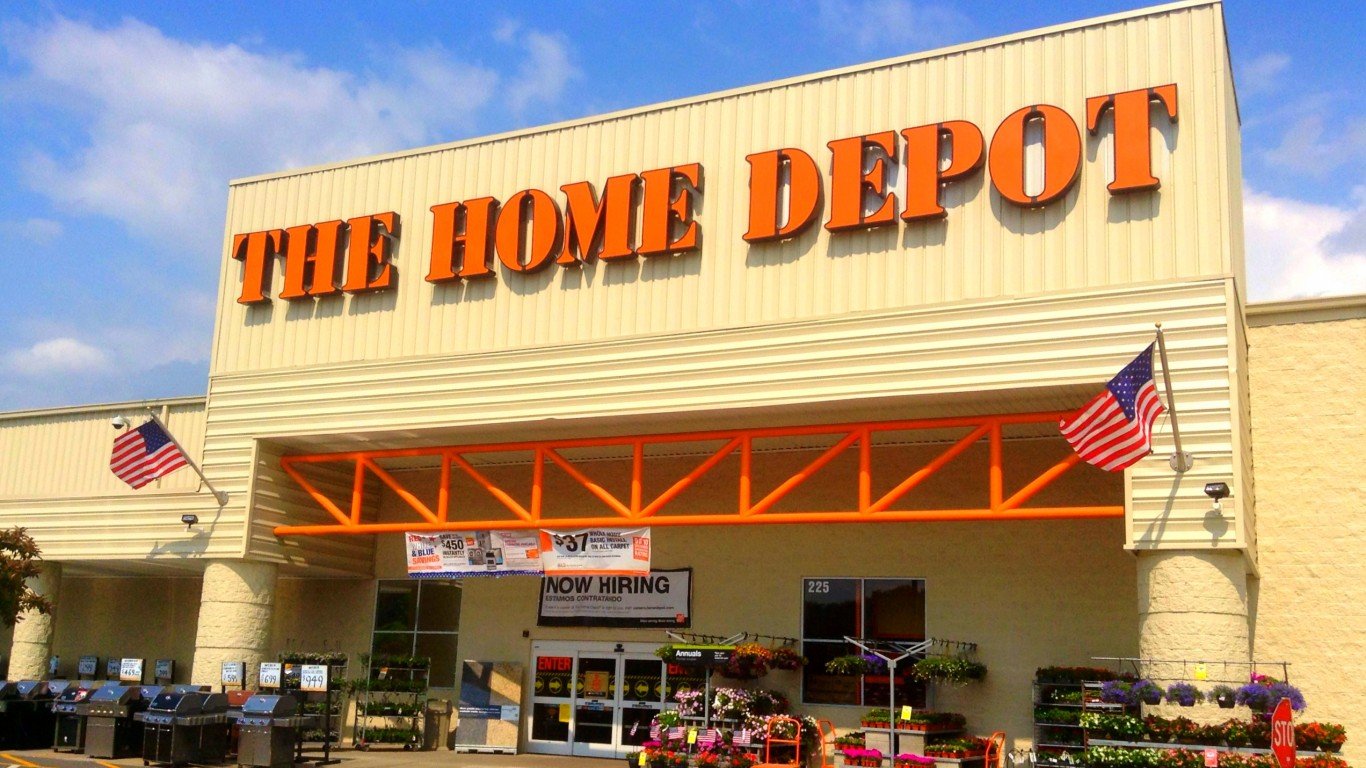
Home Depot (NYSE: HD) offers the second-highest yield in this group at about 2.77%, based on a forward dividend of $9.32 and a price of $336.17. The quarterly payout has stepped up from $0.59 in 2015 to $2.33, the highest level in that record.
Dividend safety: Trailing dividends of $9.29 absorb about 65% of trailing EPS of $14.29. For a mature retailer, this share is sustainable. Interest coverage is 8.66x, and net debt to EBITDA is 2.56x. Third-quarter interest expense fell to $579 million from $628 million. The free cash flow yield is 3.74%.
The Congress angle: Housing affordability is one of the few issues both parties want to address. Even so, divided government makes a large federal housing package unlikely, so Home Depot’s results will depend on what homeowners spend more than on any new law. That works in its favor: owners who stay in place because of low mortgage rates still have to repair and maintain aging homes.
Bull case: Third-quarter revenue rose 4.95% to $43.398 billion, comparable sales increased 2.2%, and adjusted EPS of $3.86 beat estimates. SRS Distribution, HD Supply, and GMS are driving more business from professional contractors. The company projects full-year sales growth of about 4.5%. A leadership change is underway, with Richard McPhail named as incoming CEO.
Risk: Customer traffic is soft: comparable transactions fell 0.5%. A debt-to-equity ratio of 5.10 leaves less balance-sheet room than the other three names have.
Medtronic: 49 Straight Raises and a Raised Outlook
Medtronic (NYSE: MDT) yields about 2.83%, the highest in this group, with an annualized dividend of $2.88 on a $101.87 price. Its latest rise, to $0.72[1] per quarter, marked its 49th consecutive year of dividend increases.
Dividend safety: The annual dividend equals about 48% of the low end of fiscal 2027 non-GAAP EPS guidance of $5.94 to $6.00[6]. First-quarter free cash flow of $1.29 billion[6] covered the $921 million in dividends paid about 1.4 times. Full-year fiscal 2026 free cash flow reached $5.426 billion[1].
The Congress angle: Health care fights in Washington center mostly on drug pricing, and device makers face less of that pressure. Medtronic’s growth depends on reimbursement decisions made by Medicare and private insurers. The CEO pointed to “the national coverage decision for CMS”[7] and to commercial payers adding renal denervation coverage. A Congress focused on patient access is unlikely to undo those gains.
Bull case: First-quarter revenue rose 13.73%[6] to $9.756 billion, and Cardiac Ablation Solutions grew 88%. Management raised full-year organic growth guidance to 7.25%-7.75%[6]. A new FDA clearance also widens the market for its surgical robot. At about 17 times forward earnings, Medtronic is the cheapest stock in this group on that measure.
Risk: The planned separation of the Diabetes business adds complexity. Fourth-quarter fiscal 2026 margins also fell 230 bps[1] because of tariffs and a payment tied to the MiniMed deal with Blackstone (NYSE: BX).
Gridlock Favors Payers That Need No New Laws
Texas Instruments funds its dividend with chip incentives that are already law, and Ecolab sells water solutions customers need no matter the political mood. Home Depot benefits from the steady repair needs of an aging housing stock, and Medtronic from rising procedure volumes and expanding insurance coverage. All four cover their dividends with real free cash flow and have years of verified increases behind them. This is income that holds up when Washington stalls.
Contact [email protected] for any questions or corrections.
Lee Jackson has covered Wall Street analysts' equity and debt research and equity strategy daily for 24/7 Wall St. since 2012. His broad, diverse career, including a stint as creative services director at an NBC affiliate in Austin, Texas, gives him unique insight into the financial industry.
Lee Jackson's journey in the financial industry spans more than 30 years, including nearly two decades as an institutional equity salesperson at Bear Stearns, Lehman Brothers, and Morgan Stanley. His career spanned pivotal sell-side Wall Street events, from the dot-com rise and bubble to the Long-Term Capital Management debacle, 9/11, and the Great Recession of 2008. This reflects his resilience and adaptability amid market volatility.
Lee Jackson’s practical financial industry experience, gained through a career at some of the biggest banks and brokerage firms, is complemented by a lifetime of writing across various platforms. This unique combination allows him to shed light on the intricacies of Wall Street in a way only someone with deep insider experience and knowledge can. Moreover, his extensive network across Wall Street continues to provide direct access for him and 24/7 Wall St., a privilege few firms enjoy.
Since 2012, Jackson’s work for 24/7 Wall St. has been featured in Barron’s, Yahoo Finance, MarketWatch, Business Insider, TradingView, Real Money, The Street, Seeking Alpha, Benzinga, and other media outlets. He attended the prestigious Cranbrook Schools in Bloomfield Hills, Michigan, and has a degree in broadcasting from the Specs Howard School of Media Arts.