Union Pacific Has Raised Its Dividend for 20 Years. These 3 Railroads Offer Income

This post may contain links from our sponsors and affiliates, and Flywheel Publishing may receive compensation for actions taken through them.
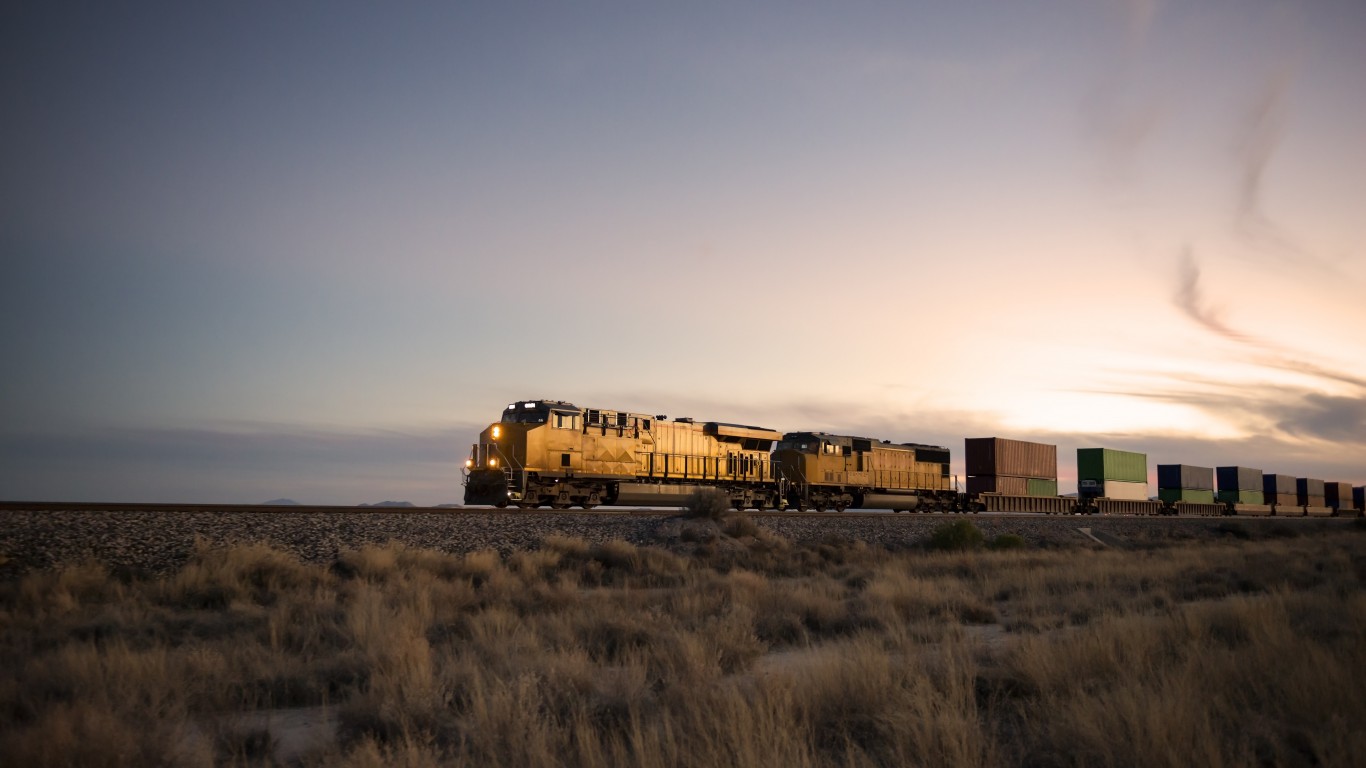
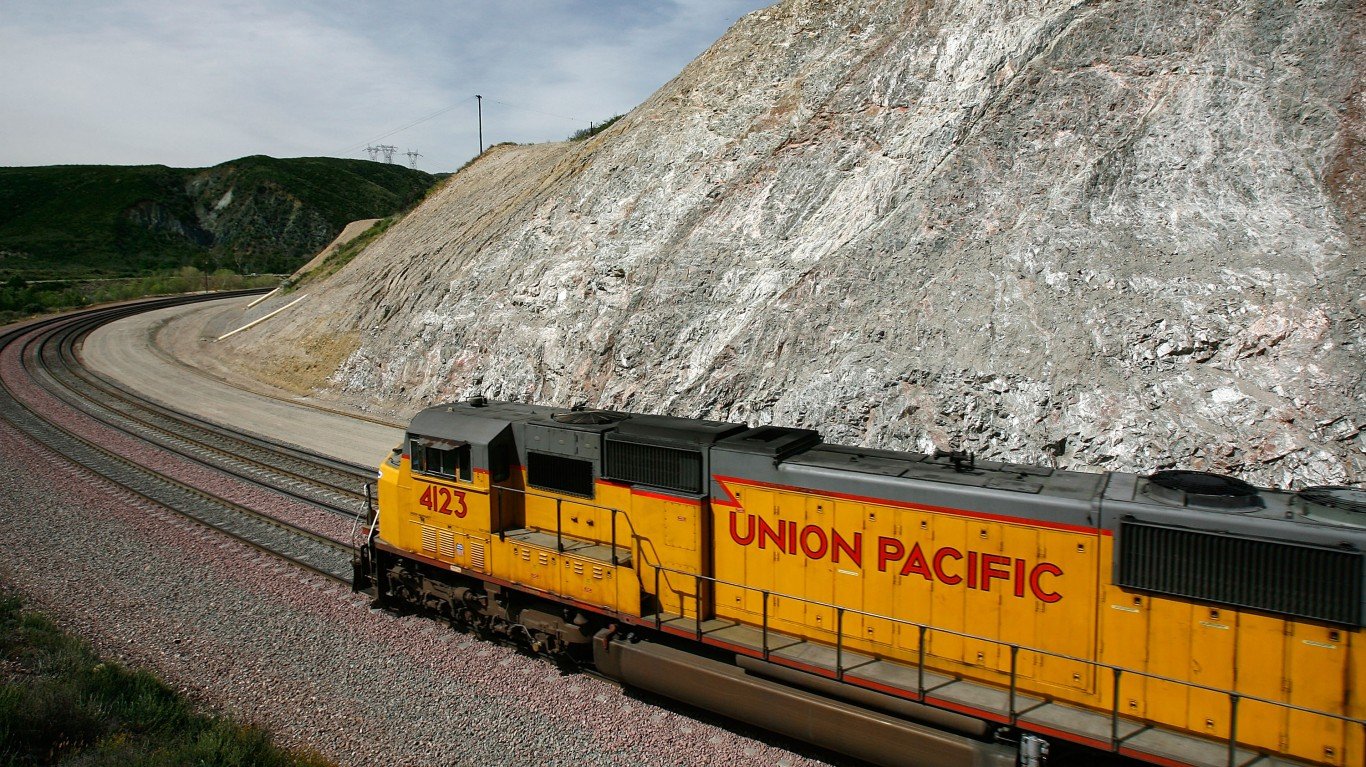
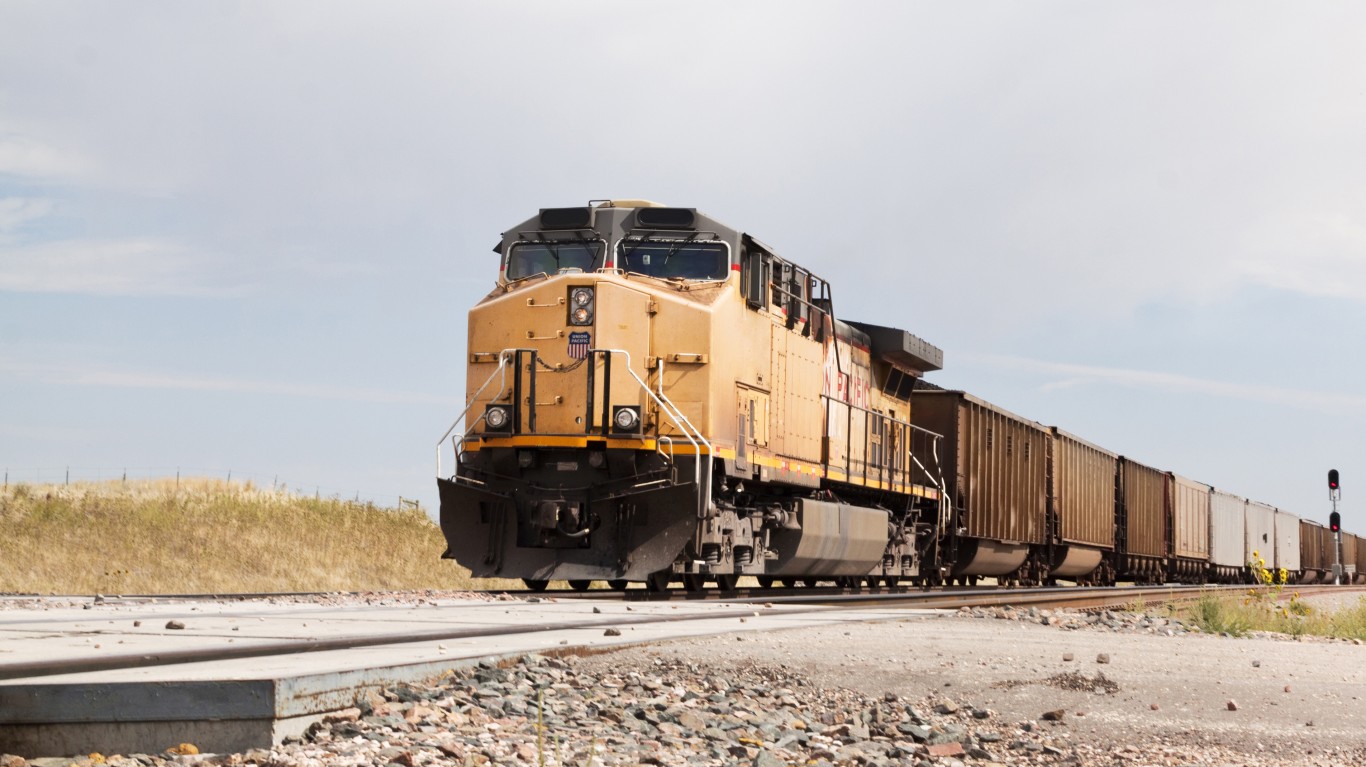
Income that holds up through recessions and political cycles runs on the tracks under America’s freight. Union Pacific (NYSE:UNP | UNP Price Prediction), CSX (NASDAQ:CSX) and Norfolk Southern (NYSE:NSC) own networks built over more than a century, and nobody could realistically rebuild them today. That scarcity gives the railroads pricing power, and pricing power turns into regular cash and regular dividend checks. Union Pacific’s latest increase marked its 20th consecutive year[1] of annual raises. The yields are modest, so the income case depends on coverage, cash flow and staying power. Each tells a different dividend story.
Union Pacific: A 20-Year Raise Streak Paid for After Capex
Union Pacific yields 1.85%. Its quarterly dividend rose from $1.38 to $1.42 this year, putting the annualized forward payout at $5.68 per share, up from $5.56 paid over the trailing 12 months. Chief Financial Officer Jennifer Hamann put the raise in context: “Free cash flow totaled $2.4 billion after we reinvested in our network and increased our third-quarter dividend 3%, the 20th consecutive year providing our shareholders with an annual dividend raise.”[1]
Dividend safety: Coverage is the strongest of the three. The trailing dividend uses roughly 43% of trailing diluted EPS of $12.82. Union Pacific reports free cash flow after paying the dividend, and that figure came to $2.292 billion for 2025, so the payout is funded with cash to spare. Cash from operations rose 18%[1] to $8.3 billion. The company ended the quarter with $3.1 billion[1] in cash and short-term investments and adjusted debt-to-EBITDA of 2.4x. Management’s outlook explicitly calls for “consistent annual dividend increases.”[2]
Bull case: This is the industry’s efficiency leader, and it is growing. Third-quarter adjusted EPS of $3.53[2] beat the $3.47 consensus, and revenue rose 15.26% to $7.197 billion. The operating ratio came in at 58.8%[1], with pricing gains expected to keep running ahead of inflation. Chief Executive Jim Vena said, “Six percent volume growth and 110 basis points of core operating ratio improvement don’t just happen.”[1] The stock trades at about 23 times trailing earnings and 21 times forward earnings.
Risk: Regulation. The pending Norfolk Southern acquisition is under Surface Transportation Board review, with closing expected in the second half of 2027[1]. Cash is already being held back for the deal: buybacks fell to $26 million[2] through September from $2.679 billion a year earlier. It also flags the risk of a credit rating downgrade from the extra debt. Vena has said, “We will walk away from this”[1] if the terms break Union Pacific.
CSX: Lowest Payout Ratio and Fastest Cash Flow Growth
CSX pays out 1.07%, the lowest of the three, but it has the most room to raise. The quarterly dividend went to $0.14 this year from $0.13, for an annualized forward rate of $0.56. It marks the latest step in a run of annual raises: $0.10 in 2022, $0.11 in 2023, $0.12 in 2024, and $0.13 in 2025. The per-share payout dropped from $0.28 to $0.093 in 2021 because of a 3-for-1 stock split on June 29, 2021. Shareholders’ income was unchanged.
Dividend safety: The dividend uses only about 29% of trailing diluted EPS of $1.92. Free cash flow was $1.789 billion in 2025. At the current share count, a full year of dividends at the forward rate costs about $1.03 billion. Chief Executive Steve Angel expects more room ahead: “Our outlook for capital expenditures remains below $2.4 billion, and we expect free cash flow growth of more than 80%.”[3] CSX also spent $1.049 billion buying back 23 million shares through September, and fewer shares means each future raise costs less. Cash rose to $1.223 billion[4], and shareholders’ equity climbed 12.73%.
Bull case: CSX’s network covers the eastern U.S., where nearly two-thirds of the nation’s population lives. Its third-quarter operating margin rose to 39.1%[4], and EPS of $0.57 beat the $0.54 consensus. Management has lined up more than 100[3] productivity initiatives for next year, so margins have room to keep improving. The stock trades at roughly 26 times trailing earnings and 22 times forward earnings.
Risk: Freight volumes. Much of CSX’s intermodal growth comes from tight trucking capacity and high diesel prices driving shippers onto rail. If those conditions reverse, freight could move back to trucks. Fuel accounted for about half[3] of revenue growth, and fertilizer volume fell 13%.
Norfolk Southern: Flat Dividend, Comfortable Coverage, Pending Merger
Norfolk Southern yields 1.67%, but the dividend has not grown in years. The quarterly payout has been $1.35 per share since the February 2, 2023 ex-dividend date, up from $1.24 in 2022. Trailing and forward annual dividends are both $5.40. Income investors should expect a reliable check without annual raises.
Dividend safety: The payout takes about 45% of trailing diluted EPS of $11.93. Operating cash flow of $4.361 billion in 2025, minus $2.204 billion of capital spending, left about $2.16 billion in free cash flow. The current annual dividend costs roughly $1.21 billion. Norfolk Southern bought back no shares[5] through September, compared with $533 million a year earlier. Cash rose to $1.598 billion[5], and equity grew 10.49% to $16.730 billion.
Bull case: Revenue covers a record $3.526 billion[5], up 13.63%. Adjusted EPS of $3.62[5] beat the $3.47 consensus, and intermodal revenue jumped 21.1%. Management is on track for at least $650 million[6] in cumulative cost savings, and Chief Executive Mark George said: “The underlying business remains healthy.” The pending combination with Union Pacific also gives holders a path into a bigger transcontinental network. The stock trades at about 27 times trailing earnings and 23 times forward earnings.
Risk: Safety incidents. Costs from the Eastern Ohio derailment are still showing up, with $28 million[5] of net incident expense last quarter. The company continues to manage litigation and remediation, so a future accident or legal ruling could hit cash flow that would otherwise support the dividend.
Rail Income Comes Down to Coverage
All three railroads pay their dividends out of less than half of earnings and fund them with free cash flow from networks no competition can copy. Union Pacific has the longest record of raises, CSX has the most room to grow its payout, and Norfolk Southern pays a flat but well-covered dividend while the merger review continues. For retirees, the main things to track are fuel costs, the pace of trucking conversions, and the Surface Transportation Board’s decision. Rail yields alone will not carry a retirement, but they pair well with higher-yielding names in a ladder built to spin off checks without ever selling a share (we walked through how to assemble one in a free guide here).
Contact [email protected] for any questions or corrections.
Chris Lange is a financial and geopolitical writer with more than a decade of experience covering a myriad of topics. He has published thousands of articles for 24/7 Wall St., with past coverage focused heavily on stocks, IPOs, healthcare, defense, global affairs, and technology.
His work has been quoted, or referenced by a number of outlets including Business Insider, USA Today, Yahoo Finance, MSN, The Motley Fool, and many other publications. A graduate of Southwestern University, he studied business with a focus on investments and has previous experience in banking and startups.
When not reading or writing the news, he is following his passion for Lacrosse, playing chess, or building solar projects with his dad.