What You Actually Own When You Buy Pershing Square Stock

This post may contain links from our sponsors and affiliates, and Flywheel Publishing may receive compensation for actions taken through them.

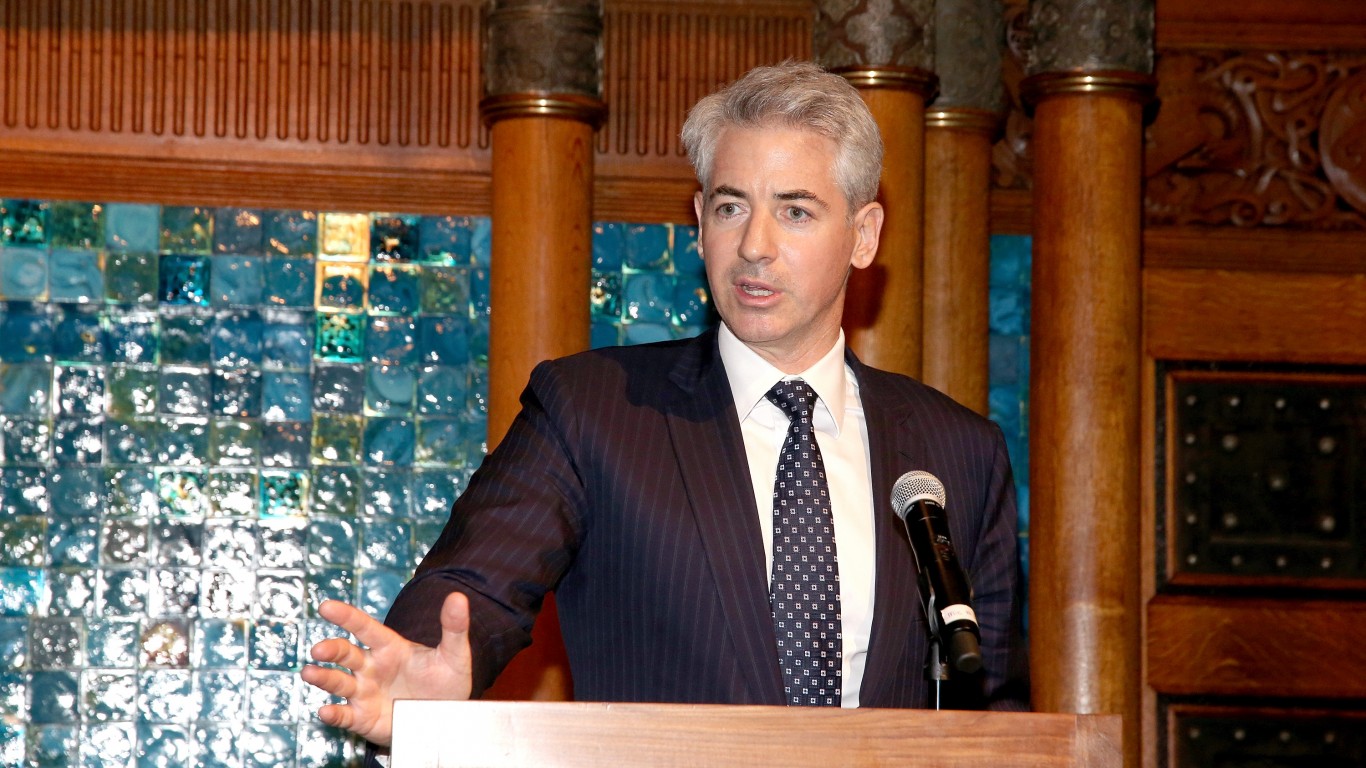
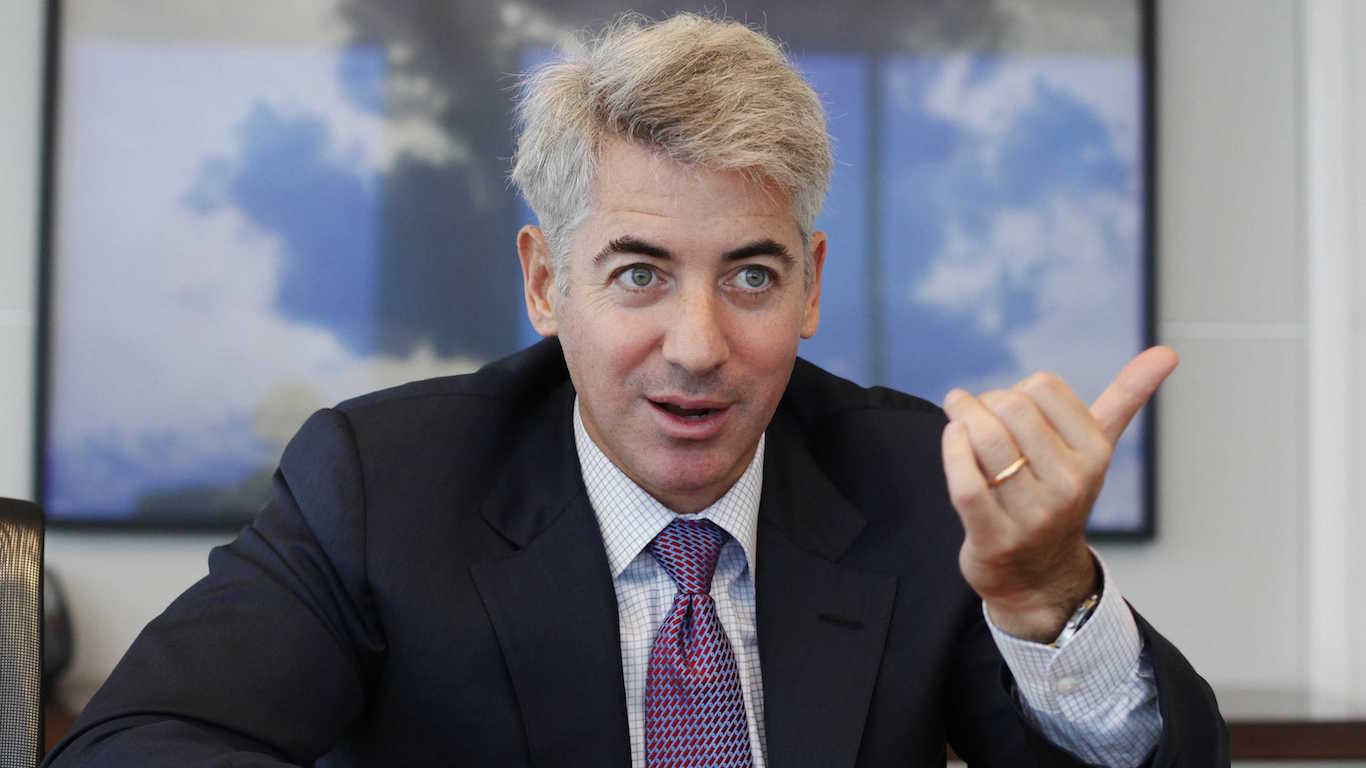
Buyers of Pershing Square (NYSE:PS) own the manager that collects fees for running Bill Ackman’s stock portfolio. The concentrated stock positions belong to the funds. Pershing Square shareholders own the business that charges those funds, a company with a market value of about $17.8 billion.
How the Fee Machine Earns Its Money
Pershing Square makes money in three ways. The first is management fees. It charges 1.5% of net asset value (NAV) a year on Pershing Square Holdings, which trades in London, and on its private funds. It charges 2.0% on Pershing Square USA (NYSE:PSUS). The second is performance fees, earned when fund returns clear high-water marks. The third is the company’s own balance sheet, which holds stakes in Howard Hughes Holdings (NYSE:HHH | HHH Price Prediction), PSUS, and PS Ventures.
In the third quarter, PSH management fees came to $47.188 million, and PSUS fees came to $22.963 million. The company booked no performance fees, compared with $2.661 million a year earlier. Its fee-related earnings (FRE) margin expanded to 84.2%. Revenue of $56.604 million still missed the $75.474 million consensus.
Why Permanent Capital Changes the Math
About 98% of fee-paying AUM is permanent capital. Investors who want out sell their shares to other investors. They cannot redeem cash from the vehicle, so the fee base stays in place even when holders leave. On the earnings call, Ackman put it simply: “Our capital base is permanent.”
Brookfield Asset Management (NYSE:BAM) tells a similar permanent-capital story. Blackstone (NYSE:BX) draws fees from a much broader mix of strategies. Blackstone stock is down 20.8% year to date, while Brookfield is up 0.3%. Pershing Square fell 18.5% over the past month but remains up 84.9% since April 29, 2026.
What Actually Moves Pershing Square Shares
Fund performance drives both AUM and performance fees. Ackman described the link this way: “We mark the portfolio to market every day, and we get paid based on mark-to-market performance.”
Market gains added $813 million to fee-paying AUM in the quarter. Over the past year, though, PSH fee-paying AUM fell from $16.044 billion to $13.258 billion. The funds target “12 to 15 of the world’s great businesses.” Chief Investment Officer Ryan Israel said those can return “at least a 20% rate of return over a multiyear period of time.”
Pershing Square Versus Pershing Square USA for the Undecided Investor
A PSUS share is a claim on the portfolio itself, after the 2.0% fee comes out. A Pershing Square share is a claim on that fee, the fees from the other vehicles, and any new products. Pershing Square also pays a dividend, most recently $0.103 per share on October 20, 2026. Pershing Square Ventures is one of those new products. It has a planned 2% fee and a possible starting size of $500 million to $1 billion.
Risks Shareholders Carry
- Portfolio concentration and dependence on one founder and one small investment team.
- Net interest expense of $2.669 million, up from $20 thousand, on $297 million of debt.
- A new corporate tax bill, which started with an $11.53 million provision.
- Regulation FD disclosures that rely on Ackman’s X account.
Bottom Line and the Trigger to Watch
Pershing Square is a high-margin fee stream with sticky capital behind it. Its growth depends on investment returns and new vehicles, because fundraising plays a small role. Management has set a first-quarter target for the public launch of Pershing Square Ventures. The launch might slip. If it does and PSH fee-paying AUM keeps shrinking, the case for owning the manager rather than the funds weakens considerably.
Contact [email protected] for any questions or corrections.
Trey has been an editor and author at 24/7 Wall St. for more than a decade, where he has published thousands of articles analyzing corporate earnings, dividend stocks, short interest, insider buying, private equity, and market trends. His comprehensive coverage spans the full spectrum of financial markets, from blue-chip stalwarts to emerging growth companies.
Beyond 24/7 Wall St., Trey has created and edited financial content for Benzinga and AOL's BloggingStocks, contributing additional hundreds of articles to the investment community.
Trey's editorial expertise extends across multiple publishing environments. He served as production editor at Dearborn Financial Publishing and development editor at Kaplan, where he helped shape financial education materials. Earlier in his career, he worked as a writer-producer at SVE. His freelance editing portfolio includes work for prestigious clients such as Sage Publications, Rand McNally, the Institute for Supply Management, the American Library Association, Eggplant Literary Productions, and Spiegel.
Outside of financial journalism, Trey writes fiction and has been an active member of the writing community for years, moderating workshop sessions at regional conventions.