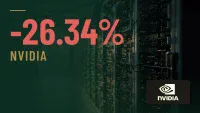
Jensen Huang is Out as CEO, Nvidia Down 25% in a Month: Wall Street’s Highest Target Price Reaffirmed as Major Desks Slash Prices, Predicting 210% Gains

This post may contain links from our sponsors and affiliates, and Flywheel Publishing may receive compensation for actions taken through them.
Shares of NVIDIA (NASDAQ:NVDA | NVDA Price Prediction) currently trade at $166.19. The average analyst target sits at $319.99, pointing to upside of about 92.5%.
NVIDIA sells the GPUs, networking and software behind most large AI data centers, and the business is still growing fast. Its latest quarter brought in revenue of $96.221B, up 105.85% year over year.
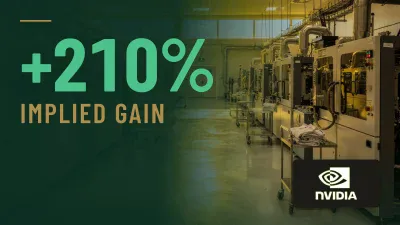
Implied upside above 40% is rare for a company worth $4.013 trillion. Raymond James has maintained the most bullish target of $515.00, which implies gains of roughly 210%.
A Boardroom Ouster Sent NVIDIA Into a 27% Monthly Slide
Jensen Huang’s exit as CEO broke the stock. The Wall Street Journal reported that Huang had been ousted, and NBC News reported that the stock fell after he resigned, weighing on the broader market. His exit came after a New York Times report that Huang had a relationship with an NVIDIA executive who reported to him. The company’s CFO is reportedly taking over on an interim basis.
Shares are down 27.28% over the past month, including an 8.49% drop in the past week. NVIDIA fell on its own. Over the same month, the S&P 500 slipped just 2.67%.
Non-GAAP EPS of $2.22 beat the $2.0887 consensus. Still, the leadership shock amplified older concerns. Management expects gross margin to bottom at 71% to 72% in the fourth quarter because of memory costs. Days sales outstanding rose to 60 days. NVIDIA has also put nearly $50 billion into frontier AI labs, which has drawn criticism that the deals amount to circular financing.
Raymond James Defends $515 as Rival Desks Cut
Raymond James senior analyst Simon Leopold kept his Strong Buy rating even as Oppenheimer, Bernstein and Baird cut targets or moved to the sidelines. Leopold sees “limited reason” to expect near-term disruption to customer commitments or product roadmaps. In his view, the moat lives in NVIDIA’s engineering organization, CUDA ecosystem and full-stack architecture.
His target applies a 22x multiple on CY28 earnings and assumes an annual run-rate approaching $1 trillion by early 2029. His reasoning is that TSMC (NYSE:TSM) capacity, HBM supply and Rubin rack deliveries are locked in well before deployment. Management’s own outlook supports that. On the last earnings call, CFO Colette Kress guided to fiscal 2028 growth of about 70%, a figure limited by supply, and put Vera Rubin’s revenue opportunity at $40 billion per gigawatt.
Estimates are still climbing. Fiscal 2028 consensus EPS now stands at $15.9146, up from $12.8148 90 days ago. Other desks are less forgiving: Citigroup applied a 25% key-person discount, and Bernstein cut its target in half to $200. Coverage is still skewed, with 10 Strong Buy, 49 Buy, 2 Hold and 1 Sell ratings. Next week’s earnings report will be the first real test.
AMD and Broadcom Held Up While NVIDIA Fell
The rest of the group held up while NVIDIA dropped.
Advanced Micro Devices (NASDAQ:AMD) slipped 3.34% over the month but jumped 30.34% in the past week. With the stock at $585.30 versus a $657.49 average target, implied upside is about 12.3%. With 5 Strong Buy, 39 Buy and 11 Hold ratings, analysts see far less room here than in NVIDIA.
Shares of Broadcom (NASDAQ:AVGO) rose 1.97% over the month and 24.06% in the past week. At $364.36 versus a $533.42 target, it offers about 46.4% upside, backed by 8 Strong Buy, 41 Buy and 2 Hold ratings. That trails NVIDIA’s implied upside.
The biggest implied upside in the group belongs to NVIDIA by a wide margin. Almost all of that gap comes from its own price drop, which tells you investors are baking in a leadership risk that only NVIDIA faces.
NVIDIA Now Sits Near Its 52-Week Low
At $166.19, shares sit just above the 52-week low of $163.90. The $319.99 average target from 62 analysts implies about 92.5% upside. The forward P/E is roughly 11x. Many of those targets were set before the departure, so they offer guidance and nothing stronger.
NVIDIA is down 10.68% year to date, while the S&P 500 is up 11.05%. Over one year, NVIDIA has lost 14.04% against the index’s 10.81% gain.
I Lean Bullish, and the CEO Search Will Decide the Upside
The bull case improves if next week’s earnings report confirms the $108.0B revenue guide, Vera Rubin ships on schedule and the board quickly names a credible permanent CEO. That path leads back toward the average target. Raymond James’s $515 also requires the company to deliver the 70% growth.
The bear case gains weight if the governance scandal grows, the CEO search drags on, or the AI-lab financing starts to look uncertain. Kress said that financing should drive roughly a quarter of next year’s business. Gross margin slipping toward the low 70s would make things worse.
I lean bullish. At about 11x forward earnings, shares reflect a damaged franchise even though NVIDIA’s customers and supply are already locked in. I treat $515 as the best case and the average target as the more realistic one.
Contact [email protected] for any questions or corrections.
Alex Sirois is a financial writer with experience spanning both retail and institutional investing. He has written for InvestorPlace and held roles at BNY Mellon and Bernstein, giving him a perspective that bridges Main Street portfolios and Wall Street analysis.
Alex holds an MBA from George Washington University and has built his career across multiple industries, including e-commerce, education, and translation — a breadth of experience that informs how he breaks down complex financial topics for everyday investors. His writing is conversational, actionable, and grounded in long-term, buy-and-hold investing principles.
At 247 Wall St., Alex focuses on delivering analysis that is both accessible and useful, with a clear emphasis on helping readers make more informed decisions with their money.