Coca-Cola and J&J Just Hit Record Highs. A 62-Year-Old Put $300,000 Into Them and Procter & Gamble in 2016. Here’s How Much the Now 72-Year-Old Gets Paid Every Single Month

This post may contain links from our sponsors and affiliates, and Flywheel Publishing may receive compensation for actions taken through them.

On Monday, Nov. 14, 2016, the first trading day after the election week, a 62-year-old put $300,000 into three companies whose products he had used every day of his life: Johnson & Johnson (J&J), Procter & Gamble and Coca-Cola, $100,000 in each. Call him Walt. He had just sold a rental duplex, he was still two years from claiming Social Security, and he wanted checks he could count on. The 10-year Treasury paid 2.23% that Monday. The three stocks paid more, and they had raised their payouts every year for half a century.
Ten years later, to the day, Walt is 72. His shares have never been touched, and the three companies have kept raising the dividend every year: Johnson & Johnson for 64 straight years, Coca-Cola for 64, Procter & Gamble for 70. The checks now add up to $14,983 a year, which is $1,249 a month, call it $1,250. He has cashed $121,100 of dividends along the way, and the $300,000 of stock is worth about $690,300 after Coca-Cola and Johnson & Johnson both closed at record highs on Friday.
Walt is a scenario. The prices, the dividend history and the tax rules are real, pulled from Alpha Vantage’s daily record of each stock and from the IRS tables for 2026. Ten years of raises from household names read as proof that a retiree can out-earn a bond without taking a trader’s risk. The limit sits in the same numbers: a buyer at Friday’s prices gets about 2.2%, less than half of what Walt earns on his cost, and three stocks is a thin basket for anyone’s income.
What $300,000 bought in 2016
At the Nov. 14, 2016 closes, $100,000 bought whole shares only:
Johnson & Johnson closed at $116.60. That bought 857 shares for $99,926.20. The quarterly dividend was $0.80, so the shares yielded 2.74%.
Procter & Gamble closed at $83.00. That bought 1,204 shares for $99,932.00. The quarterly dividend was $0.6695, a 3.23% yield.
Coca-Cola closed at $41.17. That bought 2,428 shares for $99,960.76. The quarterly dividend was $0.35, a 3.40% yield.
Total spent: $299,818.96, with $181.04 left in cash. At those first rates the three positions paid $9,365.91 a year, about $780 a month. Every one of the 120 dividends since then has been paid, 40 from each company, and not one was smaller than the one before it.
The checks today
Each company raised again in 2026. Johnson & Johnson lifted its quarterly dividend 3.1% in April to $1.34, its 64th straight annual increase. Procter & Gamble raised 3% in April to $1.0885, its 70th. Coca-Cola raised about 4% in February to $0.53, its 64th. On Walt’s share counts:
Johnson & Johnson: 857 shares at $5.36 a year pay $4,593.52, or $1,148.38 a quarter.
Procter & Gamble: 1,204 shares at $4.354 a year pay $5,242.22, or $1,310.55 a quarter.
Coca-Cola: 2,428 shares at $2.12 a year pay $5,147.36, or $1,286.84 a quarter.
Together that is $14,983.10 a year, $1,248.59 a month on average. The checks do not arrive on the first of every month. Procter & Gamble pays in February, May, August and November; Johnson & Johnson in March, June, September and December; Coca-Cola in April, July, October and December. So a check lands in 11 of the 12 months, December brings two, and January is the one quiet month. Walt keeps one quarter’s worth in a savings account to smooth that out.
The income has grown 60% since the first year, from $9,365.91 to $14,983.10, while consumer prices rose 39.6% from October 2016 to October 2026. The first year’s income, grown with inflation, would be $13,077 today; the real checks are about $1,900 ahead of that. On his original $299,818.96, the three positions now yield 5.00%, almost exactly what a new 10-year Treasury paid on Nov. 10 (4.98%), with one difference: a Treasury never raises its coupon.
Ten years of checks, and a record high
Walt has collected $121,054.59 in cash dividends over the ten years: $36,645.32 from Johnson & Johnson, $41,967.83 from Procter & Gamble and $42,441.44 from Coca-Cola. That is 40.4% of the original $300,000 back in his pocket without selling a share.
The shares themselves did more. At Friday’s closing prices, 857 Johnson & Johnson shares at $285.75 are worth $244,887.75, 1,204 Procter & Gamble shares at $169.80 are worth $204,439.20, and 2,428 Coca-Cola shares at $99.25 are worth $240,979.00. The total is $690,305.95, a price gain of $390,486.99 on top of the dividends. Stock plus cash collected comes to $811,360.54.
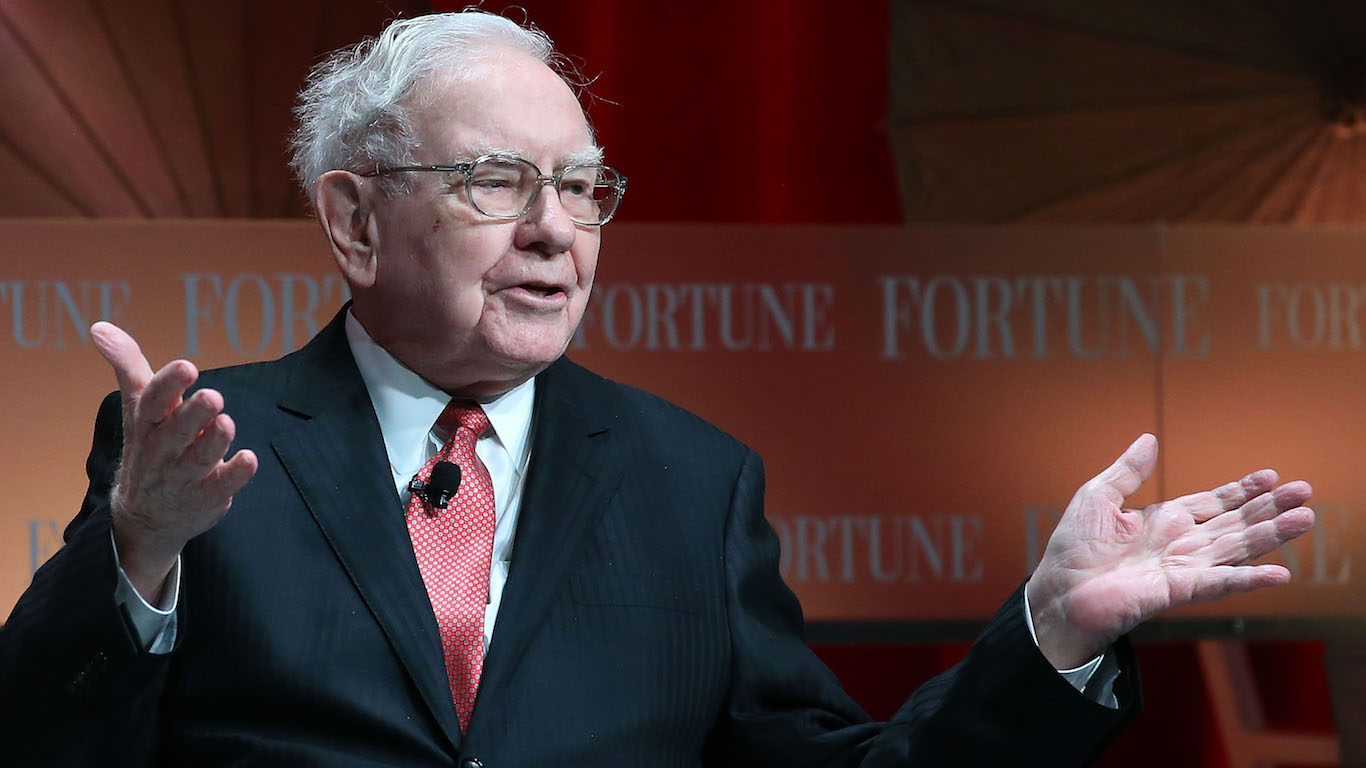
Two of the three are at records. Coca-Cola’s close on Wednesday was its 29th record close of 2026, by the Motley Fool’s count, and it traded higher again on Friday. Johnson & Johnson traded above $288 on Friday, above any price in its history. Procter & Gamble is the laggard, 5.5% below its December 2024 record close of $179.70. Warren Buffett’s Berkshire Hathaway holds 400 million Coca-Cola shares bought between 1988 and 1994 and collects the same $2.12 a share, about $848 million a year.
If every check had been reinvested
Suppose Walt had not needed the income and had bought more shares with every dividend at the closing price on each ex-dividend date. He would own 1,124.51 Johnson & Johnson shares, 1,580.13 Procter & Gamble shares and 3,310.75 Coca-Cola shares today. Those would pay $19,926.02 a year, $1,660.50 a month, which is $411.91 a month more than the spend-the-checks path. The stock would be worth $918,225.58.
Against the spend-it path’s $811,360.54 of stock plus cash, reinvesting would have left him $106,865.04 better off. That is the price of living on the checks for ten years, and Walt would pay it again: the dividends were the point.
The tax bill on the checks
Walt is single and collects $2,900 a month in Social Security, $34,800 a year. The shares sit in a regular brokerage account, so the dividends are qualified and taxed at the capital gains rates. For 2026 the IRS sets the 0% band for a single filer at taxable income up to $49,450.
This year his provisional income pulls $3,692 of Social Security into income, so his adjusted gross income is $18,674. His deduction is $24,150: the $16,100 standard deduction, the $2,050 addition for being over 65 and the $6,000 senior deduction that runs through 2028. Taxable income: $0. Federal tax on $14,983 of dividends and $34,800 of Social Security: $0.
Next year changes that, and the RMD is the reason. Walt turns 73 and takes his first required minimum distribution from a $600,000 IRA: $22,642 at the 26.5 divisor. That withdrawal pulls $22,371 of Social Security into income, taxable income becomes $35,846, and the federal bill becomes $2,256. The dividends still sit inside the 0% band, with $13,604 of room to spare. The RMD and the Social Security it drags along are what get taxed. A retiree who converted part of that IRA to a Roth in the years before 73, while the dividends were still tax-free, would have shrunk every RMD that follows.
Where the plan is weak
Three stocks is a thin basket. Each one is about a third of $690,306, so a 20% drop in the group would cost about $138,061, and the two at record highs now yield the least: a buyer today gets 1.88% from Johnson & Johnson and 2.14% from Coca-Cola. Walt’s 5.00% yield is on his 2016 cost, which no new buyer can have.
The dividends are a habit the boards have kept for decades, and no contract requires them. The 64- and 70-year streaks are the longest in American business, and all three companies kept raising through 2008 and 2020, but a board can vote a cut on any Thursday. The same $690,306 in a 10-year Treasury at 4.98% would pay about $34,377 a year, more than twice the $14,983 the stocks pay, with no growth in the check. Walt took the growing check over the bigger fixed one, and over ten years the growing check caught up with inflation and then some. That trade only works for someone who can live on $1,250 a month from the stocks plus Social Security while the price does whatever it does.
The bottom line
$300,000 split three ways on Nov. 14, 2016 bought 857 shares of Johnson & Johnson, 1,204 of Procter & Gamble and 2,428 of Coca-Cola. Those shares now pay $14,983 a year, $1,249 a month on average, in 11 of 12 months. They have paid $121,054.59 in cash over ten years and are worth $690,305.95 after Friday’s record highs. Reinvesting instead would have produced $1,660 a month and $918,225.58 of stock. The federal tax on this year’s checks, next to $34,800 of Social Security, is $0; next year’s first RMD is what turns the bill on.
Contact [email protected] for any questions or corrections.
Joel South covers large-cap stocks, dividend investing, and major market trends, with a focus on earnings analysis, valuation, and turning complex data into actionable insights for investors.
He brings more than 15 years of experience as an investor and financial journalist, including 12 years at The Motley Fool, where he served as an investment analyst, Bureau Chief, and later led the Fool.com investing news desk. He has also co-hosted an investing podcast and appeared across TV and radio discussing market trends.