4 High-Yield Energy Stocks That Get Paid to Move Oil and Gas

This post may contain links from our sponsors and affiliates, and Flywheel Publishing may receive compensation for actions taken through them.
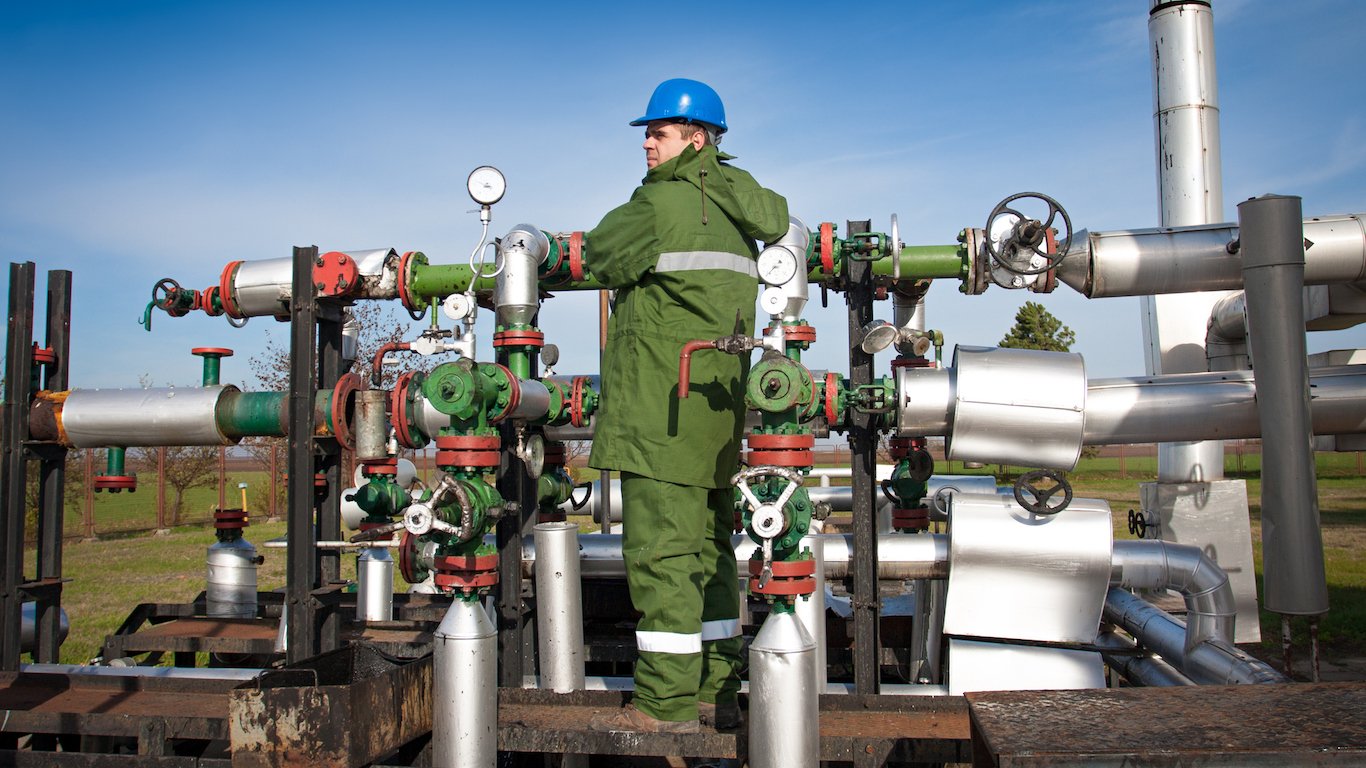
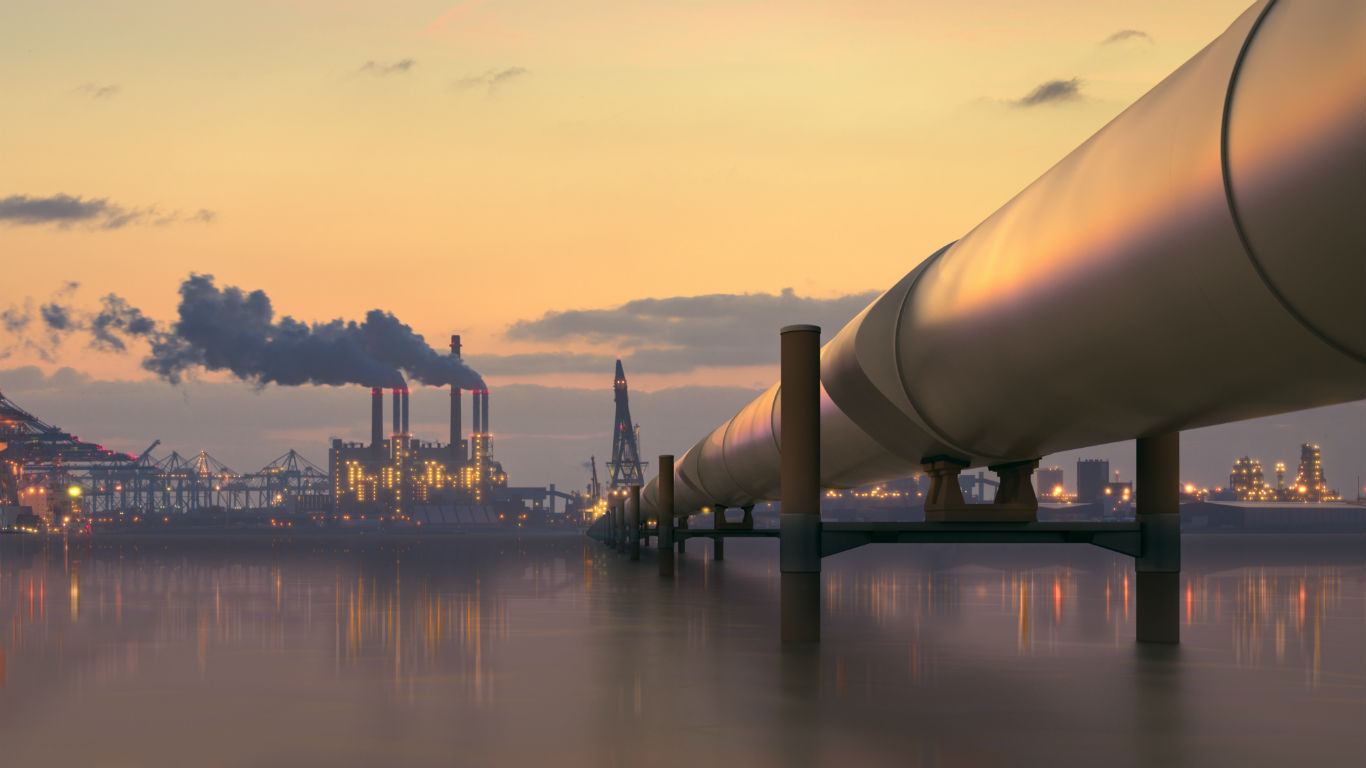
Pipelines work like toll roads. Producers pay to move natural gas, natural gas liquids (NGLs), and crude oil whether prices are high or low, and the operators pass much of that cash to unitholders. Four midstream partnerships stand out right now because they pair large distributions with multi-year growth backlogs in the Permian and Marcellus. The safest of the group, Enterprise Products Partners (NYSE:EPD | EPD Price Prediction), covered its latest payout 1.9x[1] with distributable cash flow, and it still has $6.3B of growth projects under construction.
Know What You Own Before Tax Season Arrives
Enterprise Products, MPLX (NYSE:MPLX) and Energy Transfer (NYSE:ET) are master limited partnerships (MLPs), and so is the fourth pick, Western Midstream Partners (NYSE:WES). Investors own units and receive distributions rather than dividends. A publicly traded partnership avoids corporate tax treatment only if 90% or more of its gross income consists of qualifying income[2] (26 U.S.C. § 7704(c)(2)), which pipeline fees typically satisfy.
Three practical results follow:
- Tax form: unitholders receive a Schedule K-1 (Form 1065), Partner’s Share of Income, Deductions, Credits, etc., instead of a Form 1099-DIV. K-1s often arrive later than 1099s.
- Return of capital: much of each distribution is often treated as a return of capital. That portion reduces your cost basis instead of being taxed in the year you receive it, which moves more of the tax bill to the year you sell.
- IRA complications: a tax-exempt account must include its share (whether or not distributed) of the gross income of the partnership from such unrelated trade or business[3] when it calculates unrelated business taxable income (26 U.S.C. § 512(c)(1)). Large MLP positions inside an IRA can trigger tax filings within the account itself.
| Partnership | Price (Nov. 13) | Annualized Distribution | Forward Yield | YTD Price Change |
|---|---|---|---|---|
| Enterprise Products | $38.29 | $2.24 | 5.9% | 26.75% |
| MPLX | $57.25 | $4.8444 | 8.5% | 16.05% |
| Energy Transfer | $19.42 | $1.372 | 7.1% | 26.24% |
| Western Midstream | $42.24 | $3.72 | 8.8% | 16.38% |
Enterprise Products Partners: Fortress Coverage Behind a 5.9% Yield
Yield: Enterprise pays $0.56 per unit each quarter, or $2.24 annualized. The result is a high-yield 5.9% at $38.29.
Distribution safety: This is the strongest balance sheet in the group. Third-quarter distributable cash flow rose 27%[1] year over year to about $2.3B, covering the payout 1.9x and leaving $1.1B to reinvest. Net leverage is 2.9x[4], inside a target of 2.7x to 3.25x, and about 96% of debt is fixed rate over the trailing 12 months; distributions plus $437 million[4] of buybacks used just 54% of adjusted cash flow from operations. The distribution history shows the quarterly payout climbing every year from $0.445 in 2020 to today’s $0.56, and the latest payout is up 2.8%[4] from a year earlier.
Bull case: Permian processing volumes hit a record 4.6 Bcf per day[4], up 12%. Management raised its 2025 to 2030 forecast for Permian wet gas and NGL production growth to 34%[4] from 23%. A 300 MBPD[1] Houston Ship Channel LPG expansion and the Athena processing plant are both due in the fourth quarter. An Enterprise executive said of the export expansion: “It is full. We have contracted it.”[4]
Risk: Growth looks set to slow. Co-CEO Randy Fowler warned that “2027 may be more modest compared to what we’re going to wind up reporting for 2026,”[4] and lower Midland Basin processing margins and hedging losses remain swing factors.
MPLX: Ultra-High-Yield Payout Growing 12.5% a Year
Yield: MPLX raised its quarterly distribution to $1.2111, or $4.8444 annualized. That’s an ultra-high yield of 8.5% at $57.25.
Distribution safety: Distributable cash flow of $1.54B covered the new payout 1.3x, and leverage is 3.8x against a 4.0x target. The raise checks out against the history: the quarterly payout went from $0.85 to $0.9565 in 2024, to $1.0765 in 2025, and to $1.2111 now. That’s the third consecutive year of 12.5% raises.
Bull case: More than 90% of the $2.9B organic growth budget goes to Permian and Marcellus natural gas and NGL infrastructure, with management expecting mid-teens returns. Adjusted EBITDA rose 5.3% to $1.86B, gathering throughput rose 4% to 7,216 MMcf/d, and management guides to 12.5% distribution growth through 2027. The BANGL expansion and Blackcomb Pipeline are scheduled for Q4 2026.
Risk: Much of MPLX’s cash flow depends on commercial agreements with its sponsor, Marathon Petroleum (NYSE:MPC). At 1.3x, coverage is lower than at Enterprise, and leverage is edging up while the multi-year project scheduled is being built.
Energy Transfer: 20 Straight Raises and Data Center Gas Demand
Yield: Energy Transfer pays $0.3425[5] per unit quarterly, or $1.372 annualized. That’s an ultra-high-yield 7.1% at $19.42.
Distribution safety: Third-quarter distributable cash flow attributable to partners rose to about $2.5 billion[6] from $1.9 billion, and adjusted EBITDA rose 31%[5] to $5.03B. The latest payout was the 20th consecutive quarterly increase[5], up 3% from a year ago. Long-term holders will remember that the history also shows a cut from $0.305 to $0.1525 in 2020. The payout has since moved back above its pre-cut level.
Bull case: Management raised 2026 adjusted EBITDA guidance to $19.7B-$19.9B[5] from $18.8B-$19.1B. Phase I of the Hugh Brinson Pipeline entered service with 1.5 Bcf per day[6] of capacity, and Phase II should take it above 2.3 Bcf per day in the first quarter of 2027. Since early 2025, Energy Transfer has signed more than 9.5 million MMBtu per day[6] of agreements with hyperscalers, data centers, and power plants. The pending Vaquero Midstream deal is priced at about 8.5x[6] estimated 2027 EBITDA.
Risk: Spending is heavy. Growth capex is about $7B[5] for 2027, which the CFO called “the high watermark.”[6] Third-quarter GAAP EPS of $0.33 missed expectations of $0.4072, weighed down by $379M of unrealized hedging losses.
Western Midstream Partners: Biggest Yield, Most Homework
Yield: Western Midstream pays $0.93 per unit quarterly, or $3.72 annualized. That’s an ultra-high-yield 8.8% at $42.24, the highest payout of the four.
Distribution safety: CEO Oscar Brown put coverage at “roughly 1.4 or something like that.” Pro forma net leverage is about 3.2x[7], and liquidity is about $1.8 billion. Third-quarter distributable cash flow was $512 million[7], and 2026 free cash flow guidance holds at $1.1 billion to $1.3 billion. The payout rose from $0.875 to $0.91 in 2025 and to $0.93 in 2026. It has been flat for three quarters, and the board typically decides on raises in February.
Bull case: Delaware Basin gas throughput hit a record 2.6 Bcf/d[8], up 20% sequentially, after the Brazos Delaware II acquisition. Management expects 2026 adjusted EBITDA to land above the center of $2.75B-$2.95B[8]. The Pathfinder water pipeline is about a 10%[7] return asset on its anchor commitment alone, and management hopes to move it toward 20%-plus as volumes fill. Brown said that the “yield today is something like 8.75%, which seems a little peppy given the strong outlook in the business.”[7]
Risk: Third-quarter EPS of $0.78[8] missed expectations of $0.9094. Gas gross margin per Mcf fell to $1.25[8] from $1.35, free cash flow fell 38.6% year over year, and capex is running slightly above the top of guidance.
Four Toll Roads, One Shared Engine
All four partnerships are collecting fees on rising Permian and Marcellus gas and NGL volumes, and each covers its payout with distributable cash flow. Enterprise offers the most safety, MPLX the clearest distribution growth, Energy Transfer the strongest data center play, and Western Midstream the biggest current check. In early 2027, keep an eye on Western Midstream’s February distribution decision, Energy Transfer’s Hugh Brinson Phase II start-up, and how fast Enterprise fills its expanded LPG dock.
Contact [email protected] for any questions or corrections.
Chris Lange is a financial and geopolitical writer with more than a decade of experience covering a myriad of topics. He has published thousands of articles for 24/7 Wall St., with past coverage focused heavily on stocks, IPOs, healthcare, defense, global affairs, and technology.
His work has been quoted, or referenced by a number of outlets including Business Insider, USA Today, Yahoo Finance, MSN, The Motley Fool, and many other publications. A graduate of Southwestern University, he studied business with a focus on investments and has previous experience in banking and startups.
When not reading or writing the news, he is following his passion for Lacrosse, playing chess, or building solar projects with his dad.