Elon Musk’s Historic SpaceX Mission Was Only Half Successful. Its Payoff Could Still Slash Launch Costs by 77%

This post may contain links from our sponsors and affiliates, and Flywheel Publishing may receive compensation for actions taken through them.
The economics of spaceflight are approaching another turning point. Reusable rockets have already reduced the expense of reaching orbit, but even today’s most successful launch systems still discard expensive hardware after every mission. Recovering that hardware could make launching satellites cheaper, support entirely new businesses in orbit, and give the companies mastering the technology an advantage competitors will struggle to overcome.
Elon Musk’s SpaceX (NASDAQ:SPCX) just moved closer to that future. Its latest Starship mission accomplished only half its planned recovery, yet the successful half could ultimately help reduce launch costs by 77%. The difference comes down to the half that returned.
SpaceX Makes History Despite Losing Its Booster
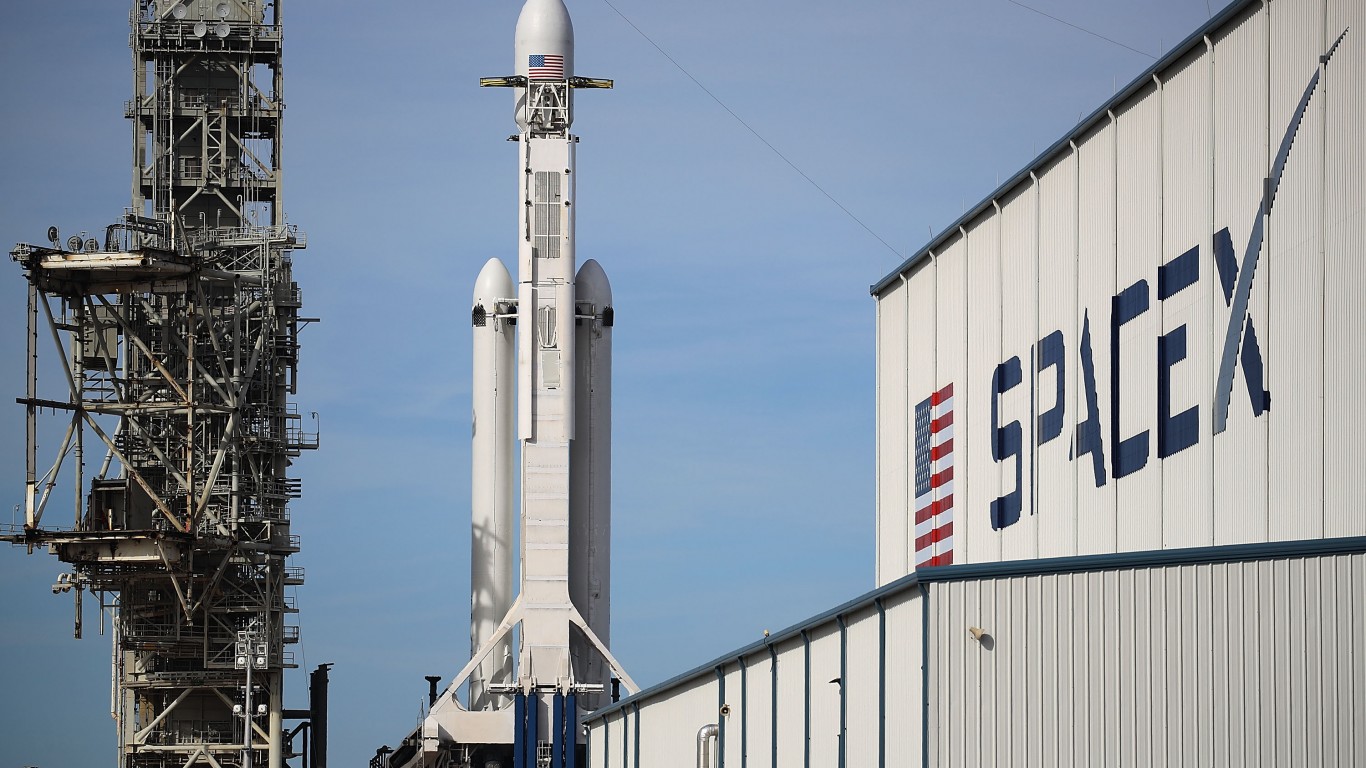
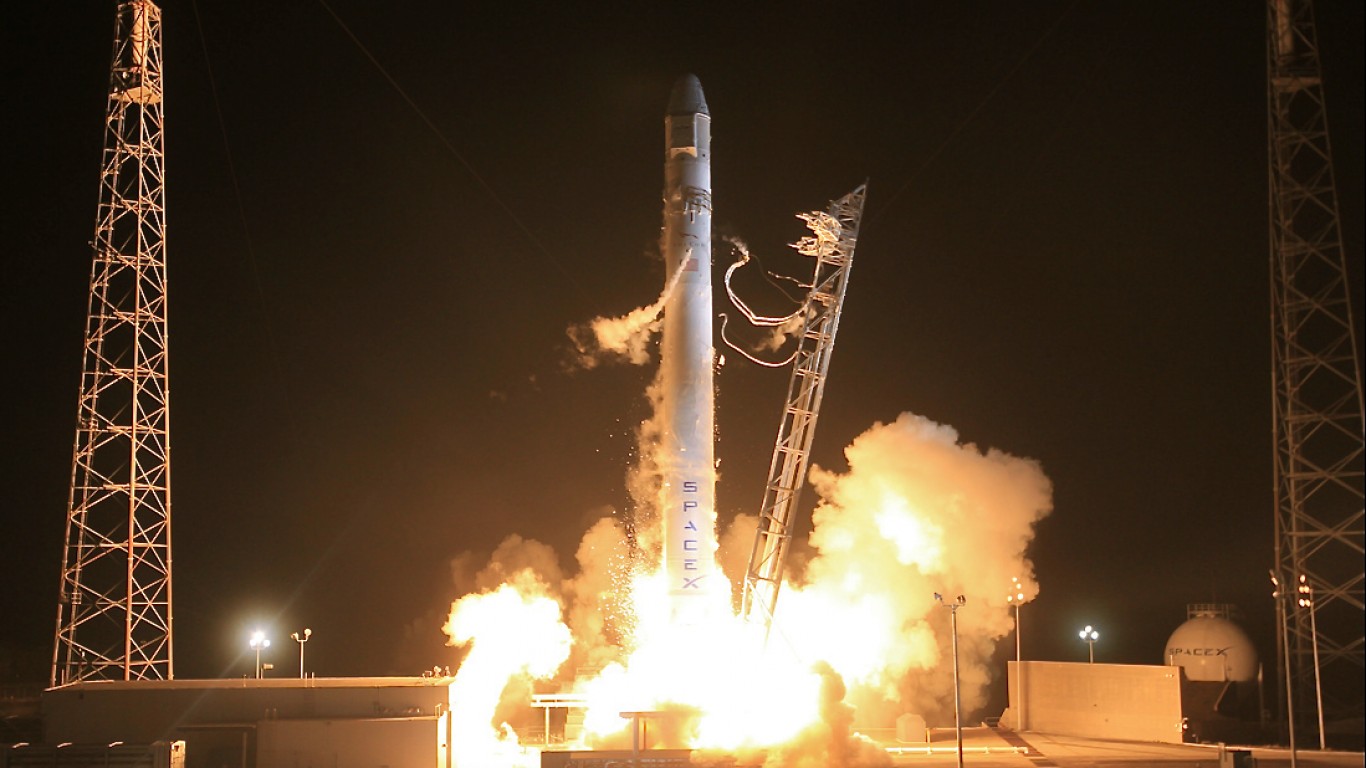
SpaceX launched its 15th Starship test flight from Texas on Nov. 13, intending to recover both stages of its 407-foot rocket using mechanical arms attached to its launch tower.
The Super Heavy booster never made it back. According to SpaceX’s flight commentary, a low-fuel alarm ended its return burn prematurely, forcing the booster to divert toward the Gulf of Mexico, where internal systems triggered a detonation. But the upper stage accomplished something no orbital rocket had done before.
After deploying 26 Starlink satellites and completing 14 orbits, Starship returned through Earth’s atmosphere on Nov. 14. Its engines slowed the spacecraft before the launch tower’s enormous mechanical arms caught it in midair.
SpaceX had previously caught Super Heavy boosters three times. Recovering the upper stage was the missing achievement because it must survive orbital speeds, atmospheric reentry, and temperatures that can destroy inadequately protected hardware.
The company has already invested at least $15 billion developing Starship, according to Reuters. Saturday’s recovery demonstrated that its investment is bringing fully reusable orbital transportation closer to reality.
How Starship Could Cut Launch Costs by 77%
The financial implications become clearer when comparing Starship with SpaceX’s existing rockets.
Falcon 9 already reuses its first-stage booster, but its upper stage is discarded after delivering a payload. Starship is designed to reuse both stages, eliminating a recurring hardware expense while carrying much larger payloads.
A June 2026 Morningstar analysis, drawing on PitchBook research, estimated the following internal costs of delivering cargo to orbit:
| Rocket | Estimated Cost Per Kilogram |
|---|---|
| Falcon 9 | $756 |
| Starship, early reuse | $407 |
| Starship, proven reuse | $173 |
| Starship, optimistic scenario | $67 |
The $173 estimate represents a 77% reduction from Falcon 9’s projected cost. Under Morningstar’s more ambitious scenario, costs could fall approximately 91%. Morningstar’s assumptions envision 340 annual Starship missions by 2035, with an 85% reusability rate.
Nevertheless, Saturday’s recovery demonstrated a capability essential to reaching those economics.
The Real Payoff Goes Beyond Rocket Launches
Lower launch costs would benefit SpaceX’s Starlink satellite network, which serves more than 13 million customers across over 170 countries, according to Barron’s.
Starship can carry more than 100 metric tons to low Earth orbit, over five times Falcon 9’s payload capacity. Combining larger payloads with reusable hardware could allow SpaceX to expand Starlink while spending less to deploy each satellite.
Competitors face a tougher equation. Rocket Lab (NASDAQ:RKLB), for example, has raised the base price of its planned Neutron launches to $70 million, although its reusable rocket has yet to fly.
SpaceX could eventually offer customers lower costs while preserving attractive margins, particularly if competitors cannot match its launch frequency. That opportunity also extends to Musk’s proposed orbital AI infrastructure, where the economics depend on transporting enormous amounts of equipment into space.
Granted, catching a spacecraft doesn’t prove it can be refurbished cheaply or flown repeatedly. SpaceX still must resolve its booster recovery problem and demonstrate reliable operations at commercial scale.
Key Takeaway
In short, SpaceX lost a booster but recovered something potentially more valuable: proof that its orbital upper stage can return intact. The next milestone is flying that recovered hardware again. If SpaceX can make upper-stage reuse routine, Morningstar’s projected 77% cost reduction becomes a more credible business opportunity.
For shareholders, that’s the metric worth watching. The successful catch strengthens SpaceX’s long-term competitive position, but the investment payoff will come from how cheaply and frequently Starship can fly –not simply how spectacularly it lands.
Contact [email protected] for any questions or corrections.
After two decades of patrolling the dark corners of suburbia as a police officer, Rich Duprey hung up his badge and gun to begin writing full time about stocks and investing. For the past 20 years, he’s been cruising the markets looking for companies to lock up as long-term holdings in a portfolio while writing extensively on the broad sectors of consumer goods, technology, and industrials. Because his experience isn’t from the typical financial analyst track, Rich is able to break down complex topics into understandable and useful action points for the average investor. His writings have appeared on The Motley Fool, InvestorPlace, Yahoo! Finance, Money Morning, and, of course, 24/7 Wall St. He has been featured in both U.S. and international publications, including MarketWatch, Financial Times, Forbes, Fast Company, and USA Today.