Michael Milken’s Traditional IRAs Were Valued at $509 Million. Here’s How the Ultra-Wealthy Legally Shrink the Tax Bill on Massive RMDs

This post may contain links from our sponsors and affiliates, and Flywheel Publishing may receive compensation for actions taken through them.
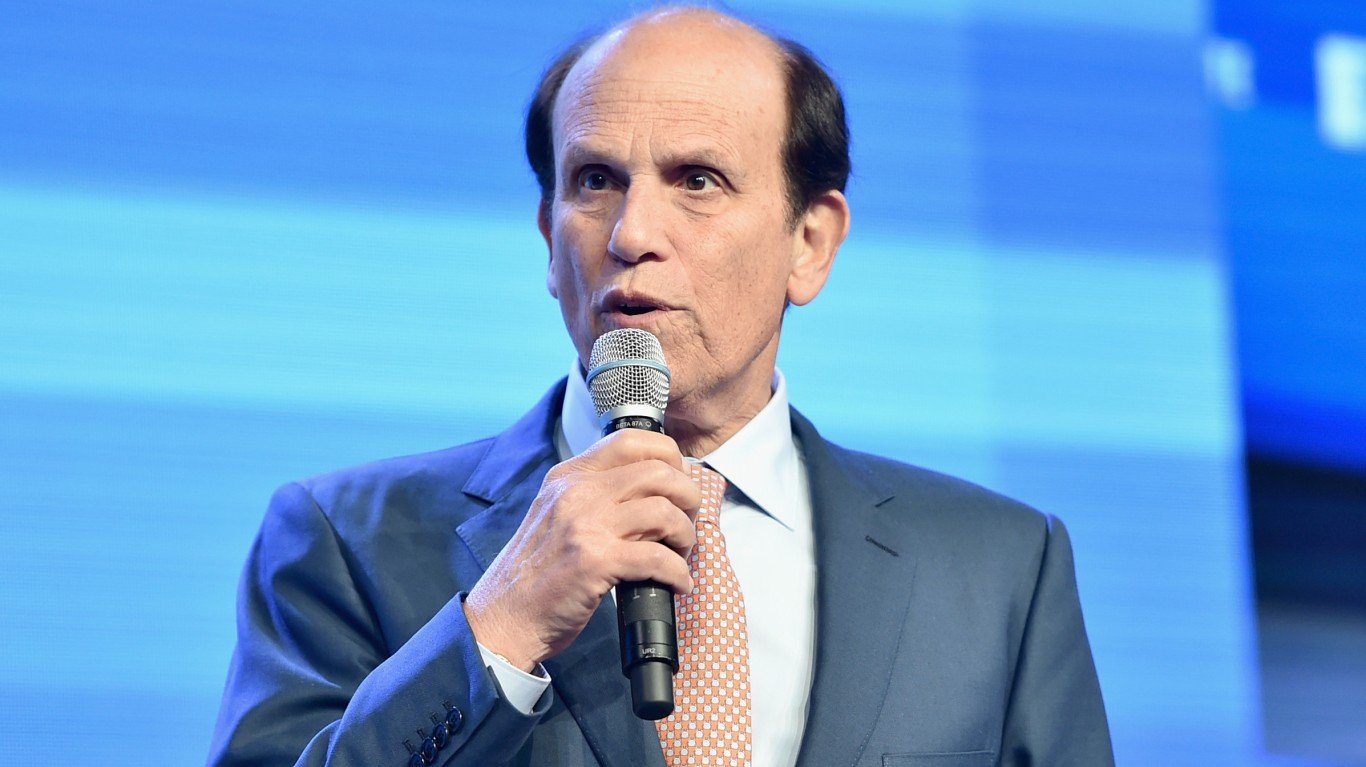
Michael Milken’s traditional IRAs were valued at $509 million, according to tax records obtained by ProPublica, and at his age the IRS table would force about $25 million out of an account that size in a single year. The figure appeared in the outlet’s June 2021 report on giant retirement accounts, built from leaked IRS data covering more than 15 years, which described Milken as "the 1980s junk bond king who went to prison for fraud and was later pardoned by President Donald Trump." A senior adviser declined to discuss it: "since it’s not our practice to publish or discuss Mike Milken’s private financial information, I can’t help you on this one."
A traditional IRA is money the IRS has not taxed yet, and from your early 70s the agency starts taking its share whether you need the money or not. Every year it divides your balance by a number from its Uniform Lifetime Table and makes you withdraw the result, taxed as ordinary income. Milken was born on July 4, 1946, so he is 80 this year and has been under those rules since 2017. An account that size is a warning of a tax bill the IRS has already scheduled: at 80, the table would pull about $25 million out of a $509 million balance in a single year, all of it taxable. The limit on that reading is that ProPublica’s figure carries no date and says nothing about what the account held, so it could be larger or smaller today, and nobody outside Milken’s office knows what he did about it.
The arithmetic is the same for any owner. At 72, the divisor is 27.4, so a $509 million balance would have to pay out about $18.6 million. Run that through the 2026 brackets as the only income on a joint return and the federal tax alone comes to about $6.8 million, before state tax. At 80 the divisor is 20.2, the withdrawal is about $25.2 million and the federal tax about $9.2 million. The table takes a bigger slice every year, 3.65% of the balance at 72 and 4.95% at 80.
That is the bill. Here are the legal tools people with accounts like that use to shrink it, and what the same moves do for you at $1.5 million.
Tool one: pay the tax once and never take an RMD again
A Roth conversion moves money from a traditional IRA into a Roth IRA. You pay ordinary income tax on the amount converted in the year you convert it. After that the IRS never requires a withdrawal while you are alive, and the growth comes out tax free. The one catch is that you cannot convert the year’s required withdrawal itself; that money has to come out and be taxed first.
The same ProPublica records show how Warren Buffett used it. "His boss, Warren Buffett, converted $11.6 million. After paying the one-time tax, both men saw their Roth accounts soar," the report said. "At the end of 2018, Buffett had $20.2 million in it." Buffett did not respond to ProPublica’s questions, and the year of his conversion and the tax he paid were not reported. The "boss" line refers to Ted Weschler, one of Buffett’s deputies, who told ProPublica he converted $130 million, paid more than $28 million of federal tax to do it, and had $264.4 million in his Roth at the end of 2018. Until a 2010 rule change, conversions were closed to anyone earning over $100,000.
At Milken’s scale the tool is brutal in its first year and generous after. Converting all $509 million at the 37% top rate would cost about $188 million of federal tax at once. In exchange, the forced withdrawals stop for life.
Tool two: give from the account, and give big
A qualified charitable distribution sends money straight from your traditional IRA to a charity. It counts toward the year’s required withdrawal and never shows up in your income. For 2026 the IRS caps it at $111,000 a person. Against an $18.6 million withdrawal it covers 0.6%, and the tax it saves at the top rate is $41,070.
The lever that works at that size is the ordinary charitable deduction. Cash gifts to public charities can be deducted up to 60% of adjusted gross income. From 2026, only gifts above 0.5% of income count, and for people in the 37% bracket each deducted dollar is worth at most 35 cents. If the $18.6 million withdrawal were the only income and 60% of it, about $11.1 million, went to public charities, the deduction would be about $11.05 million after the floor, worth about $3.9 million in tax saved. The federal bill would fall from about $6.8 million to about $2.9 million. Whether any particular person does this is not in the records.
Tool three: leave the account to a trust instead of a person
A charitable remainder trust can be named as the beneficiary of a traditional IRA. At the owner’s death the trust receives the account tax free, pays the heirs an income for life or for up to 20 years, and leaves what remains to charity, which must be worth at least 10% of the starting amount under IRS tables. The estate deducts that remainder, and the heirs skip the rule that empties most inherited IRAs within ten years, but they get an income stream, never the principal.
The rule Congress wants to add
On July 22, 2026, Rep. Richard Neal and Sen. Ron Wyden, the senior Democrats on the two tax-writing committees, introduced a bill that would force distributions from retirement accounts holding more than $10 million and bar new contributions above that line. With it they released Joint Committee on Taxation figures: at the end of 2024, 208 people held $85.1 billion in tax-sheltered retirement accounts, an average of $409 million each, and more than 32,000 people held more than $10 million, an average of $17 million. The bill is a proposal, not law.
The same moves for a couple with $1.5 million
Take a retired couple, 73 and 70, with $1.5 million in a traditional IRA and $4,500 a month of Social Security between them, filing jointly.
Their first required withdrawal at 73 is $1.5 million divided by 26.5, or $56,604, about $4,717 a month. That income pulls $39,663 of their Social Security into the taxable column. Adjusted gross income is $96,267, deductions are $47,500 (the $32,200 standard deduction, $1,650 for each spouse over 65 and the $6,000 senior deduction each), taxable income is $48,767 and the federal tax is $5,356.
A $10,000 qualified charitable distribution to their church, sent straight from the IRA, cuts the taxable Social Security to $31,163 and the tax to $3,136. The gift saves $2,220, or 22 cents per dollar given, even though they sit in the 12% bracket, because every IRA dollar you skip also pulls Social Security back out of the taxable column.
A $50,000 Roth conversion on top of the withdrawal pushes their income to $152,504 and taxable income to $105,154, with $4,354 of it reaching the 22% bracket. The extra federal tax is $7,202, about 14 cents on each converted dollar, and their income stays under the $218,000 line where Medicare surcharges begin. Next year’s required withdrawal shrinks by about $1,961, and every one after it shrinks too. The same $50,000 converted by someone in the 37% bracket costs $18,500. That is the whole point: the cheapest year to convert is a year when you sit in a low bracket, and for most retirees that year comes between the last paycheck and the first required withdrawal.
The trust does not scale down. At $1.5 million your heirs are usually better served by inheriting the account and spreading ten years of withdrawals across their own low-income years.
The bottom line
A traditional IRA is a loan from the IRS, and the Uniform Lifetime Table is the repayment schedule. At $509 million the schedule would call for about $25 million this year; at $1.5 million it calls for $56,604. The legal answers are the same at both sizes: convert in a cheap year, give straight from the account, and decide now who inherits it. For the 208 people in the Joint Committee’s count, the conversion and the big deduction do the work. For you, with $1.5 million, a $10,000 gift and a $50,000 conversion in a 12% year are worth more than any trust.
Contact [email protected] for any questions or corrections.
AJ spent 10 years writing about financial markets at The Motley Fool. His coverage centers on technology stocks and the broader macroeconomic trends, from interest rates to geopolitics, that shape where markets are headed next. AJ is drawn to the stories where big-picture economics and individual companies collide.