Rocket Lab Slides 4% as SpaceX Shares a $985 Million Launch Award: Are Cathie Wood and David Tepper Picking SpaceX Over Rocket Lab?

This post may contain links from our sponsors and affiliates, and Flywheel Publishing may receive compensation for actions taken through them.

Investor attention in space launch is shifting toward the industry’s largest player, and Rocket Lab (NASDAQ:RKLB | RKLB Price Prediction) is giving back some ground. Rocket Lab stock trades at $55.20, down 4%. Even after that dip, Rocket Lab stock is up 11% over the past month, so the pullback follows a strong run. Broader risk appetite is weak as the market waits on the upcoming earnings report from NVIDIA (NASDAQ:NVDA).

The background for Rocket Lab is its Q3 2026[1] report from November 9. Quarterly revenue at Rocket Lab rose 72.7%[1] year over year to $267.83 million, and the company’s backlog reached a record $3.57 billion. The company’s loss per share under generally accepted accounting principles (GAAP) came in at $0.12[1], missing expectations, as a $27.26 million charge for retiring convertible notes and $21.34 million in costs tied to a pending acquisition weighed on results.

SpaceX Lands Launch Dollars and Big-Name Buyers
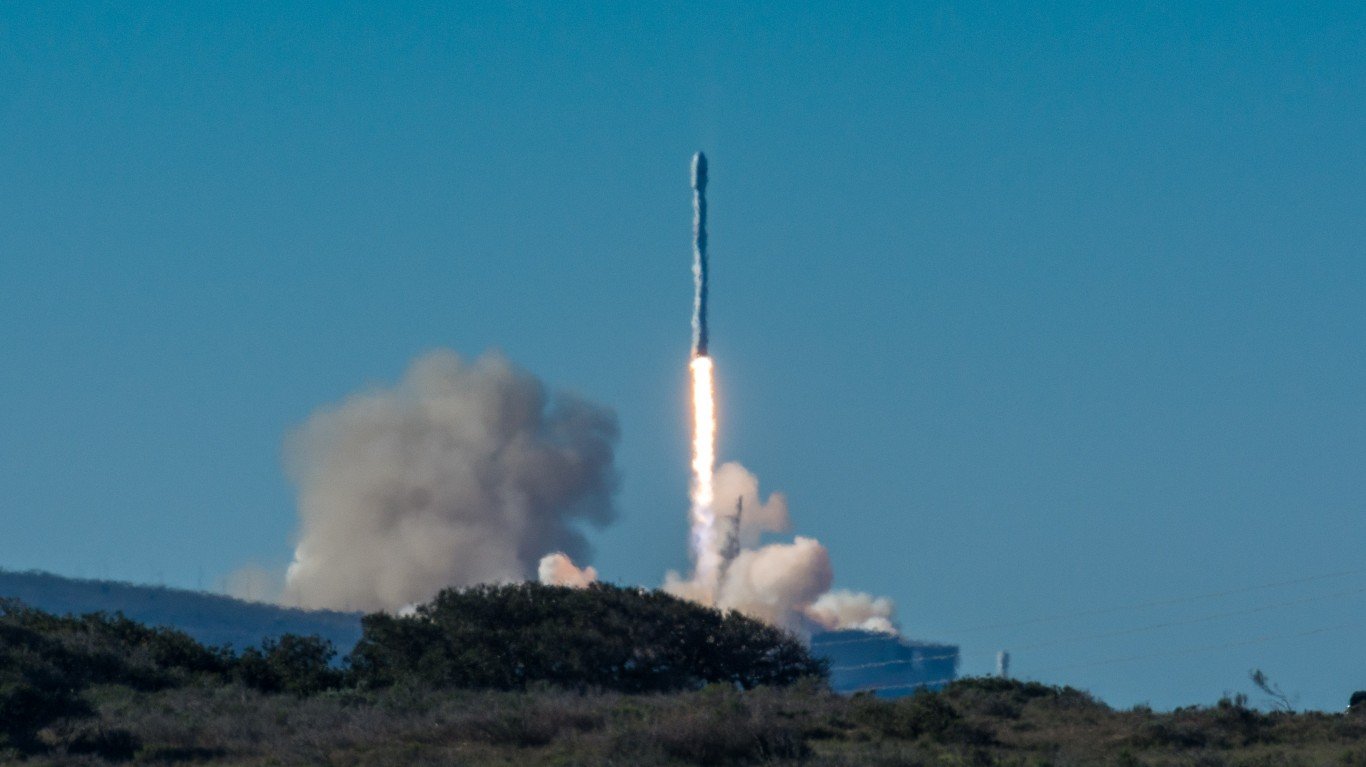
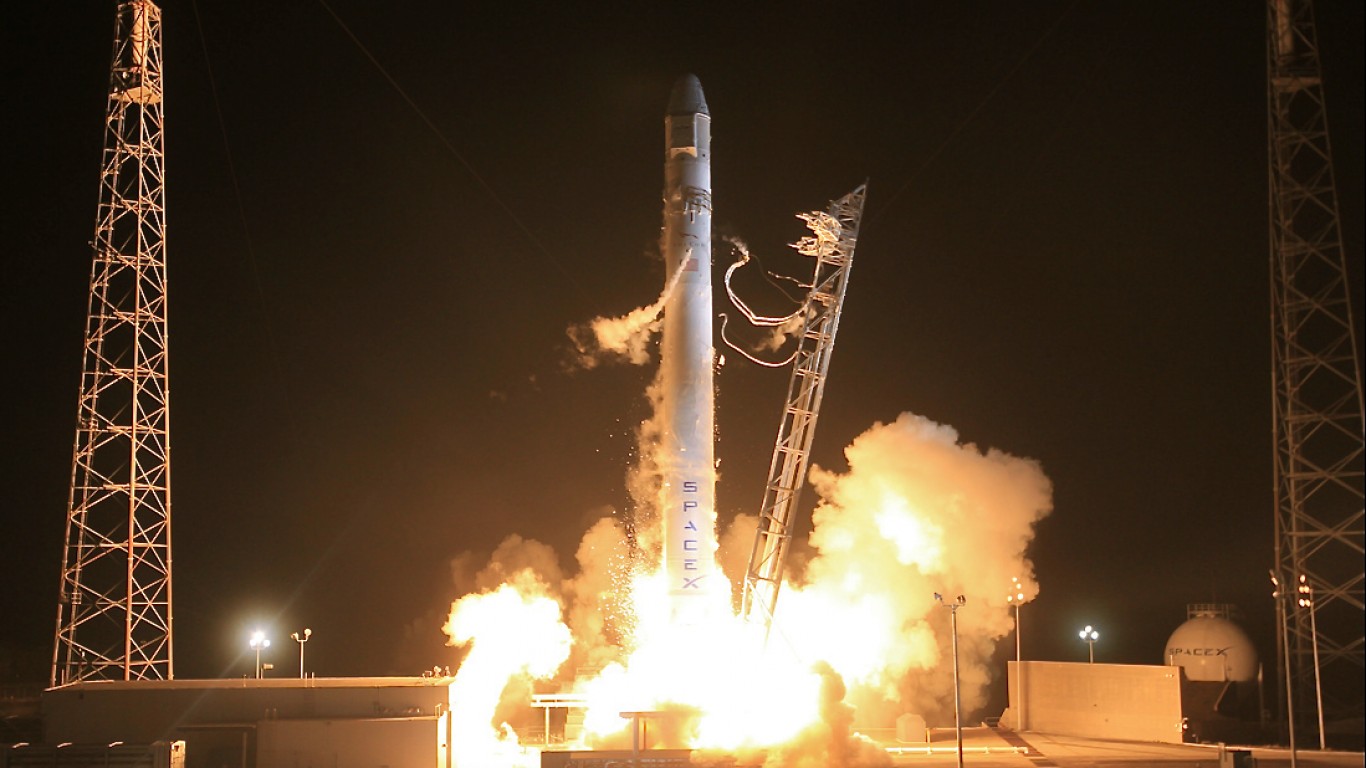
On November 16, SpaceX (NASDAQ:SPCX) won a share of a $985 million[2] launch contract modification alongside Blue Origin and United Launch Alliance. The list of winners didn’t include Rocket Lab. SpaceX stock is at $140.01, up 2%.
Cathie Wood’s ARK Invest and David Tepper’s Appaloosa Management added to their SpaceX holdings, according to the firms’ disclosures. ARK’s quarterly filing for the period ended September 30 also shows the firm added to its Rocket Lab stake. At least through that date, ARK’s appetite for SpaceX sat alongside a growing Rocket Lab position.
Rocket Lab has been signing plenty of launch work of its own. CEO Peter Beck stated in the company’s November 9 results release that “Nearly $1 billion of that backlog comes from new launch contracts, signed in Q3 2026 alone, as well as $470 million signed for Space Systems.”[1] Those launch deals include 18 HASTE launches[3] for the Space Force Systems Command and eight Neutron launches.
What the Peer Group Says About Rocket Lab
AST SpaceMobile (NASDAQ:ASTS) stock is at $27.75, down 3%. This satellite operator holds launch agreements with SpaceX, Blue Origin and others covering more than 100 satellites for 2027 and 2028, which places it on the buying side of the launch market. Blacklift, a reusable rocket the company is developing, isn’t expected to start flying until late 2028.
Intuitive Machines (NASDAQ:LUNR) stock is at $11.27, down 4%. Lunar delivery missions, satellite production and ground networks drive the company’s business, and its decline roughly matches Rocket Lab’s.
How Rocket Lab’s Business Model Differs From Its Peers
Rocket Lab builds rockets, spacecraft and components under one roof, combining Electron small launches and HASTE suborbital test flights with a growing space systems business. Neutron, a reusable medium-lift rocket still in development, is the company’s bid to compete for larger payloads. Beck framed the company’s standing on the November 9[3] earnings call: “Fundamentally, there have been two commercial companies that have developed a vehicle, brought it to market, and scaled. That has been SpaceX and Rocket Lab.”
AST SpaceMobile operates a satellite network, partnering with mobile carriers to deliver cellular broadband straight to standard smartphones. Intuitive Machines centers on NASA lunar deliveries, a lunar data relay constellation, satellite production and ground stations. Of the three, only Rocket Lab sells rides to orbit, which puts it in direct competition with SpaceX for government launch work.
Rocket Lab’s Path in a SpaceX-Led Launch Market
Rocket Lab’s key question is whether Neutron reaches its first launch, targeted for no earlier than 2027[1]. A Yahoo Finance piece on November 17 quoted an analyst calling AST SpaceMobile’s plan to build its own rocket within two years “totally unrealistic,” while noting Rocket Lab is still building one. That remark cuts both ways, since it shows how hard new rockets are to build and how long Rocket Lab’s own effort is taking.
The bulls point to Rocket Lab’s record backlog and to Beck’s view that “Launch is extremely constrained.”[3] In that reading, SpaceX can’t fly every mission alone, and ARK’s larger Rocket Lab stake suggests big-name money can own both. Management said the first 16 Neutron launches[3] are already booked, with the next open slots in the 2030s.
The bears might counter that the Neutron delay, growing GAAP losses and dilution from large at-the-market stock sales leave Rocket Lab trailing a rival with far greater scale. SpaceX’s fresh contract share and the buying from Wood and Tepper show where some government and institutional money is flowing. The Neutron launch timeline could remain a key variable for Rocket Lab stock.

Contact [email protected] for any questions or corrections.
David Moadel is financial writer specializing in stocks, ETFs, options, precious metals, and Bitcoin. David has written well over 1,000 articles for leading online publications, helping investors understand markets, income strategies, and risk. His work has appeared in 24/7 Wall St., The Motley Fool, InvestorPlace, U.S. News & World Report, TipRanks, ValueWalk, Benzinga, Market Realist, MarketScreener, TalkMarkets, Finmasters, and others. With a master’s degree in education, David has taught at the elementary, high school, and college levels. That teaching background shapes his writing style: clear, educational, and practical. David has also built a loyal social-media audience by providing trustworthy financial content on YouTube, X/Twitter, and StockTwits.