Steve Eisman Says the Biggest AI Risk Is Local Governments Slowing Data Center Construction

This post may contain links from our sponsors and affiliates, and Flywheel Publishing may receive compensation for actions taken through them.
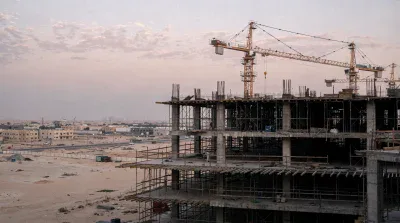
“Big Short” investor Steve Eisman went on CNBC on November 17, 2026, and said the biggest danger to the AI trade sits with local zoning boards and statehouses, ahead of chip supply. In the full interview, he said: “I think the biggest issues by far are how much are local and state governments going to slow AI data center construction? Is it going to be a 100% moratorium? That would obviously put the country into a recession overnight, or is it something like 10 to 30%?” Steve Eisman’s range runs from a 100% freeze, which he called a recession trigger, to a more plausible 10 to 30% slowdown.
He also addressed reports about the leading AI chipmaker’s sales in Southeast Asia, where Steve Eisman said those sales could be around 15% of chip revenue: “That’s a lot.” Even so, he ranked permitting first. A GPU generates nothing until a powered building is ready to hold it.
Why Towns Are Pushing Back on Data Centers
A moratorium is a temporary pause on new permits, usually while a town or state revises its rules on zoning, power, or water. The resistance comes down to electricity, water, and land. A Colorado legislative staff memo notes that data centers require large amounts of electricity for computational power and water to cool the computer systems. It adds that laws covering land use, water use, and protections for residential customers have already passed nationwide. In House testimony, the American Public Power Association said the average individual data center load doubled from 150 to 300 megawatts (MW) between 2023 and 2024. The EIA says U.S. electricity demand has grown 2.1% per year, on average, over the last five years after 15 flat years.
The friction is already changing where projects go. On the third-quarter call of Digital Realty (NYSE:DLR), Chief Investment Officer Gregory Wright pointed to “numerous moratoriums across Michigan”[1] and power queues in Ohio as reasons hyperscalers are moving into Indiana.
Who Takes the First Hit From a Slowdown
Data center REITs: Digital Realty has 1.5 gigawatts under construction[1], with 63% already pre-leased. Its chief executive acknowledged, “Yes, there’s always here and there a delay.”[1] At Equinix (NASDAQ:EQIX), CEO Adaire Fox-Martin said: “Power availability, legislation and community sentiment have created some headwinds for the industry.”[2] She also noted that cancellations would make “already scarce capacity much more of a scarce resource.” Equinix stock is up 36.94% year to date.
Power equipment: Vertiv (NYSE:VRT | VRT Price Prediction) grew Q3 revenue 61.2%[3] to $4.31B. Its CEO said permitting and power are “pacing items, but they are not slowing down growth.” Eaton reported Electrical backlog up 46%. Investors still look nervous. Over the past month, Vertiv has fallen 8.85% and Eaton 13.76%.
Power producers: Constellation Energy (NASDAQ:CEG) is down 22.76% year to date. Its CEO called that “a bit of an overreaction in the market to the election results based upon fear that Democrats won’t let data centers get built.”[4]
Why Amazon Could Win in a Slower Build
Eisman’s second point flips the risk: “But longer term, I think if the AI data center construction story is 10 to 30% less, the group that makes out the best are the hyperscalers because they go cash flow positive.” Amazon (NASDAQ:AMZN) spent $77.26B[5] on capex in Q3, up 120%, and still expects about $220B for 2026. AWS revenue grew 39%[5]. If building slows, that spending falls while tight capacity supports pricing. Eisman said a slowdown would make construction “much more sustainable.”
Eisman Is Watching the Right Bottleneck
Demand shows up everywhere in the earnings data. Equinix booked a record $533M in annualized gross bookings, and Vertiv’s organic orders more than doubled. The weak point is getting buildings permitted and powered. Suppliers like Vertiv and Eaton depend on construction volume. Landlords that already hold permitted, energized sites, and hyperscalers paying the capex bill, could come out ahead if capacity tightens (we featured seven of the power, cooling, and networking suppliers riding this expansion in a free report).
Three things will show which end of his range plays out. First, FERC’s ruling on colocation, which Constellation expects in the first half[4] of next year. Second, whether Equinix delivers more than 13,000 cabinets[2] in Q4. Third, Digital Realty’s 250 megawatts[1] of pre-leased deliveries due over the next two quarters.
Contact [email protected] for any questions or corrections.
Chris Lange is a financial and geopolitical writer with more than a decade of experience covering a myriad of topics. He has published thousands of articles for 24/7 Wall St., with past coverage focused heavily on stocks, IPOs, healthcare, defense, global affairs, and technology.
His work has been quoted, or referenced by a number of outlets including Business Insider, USA Today, Yahoo Finance, MSN, The Motley Fool, and many other publications. A graduate of Southwestern University, he studied business with a focus on investments and has previous experience in banking and startups.
When not reading or writing the news, he is following his passion for Lacrosse, playing chess, or building solar projects with his dad.