3 Mining Giants Pay Big Dividends, but Their Yields Come With a Catch

This post may contain links from our sponsors and affiliates, and Flywheel Publishing may receive compensation for actions taken through them.
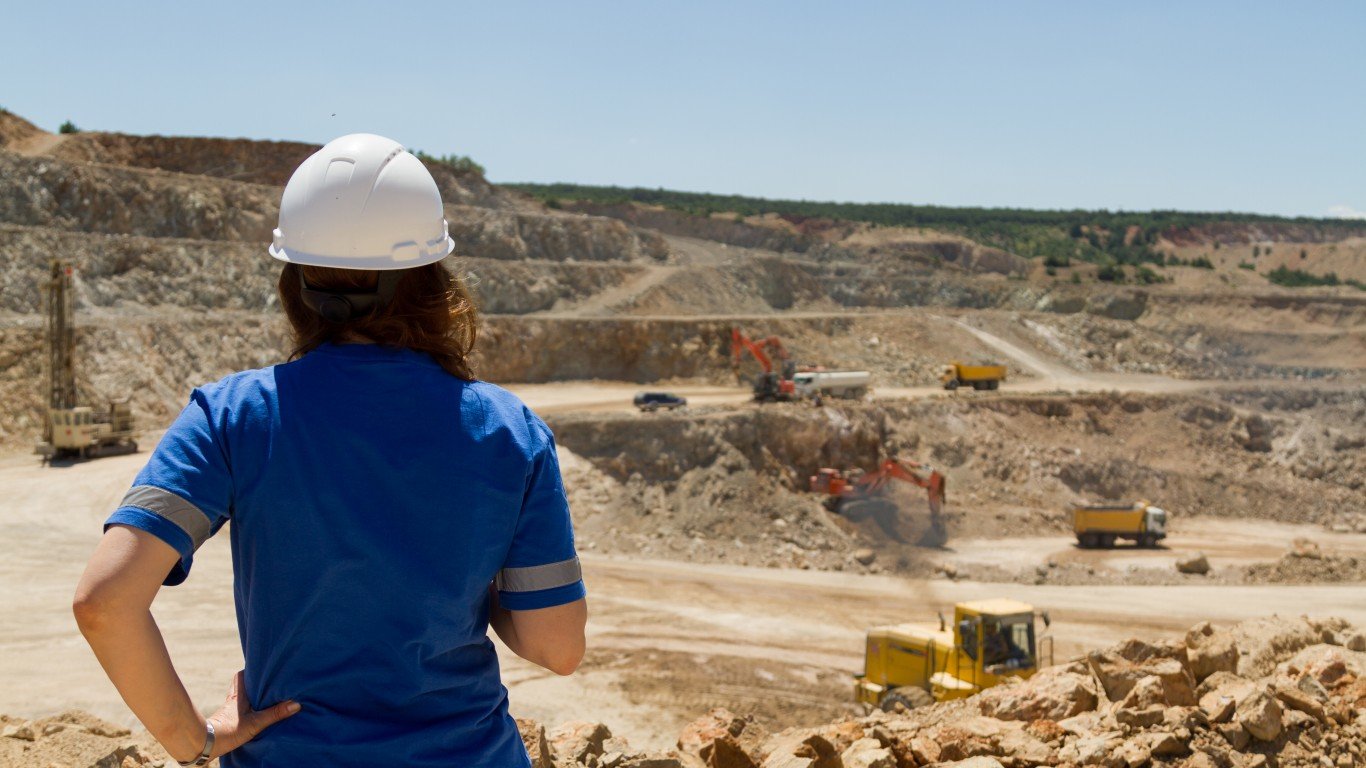
Mining dividends rise and fall with copper, iron ore, and aluminum prices. The largest miners pay out a share of what they earn instead of a fixed amount, so a mining yield works like a variable paycheck. A sharp selloff has just made that paycheck look bigger: American shares of Vale (NYSE:VALE | VALE Price Prediction) fell 22.21% over the past month, and Rio Tinto (NYSE:RIO) and BHP (NYSE:BHP) slid with it. All three are foreign companies that trade on the NYSE as American depositary shares (ADRs), so U.S. holders also take on currency swings and possible foreign tax withholding on every payment. Each name below is judged on coverage first and yield second.
Rio Tinto: A Profit-Sharing Dividend Backed by Surging Cash Flow
Rio Tinto’s last two distributions were $2.54 and $2.11 per share. At a live price of $76.52, that works out to a trailing yield of about 6.08%. The 15.28% drop over the past month has pushed Rio just into ultra-high-yield territory.
The payout works like profit-sharing. The board targets total cash returns of 40% to 60% of underlying earnings through the cycle. For fiscal 2025, Rio returned $6.5 billion[1] to shareholders and kept a 60% payout ratio for the tenth consecutive year. The first-half interim dividend of 211 US cents per share totaled $3.4 billion, up 43%, for a 50% payout ratio[2] on underlying earnings. Your income tracks profits, and underlying EPS rose to 421.40 US cents (+42%)[2] in the half.
Dividend safety: First-half free cash flow (the cash left after capital spending) reached $3.834 billion (+69.48%)[2], more than covering the interim dividend. Rio ended the half with $8.913 billion[2] in cash and $65.461 billion of shareholders’ equity against $61.8 billion of total liabilities. Payments come twice a year, and the records go back to 1999, but amounts swing widely. One 2022 payout was $4.79 per share, while one 2025 payout was $1.48.
Bull case: Copper, aluminum and lithium together made up more than 50% of underlying EBITDA in the first half, so iron ore no longer carries the income by itself. Chief executive Simon Trott said, “Our strong cash flow and balance sheet allow us to declare a $3.4 billion interim ordinary dividend, up 43 percent, as we continue to invest in high-returning growth.”[2] The stock trades at a trailing P/E of 11 and a forward P/E of 10, and management is targeting a $1.8 billion annualized productivity run-rate by year-end.
Risk: Growth spending. First-half capex of $5.947 billion[2] came against operating cash flow of $9.173 billion, and Simandou will not reach full production until the second half of 2028. If iron ore falls while that project is still being paid for, the formula-based dividend shrinks with earnings.

BHP: The World’s Largest Copper Producer Is Paying Its Biggest Check in Years
Each BHP ADR represents two ordinary shares. The last two ADR distributions were $1.98 and $1.46. At a live price of $70.88, that is a trailing yield of about 4.85%. That is still high-yield, but it is the lowest of the three, so BHP earns its place here on safety and payout growth more than on raw income.
BHP also pays out a share of profits. The fiscal 2026 final dividend of $0.99 per ordinary share was fully franked and represented a 72% payout ratio. With the $0.73 interim, total dividends reached 172 US cents per share[3], or US$8.7 billion[4] returned to shareholders. That was the highest payout in four years[4].
Dividend safety: Fiscal 2026 free cash flow of $9.767 billion (+5.27%)[3] covered the full dividend bill, and operating cash flow was $21.778 billion (+16.71%). Cash rose to $18.532 billion[3] and net debt fell to $8.69 billion, which gives BHP the strongest balance sheet of the three. Records go back to 1999. ADR payouts rose from $1.00 and $1.20 in 2025 to the latest pair, though the longer history moves too much to call it a streak.
Bull case: Copper now drives the business. The copper segment posted a 70% EBITDA margin[3] as realized prices rose to $5.74/lb from $4.25/lb. Chief executive Brandon Craig said, “Copper contributed more than half of BHP’s earnings for the first time. Today, BHP is the world’s largest copper producer.”[4] BHP guides to 3% to 4% compound annual production growth through 2035[4], including about 5% annual copper growth. Shares are still up 22.42% year to date despite a 14.9% drop over the past month, and they trade at a forward P/E of 15.
Risk: The Jansen potash project. BHP took a $2.3 billion non-cash impairment, and the Stage 1 cost has risen to $8.4 billion. Capex is expected to be about $11 billion annually through FY2028, so any further overruns would compete directly with dividends before first production in mid-2027[4].

Vale: The Fattest Yield in the Group Comes With Brazil Attached
Vale’s last two distributions were $0.399802 and $0.233074 per ADR. At a live price of $10.16, that is a trailing yield of about 6.23%, the highest here and clearly ultra-high-yield. Much of that yield comes from a 19.77% drop in the stock this year.
Vale’s payout changes the most of the three. It pays dividends plus interest on capital (a Brazilian form of shareholder payout), both linked to half-year results. For the first half, the board approved $1.701 billion[5] and approved a buyback of up to 100 million shares or ADRs over up to 18 months. The swings are large: $1.558588 in one 2021 payment versus $0.055987 in one 2022 payment.
Dividend safety: Second-quarter free cash flow more than doubled to $1.505 billion (+105.47%)[5] on operating cash flow of $2.412 billion, and pro forma EBITDA rose 19% to $4.07 billion. Reported earnings were weaker. EPS of $0.32[5] missed expectations of $0.494, and net income fell 35.05%, partly because of a $798 million unfavorable derivatives swing. Vale holds $5.577 billion[5] in cash against $50.333 billion of total liabilities, and it expanded its net debt target to $10 billion to $20 billion.
Bull case: Vale is the cheapest of the three. The stock changes hands at 6 times forward earnings, compared with a trailing multiple of 66 that reflects low reported profits. Copper revenue jumped 62%[5], nickel rose 23%, and Vale aims to double copper production by 2035. Chief executive Gustavo Pimenta said, “Backed by our solid performance in 1H26, our Board of Directors approved US$ 1.7 billion in dividends and interest on capital and extended our buyback program.”[5]
Risk: Brazil. As a Brazilian company, Vale adds country and currency risk on top of commodity risk. A stronger Brazilian real is already raising costs, and Vale lifted its iron ore C1 cash cost guidance to $22.50 to $23.50 per tonne[5]. On top of that, $3.9 billion[5] in Brumadinho and Samarco compensation provisions are still outstanding.

Who Should Own a Mining Paycheck
Rio Tinto, BHP and Vale all pay dividends the same way: as a slice of commodity profits, so income grows when copper and iron ore are strong and shrinks when they fall. That fits income investors who can live with uneven checks in return for above-market yields, strong free cash flow, and growing copper exposure. Among the three, BHP has the strongest balance sheet, Rio has the most disciplined payout formula, and Vale has the biggest yield with the most risk. These stocks are a poor fit for retirees who need the same predictable check every quarter to cover fixed bills (we made the full case for an income-first approach, instead of drawing down a set percentage each year, in a free report here).
Contact [email protected] for any questions or corrections.
Chris Lange is a financial and geopolitical writer with more than a decade of experience covering a myriad of topics. He has published thousands of articles for 24/7 Wall St., with past coverage focused heavily on stocks, IPOs, healthcare, defense, global affairs, and technology.
His work has been quoted, or referenced by a number of outlets including Business Insider, USA Today, Yahoo Finance, MSN, The Motley Fool, and many other publications. A graduate of Southwestern University, he studied business with a focus on investments and has previous experience in banking and startups.
When not reading or writing the news, he is following his passion for Lacrosse, playing chess, or building solar projects with his dad.