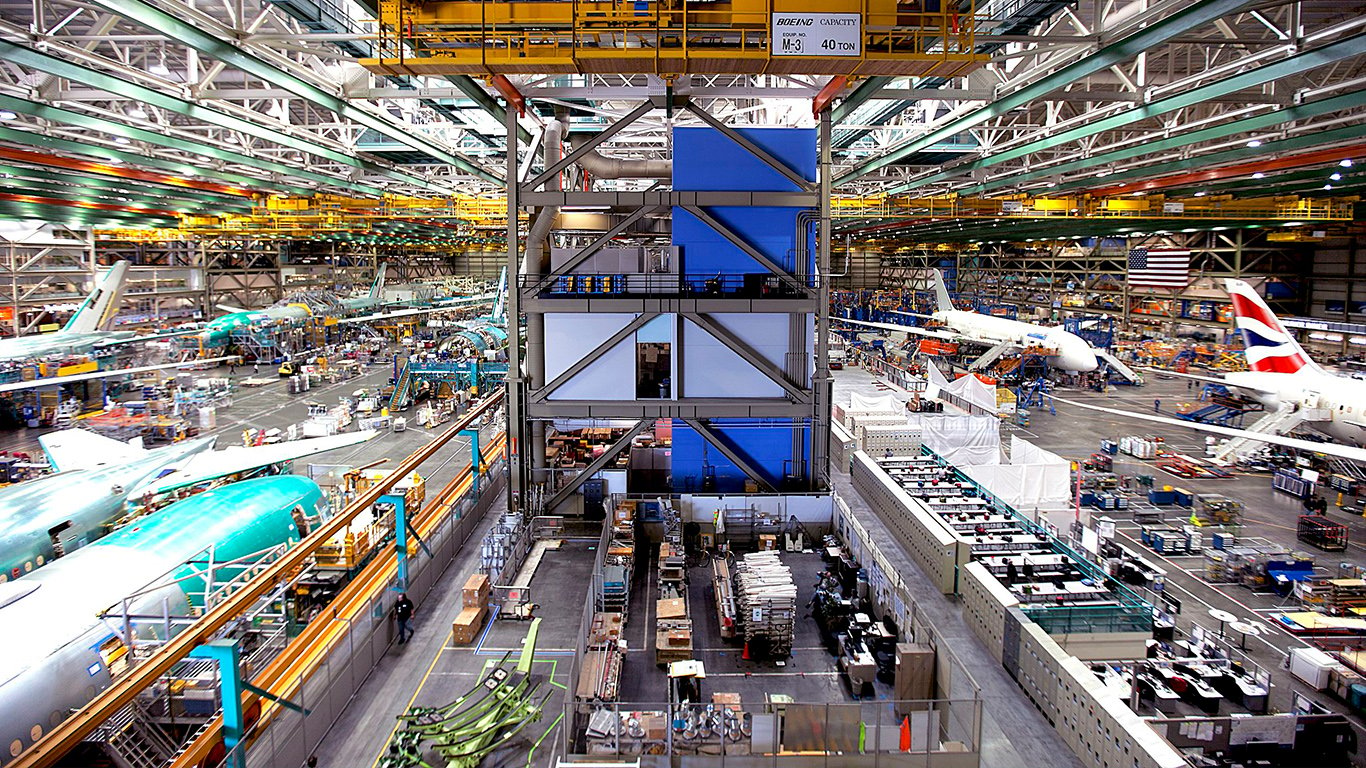
Boeing Is Down 25% This Year. Can a $12 Billion Philippine Airlines Deal Help Get BA Stock Back to $200?

This post may contain links from our sponsors and affiliates, and Flywheel Publishing may receive compensation for actions taken through them.
A major widebody order from Philippine Airlines hasn’t been enough to pull Boeing (NYSE:BA | BA Price Prediction) out of its 2026 slump. Boeing stock is flat at $163.90 in Wednesday trading. That price leaves the stock down 25% year to date (YTD).

Shares of Boeing finished 2025 at $217.12. The 52-week low for Boeing is $164.71, so the stock is trading near the bottom of its one-year range. Even a deal touted by the White House hasn’t lifted the stock off that floor. So, is there hope for a rally to $200?
Philippine Airlines Order Points to Strong Widebody Demand
The White House said in a fact sheet released November 18[1] that Philippine Airlines finalized a $12 billion purchase from Boeing, with engines from GE Aerospace (NYSE:GE). According to the White House, the order covers up to 20[1] Boeing 787 aircraft and supports 47,000 U.S. jobs. The deal is part of more than $17 billion[1] in commercial agreements. The White House linked them to President Trump’s Philippines visit and the Association of Southeast Asian Nations (ASEAN) summit.
A planned foreign military financing package of more than $2 billion[1] for Philippine purchases of U.S. defense equipment was also part of the White House announcement. For Boeing, the 787 order is one more sign of healthy widebody demand. Boeing already reported a record commercial airplane backlog of $612 billion[2] in its Q3 2026 results, so one order rarely sets the stock’s direction on its own.
What It Would Take to Get Boeing Back to $200

Getting Boeing stock back to $200, a level it traded above when the year began, requires a 22% gain. Wall Street’s consensus price target for Boeing is $233.35. Among covering analysts, 6 rate the stock Strong Buy, 19 rate it Buy and 3 rate it Hold.

Turning certifications into deliveries comes first for Boeing. The Federal Aviation Administration (FAA) certified the 737-7, the smallest MAX model, in early August. Certification of the largest MAX model, the 737-10, slipped in late September and sent Boeing stock sharply lower that day, before the company disclosed on October 27[2] that the jet had received amended type certification. Chief Financial Officer Jesus Malave Jr. said on the earnings call that the two models should deliver “around 30 aircraft that are prebuilt”[3] next year.

Production, cash generation and the space business remain the main concerns for investors in Boeing. CEO Kelly Ortberg acknowledged on the same call that “it is taking us longer than we had expected”[3] to stabilize 737 output at its higher rate. Steadier factories would support cash flow, while the space business remains a persistent drag on sentiment.
Repeat widebody orders would help Boeing, too. More deals like the Philippine Airlines purchase could boost 787 demand as the company works to raise output on that line. On the 787 program, Ortberg noted “the factory is performing well.”[3]
GE Aerospace and RTX Have Outpaced Boeing in 2026
GE Aerospace stock is at $328.66, up 7% YTD. Meanwhile, RTX (NYSE:RTX) stock is at $196.09, up 8% YTD. Both aerospace names are higher this year while Boeing is lower, which shows how badly Boeing has lagged the group.
Engine servicing drives much of GE Aerospace’s profit. A huge installed base helps, and the company shares in the Philippine Airlines order as the engine supplier. Pratt & Whitney engines, Collins Aerospace systems and Raytheon missiles give RTX a mix of aftermarket and defense revenue, while Boeing, by contrast, builds and delivers whole planes, so factory stumbles and certification delays hit its cash flow directly.
Weighing Boeing’s Road Back to $200
Boeing’s supporters can point to its record total backlog of $745 billion[2] and management’s goal of $10 billion[3] in free cash flow in 2029. In response, the bears can counter with three[4] straight quarterly losses this year and a Commercial Airplanes operating margin of negative 6.5%[2] in Q3. Another variable for Boeing is the rate outlook, as New York Fed President John Williams stated on November 17 that surging artificial intelligence (AI) investment could argue for more rate hikes next year.
Philippine Airlines’ order strengthens the demand side of Boeing’s debate, while the factory and cash questions stay open. For Boeing, the coming test is whether the 737 line stabilizes and the 777-9 stays on track for its first delivery in 2027[2]. Boeing’s 737 production ramp could remain a key driver factor for BA stock.
Contact [email protected] for any questions or corrections.
David Moadel is financial writer specializing in stocks, ETFs, options, precious metals, and Bitcoin. David has written well over 1,000 articles for leading online publications, helping investors understand markets, income strategies, and risk. His work has appeared in 24/7 Wall St., The Motley Fool, InvestorPlace, U.S. News & World Report, TipRanks, ValueWalk, Benzinga, Market Realist, MarketScreener, TalkMarkets, Finmasters, and others. With a master’s degree in education, David has taught at the elementary, high school, and college levels. That teaching background shapes his writing style: clear, educational, and practical. David has also built a loyal social-media audience by providing trustworthy financial content on YouTube, X/Twitter, and StockTwits.