A 70-Year-Old Who Bought 1,000 Berkshire Shares at the May 2025 Peak Waited 17 Months to Break Even

This post may contain links from our sponsors and affiliates, and Flywheel Publishing may receive compensation for actions taken through them.

A sample 70-year-old who bought Berkshire Hathaway (NYSE:BRK-B | BRK-B Price Prediction) at the top in May 2025 is finally ahead. That creates a 2026 tax decision that a few hundred dollars of planning can change. One partner in a married couple filing jointly bought 1,000 shares of Berkshire Class B in a taxable account at the $539.80 close on May 2, 2025. At the $583.34 close on Nov. 10, the stake was worth $583,340, a gain of $43,540.
A single stock position that large also has concentration risk. If it makes up a big share of the household’s savings, one company’s results, leadership changes and valuation will drive much of the couple’s net worth. That risk is the reason to look at the tax cost of cutting now that the shares are back above cost.
How a Single-Day Drop Turned Into a 17-Month Wait
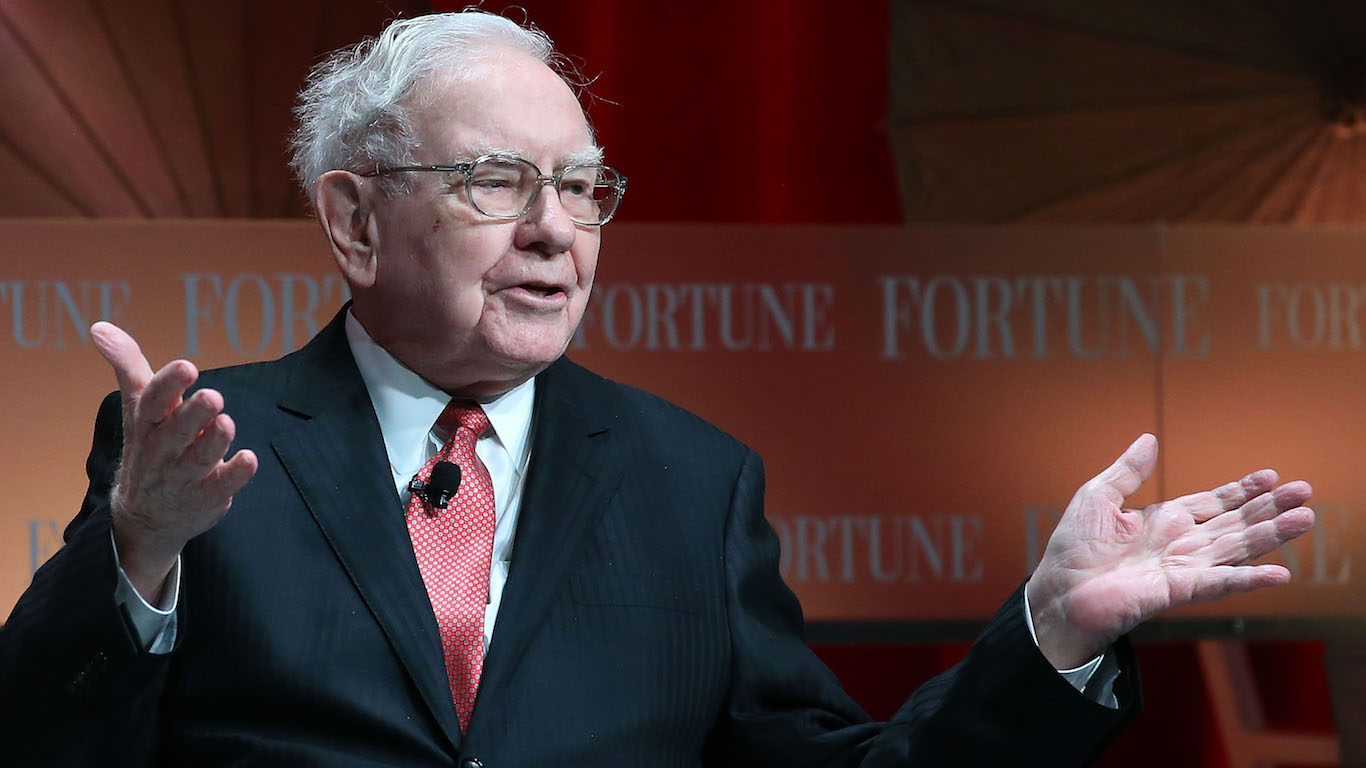
The purchase date ended up being the worst possible day to buy. On May 3, 2025, Warren Buffett announced that he would step down as CEO and wanted Greg Abel to replace him. On the next trading day, Class B closed at $512.15, down 5.12%.
The shares did not close above the purchase price again until Oct. 20, at $539.82. By then Abel had been CEO since January 1, 2026. Reuters reported that Buffett stepped down as chairman on September 18, 2026 and that his son Howard replaced him.
The stock has kept rising since breakeven. Class B rose 0.84% from the November 10 close to end at $588.24 on Nov. 11. It was trading at $590.77 on Thursday afternoon, up 0.43% on the session. At that price the stake is worth $590,770, or $50,970 above its $539,800 cost. The shares are up 11.93% over the past month and 19.86% year to date.

No Dividend Meant No Income During the Wait
Berkshire pays no dividend, and its dividend history shows zero payments. For 17 months, this $539,800 position paid the couple nothing in cash. If they needed money for living expenses, the only way to get it from this holding was to sell shares below cost and lock in a loss. A dividend payer would have paid them while they waited. This one did not.
What Changed Under Abel
Several things changed while the price was below cost. In the November 2025 report, Berkshire held $381.60 billion[1] in cash, bought back no stock and stayed a net seller of equities. Q4 2025 operating earnings fell to $10.20 billion[2] after $4.5 billion in impairments. Then Abel made a $15 million[2] personal share purchase, and buybacks resumed in early 2026.
In the quarterly report filed August 11, 2026[3], operating earnings rose to $12.98B from $11.16B. Berkshire bought back about $4.5 billion of its own stock and became a net buyer of equities for the first time in more than three years. Barron’s reported this week that Berkshire may be buying Class A stock directly from holders to increase buybacks. The stock trades at a trailing P/E of about 12 and 1.15 times book value.
2026 Tax Math on a Partial Trim
The gain qualifies for long-term treatment because the shares were held for more than one year (26 U.S.C. § 1222(3)[4]). For tax year 2026, IRS Publication 505 sets these rates on long-term gains for joint filers. Gains are taxed at 0% up to $98,900 of taxable income, at 15% up to $613,700, and at 20% above that. Capital gains count on top of ordinary income, so pension income and IRA withdrawals use up the 0% bracket first. For 2026, joint filers may deduct $32,200.
The net investment income tax adds 3.8%[5] on the smaller of two amounts: net investment income, or modified adjusted gross income (MAGI) above $250,000 for joint filers. Net gain from selling stock counts as investment income (26 U.S.C. § 1411(c)(1)(A)(iii)[5]).
| Input (Tax Year 2026) | Value |
|---|---|
| Shares sold | 500 |
| Sale price (November 10, 2026 close) | $583.34 |
| Cash | $291,670 |
| Cost basis | $269,900 |
| Long-term gain | $21,770 |
Scenario A, average income: Assume the couple’s 2026 taxable ordinary income is $80,000 after deductions. The couple has $18,900 of room in the 0% bracket. That much of the gain is taxed at 0%, and the other $2,870 is taxed at 15%. The 2026 federal tax on the trim comes to $430.50. Selling all 1,000 shares would raise the 2026 federal tax to $3,696. At this income level, the couple’s MAGI stays well below the $250,000 limit, so the 3.8% tax does not apply.
Scenario B, higher income: Now assume the couple’s MAGI is already above $250,000, with taxable income inside the 15% bracket. The same 500-share trim is taxed at 15% plus the 3.8% surtax. That brings the 2026 federal bill to $4,092.76, and $827.26 of that is the net investment income tax.
3 Paths, 3 Tradeoffs
1. Hold: Holding costs nothing in tax in 2026, and the couple keeps all the upside if buybacks and stock purchases under Abel keep working. The downside showed up already: the shares stayed below $539.80 for 17 months, and the position paid no income during that time.
2. Cutting part of the position now: A sale in 2026 reduces the concentration and turns paper gains into cash at today’s prices. In Scenario A, the 0% bracket keeps the 2026 bill on 500 shares under $500. In Scenario B, the surtax makes the same trim cost more.
3. Spread sales across 2026 and 2027: On November 5, 2026, the IRS released its tax year 2027 updates under Revenue Procedure 2026-35. The joint standard deduction rises to $33,200, and the 12% ordinary bracket goes to $104,050. Selling some shares in December 2026 and the rest in January 2027 uses two years of low-rate room, though the price of the second lot is unknown. This window also closes. The partner born in 1955 hits the first required minimum distribution year in 2028. Starting that year, any traditional IRA withdrawals will add ordinary income ahead of capital gains.
The rules around net unrealized appreciation apply only to employer stock held in a 401(k). They don’t apply to shares bought in a regular brokerage account like this one.
What to Watch for Before Dec. 31
The tax year ends Dec. 31. Anyone in this position can pull a 2026 income projection now. It shows how much of the 0% bracket is still open and whether MAGI is close to $250,000. Those two numbers set the cost of each option. Berkshire’s next quarterly report and the rate of its Class A buybacks will show whether the stock’s move above the May 2025 price holds.
Contact [email protected] for any questions or corrections.
Joel South covers large-cap stocks, dividend investing, and major market trends, with a focus on earnings analysis, valuation, and turning complex data into actionable insights for investors.
He brings more than 15 years of experience as an investor and financial journalist, including 12 years at The Motley Fool, where he served as an investment analyst, Bureau Chief, and later led the Fool.com investing news desk. He has also co-hosted an investing podcast and appeared across TV and radio discussing market trends.