Philip Morris vs. British American Tobacco: Which Tobacco Dividend Is Better for Retirees?

This post may contain links from our sponsors and affiliates, and Flywheel Publishing may receive compensation for actions taken through them.
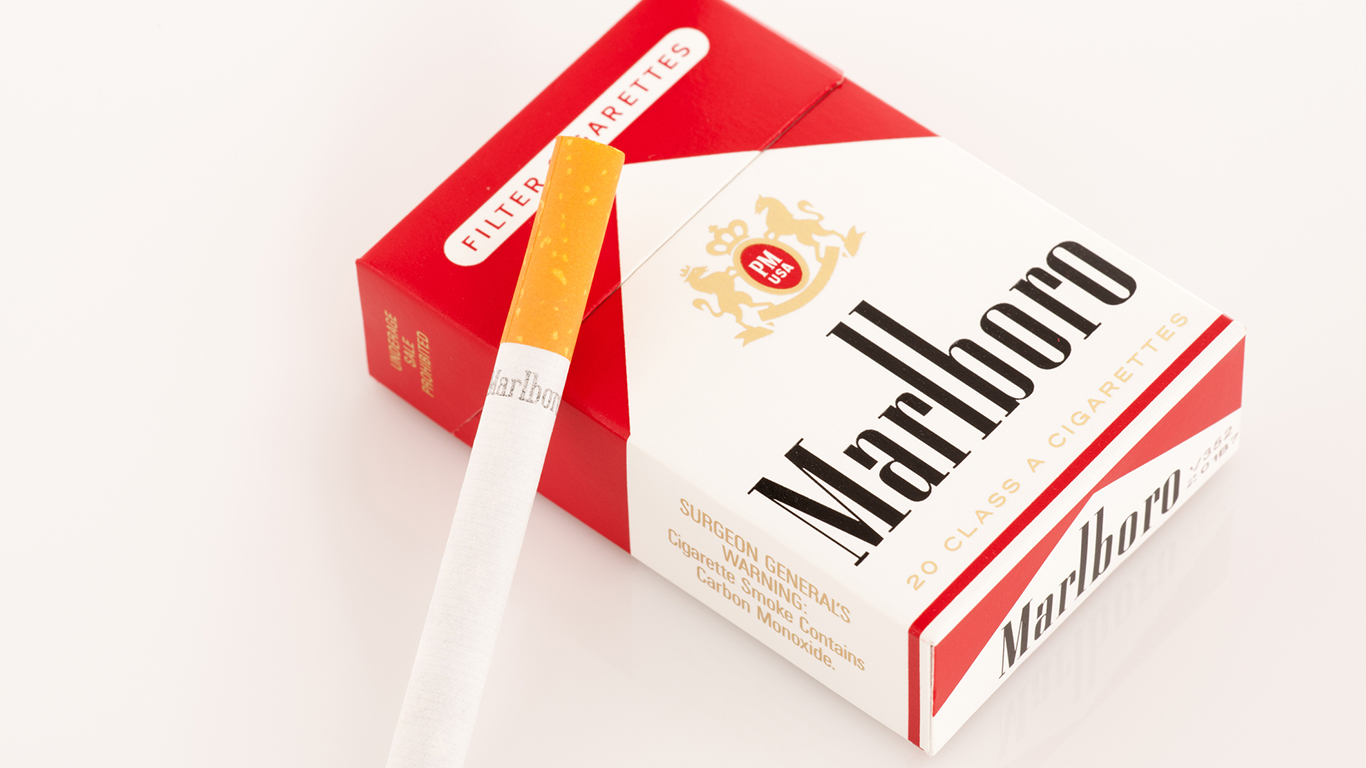
Philip Morris International (NYSE:PM | PM Price Prediction) or British American Tobacco (NYSE:BTI): which tobacco dividend holds up better for retirement-focused investors right now? The two are priced very differently. PM trades at a forward P/E of 22 and BTI at 12. Over the past year, PM shares rose 30.87%, and BTI rose 14.66%. So the choice comes down to paying up for growth or taking a bigger check today.


Dividend Safety and Growth: Philip Morris Wins
BTI pays more right now. On forward annualized payouts, it yields about 5.6%, compared with roughly 3.3% for PM. Over a 20-year retirement, though, dividend growth matters more. PM raised its quarterly dividend 8.8% to $1.60/share ($6.40 annualized)[1], its 19th consecutive year[2] of increases. BTI’s FY2025 dividend rose 2.0%[3] to 245.04p per share.
PM also covers its payout more well. In 2025, its dividends used about 81% of free cash flow. BTI’s dividends used about 88%, and once you add buybacks, total cash returned came to roughly 108% of free cash flow. PM’s net debt to adjusted EBITDA has fallen to 2.17x from 2.53x. Its negative shareholders’ equity of -$5.945B is a warning sign on the balance sheet, but leverage is heading in the right direction.
Both companies pay quarterly. BTI is a U.K. company listed in the U.S., so the dollar value of its dividend moves with exchange rates and may be subject to foreign tax withholding. Its 2026 dollar payments of $0.834851 were about 11.5% higher than 2025’s $0.749068, even though the raise in pence was only 2.0%. A stronger pound did most of that work, and currency gains can reverse.
Smoke-Free Momentum: Philip Morris Wins
Smoke-free products made up 41.5%[4] of PM’s net revenues in 2025. In the third quarter, revenue reached $11.44B[1], up 7.1% organic, and adjusted EPS of $2.36 exceeded the $2.3425 estimate. VEEV shipments grew 62%,[2] and IQOS adjusted IMS rose 7.1%. PM expects 2026 adjusted EPS of $8.29 to $8.44[1], which works out to 9.9% to 11.9% growth.

BTI is further behind. Combustibles brought in $20.2B[3] of its $25.61B in revenue, about 79% of the total. Velo grew 48%,[3] and BTI now has 34.1M smokeless consumers, but vapor revenue fell 10.4%. BTI guides to 5% to 8% adjusted EPS growth for 2026, with a currency drag of about 3%.
Valuation: British American Tobacco Wins
BTI is the cheaper stock on every major measure. Its trailing P/E is 16, compared with PM’s 29. On EV/EBITDA, it trades at 10.92x versus 18.22x. At $59.25, BTI sits below its 52-week high of $65.33. Its beta of 0.086 is lower than PM’s 0.35, so the shares have moved less with the broader market. The discount comes with risks attached, including a potential £1.08B[3] liability from Dutch tax assessments.


Verdict: Philip Morris Leads on Retirement Income Durability
Philip Morris wins two of the three categories, and those two matter most for retirees. It raises its dividend faster, pays in dollars, covers the payout with more free cash flow to spare, and gets more of its sales from smoke-free products. Over ten years, PM shares returned 255.71%, compared with 119.17% for BTI. For a retired person with a horizon of a decade or more, PM’s track record is stronger.
BTI fits a different kind of retiree: one who needs the most income today, is comfortable with currency swings, and wants a low valuation as a cushion. Its next payment comes February 8, 2027. PM holders should keep an eye on fourth-quarter U.S. results. Management expects U.S. adjusted operating income to come in around zero or slightly negative[2] while it spends heavily behind ZYN.
Contact [email protected] for any questions or corrections.
Chris Lange is a financial and geopolitical writer with more than a decade of experience covering a myriad of topics. He has published thousands of articles for 24/7 Wall St., with past coverage focused heavily on stocks, IPOs, healthcare, defense, global affairs, and technology.
His work has been quoted, or referenced by a number of outlets including Business Insider, USA Today, Yahoo Finance, MSN, The Motley Fool, and many other publications. A graduate of Southwestern University, he studied business with a focus on investments and has previous experience in banking and startups.
When not reading or writing the news, he is following his passion for Lacrosse, playing chess, or building solar projects with his dad.