Anthropic Just Started Trading. Amazon’s $18 Billion Bet Is Now Worth $216 Billion

This post may contain links from our sponsors and affiliates, and Flywheel Publishing may receive compensation for actions taken through them.
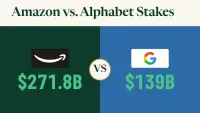
Amazon’s stake in Anthropic was worth $216 billion the moment the AI company’s first trade crossed on Nasdaq at 11:49 a.m. Eastern on Thursday. The print came at $111.50 a share, 34% above the $83 price set the night before. If you own Amazon stock, you had money riding on it.
The stake is 1.94 billion shares. It grew out of $18 billion invested over three years, so the first trade values it at about 12 times the money that went in. That is $55 billion more than it was worth at the offering price hours earlier. Spread across the 10.8 billion Amazon shares outstanding, it comes to about $20 for each one you hold. With 100 shares, that is about $2,000 of a $27,000 position.
An $18 billion investment now priced at $216 billion reads as a bet that has paid off; the gain is on paper, none of it has been sold, and the figure moves with every trade. Here is how much of the new stock sits behind your shares, what changed between the offering price and the first trade, and what a couple with 500 shares should count before buying more.
How much of the new stock sits behind each share you own
Divide the 1.94 billion shares in the stake by those 10.8 billion shares outstanding and you get 0.18. That is the fraction of one share of the new stock, ticker ANT, behind each share in your account. Put another way, about 18 ANT shares sit behind every 100 of yours. The counts come from the two companies’ latest filings.
That ratio stays put unless the stake itself changes. The dollar value moves with the new stock. Each $1 move there is worth about $1.9 billion to the stake, or about 18 cents for each share you own.
| Amazon shares you own | ANT shares behind them | Worth at $83 (offering price) | Worth at $111.50 (first trade) |
|---|---|---|---|
| 100 | 17.9 | $1,486 | $1,997 |
| 250 | 44.8 | $3,716 | $4,992 |
| 500 | 89.5 | $7,432 | $9,984 |
| 1,000 | 179.1 | $14,864 | $19,968 |
You own that slice only through the shares in your account. You cannot sell it on its own, and nobody votes it: the holding is a non-voting class.
What changed between $83 and the first trade
At the offering price the stake was worth $161 billion, or about $15 for each share you own. The first trade lifted that figure to about $20. The first trade alone added more than the whole original investment.
The stake equals about 7% of what the market says all of Amazon is worth, roughly $2.92 trillion. The stock was at $270.13 around the time of the first trade, up 0.9% on the day, after rising 3.8% on Wednesday, the day the deal priced. The change since the pricing works out to $5.10 a share, a small number next to a $270 stock. The share price also answers to the stores, the ads and the cloud unit.
The cloud unit has its own tie to the AI company. The filing says Anthropic has committed to spend at least $110 billion with Amazon Web Services from May 2026 through April 2036, about $11 billion a year. That money is owed wherever the new stock trades.
Kevin, Grace and a $20,000 question
Picture a couple who retired early from tech jobs. Call them Kevin, 58, and Grace, 56. They keep 500 Amazon shares in a brokerage account, a position worth about $135,100. Kevin wants to put $20,000 into ANT on its first day. Grace asks how much of it they already own.
The answer is about 90 shares. That many sit behind their 500, worth about $10,000 at the first trade. Kevin’s order at that price would buy about 179 more and lift the couple’s exposure to about $30,000, about three times what they carry now.
Grace has three things for Kevin to count before the order goes in.
What they already hold. Their shares give them a claim on the new stock that rises and falls with ANT at no extra cost. A 10% move in ANT changes that slice by about $1,000. If you own an S&P 500 index fund, you carry a smaller version of the same claim, because Amazon is one of the index’s largest members.
How much of their money leans the same way. One company sells computing to the other and owns a piece of it. With a six-figure position in the first and a new position in the second, Kevin and Grace would have two holdings tied to demand for AI computing.
What a first-day price is. The first trade is one print. On a stock’s first day, buyers who missed the offering meet holders who got shares the night before, and the price can travel a long way in either direction. Nothing about the couple’s 500 shares requires a decision today. The same goes for yours.
Where this math is weak
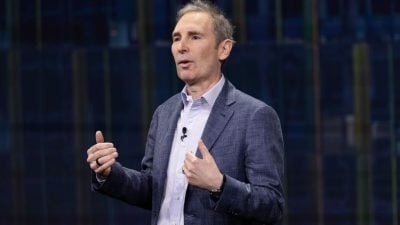
None of the stake has been sold, and management says none will be soon. Andy Jassy, the chief executive of Amazon, told CNBC on Tuesday: “We plan on being holders of their stock and equity for long period of time.” The value reaches you only through the price of your own shares, and any sale would be taxed at the corporate level first.
The share count can also change. Part of the original investment is still in convertible notes that have not become shares. The amended filing of Nov. 17 says the holding would be 3.48 billion shares if those notes converted in full, a stake worth about $388 billion at the first trade. A 12% ownership cap that Amazon chose not to waive keeps the count at 1.94 billion for now, the figure in the final prospectus filed Thursday.
The bottom line
The first trade at $111.50 put the stake at $216 billion, about 12 times the $18 billion invested and about $20 for each share you own. That slice of your account now has a public price. Count it, as Grace did, before you decide how much more you want.
Contact [email protected] for any questions or corrections.
I've spent more than 15 years inside enterprise software, working alongside the finance, sales operations, and HR leaders who run the revenue engines at some of the largest tech companies in the country.
My day job is helping enterprise executives make smarter decisions about retention, compensation, and growth. These are the same operational levers that show up in every earnings report investors actually read. That perspective shapes my writing for 24/7 Wall St.
The headline numbers are easy. The interesting stuff is underneath: how companies make money, what executives are worried about, and what any of it means for the person checking their 401(k) on a Sunday afternoon. I write about personal finance and business as someone who has spent her career inside the rooms where these decisions get made.