The Fed Just Warned About a Hidden $3 Trillion AI Risk. Here’s How It Can Spread Beyond Tech Stocks

This post may contain links from our sponsors and affiliates, and Flywheel Publishing may receive compensation for actions taken through them.
Artificial intelligence has become one of the biggest investment stories in generations. Trillions of dollars are flowing into data centers, advanced semiconductors, and the power infrastructure needed to support them. Investors have rewarded companies promising to capture that growth, while lenders have increasingly helped finance the expansion.
But an uncomfortable question is emerging beneath the enthusiasm. What happens if those investments don’t produce the returns everyone expects?
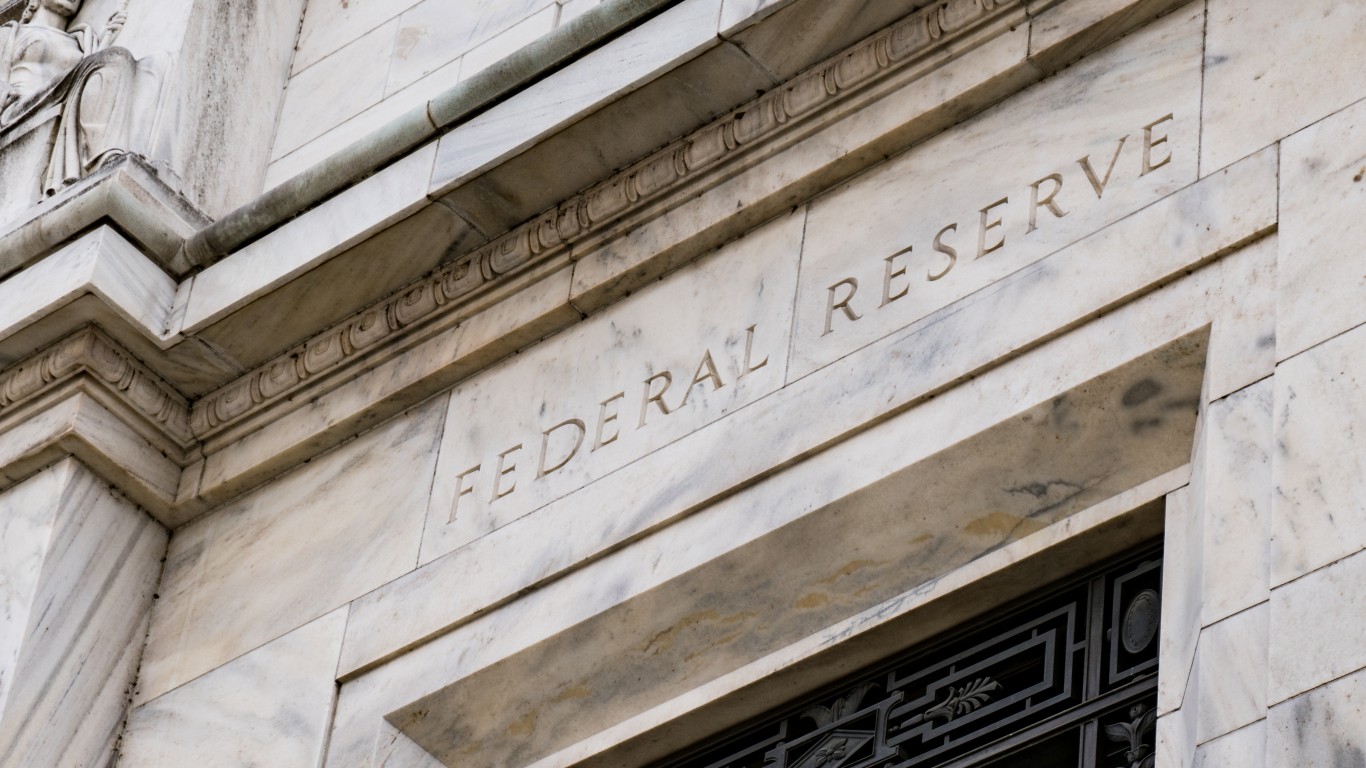
The Federal Reserve has identified a potential answer, and it extends well beyond technology stocks. Its latest financial-stability assessment highlights more than $3 trillion in potential off-balance-sheet obligations tied to the AI boom.
The $3 Trillion Risk Hiding Behind AI’s Growth
In a Nov. 16 speech, Federal Reserve Governor Michael Barr warned that AI infrastructure financing is becoming more complicated — and potentially more dangerous.
Barr cited the Fed’s Nov. 13 Financial Stability Report, which estimates that the maximum nominal value of off-balance-sheet obligations associated with major AI companies now exceeds $3 trillion. These include long-term data-center leases, energy contracts, financing guarantees, and other commitments that aren’t recorded as conventional corporate debt.
That’s on top of more than $800 billion in on-balance-sheet debt expected among seven major AI companies by year-end.
The details are important. The $3 trillion isn’t a forecast of losses or debt coming due tomorrow. It represents potential contractual exposure that could become problematic if AI investments disappoint. The Fed also cautions that these undiscounted commitments aren’t directly comparable with conventional debt.
The Fed’s October meeting minutes, released Nov. 18, identified three interconnected vulnerabilities: rapidly growing debt, circular financing arrangements, and complex obligations that can obscure where financial risks ultimately reside.
Nvidia (NASDAQ:NVDA | NVDA Price Prediction) is the most prominent example. The chipmaker supplies processors to companies building AI infrastructure, some of which rely on borrowing or financing arrangements supported by future computing demand.
As Michael Burry recently warned about Nvidia’s financing relationships, the financial consequences of disappointing AI demand could reach companies that never manufactured a semiconductor.
How AI Trouble Could Spread Across Wall Street
The danger lies in how interconnected the financing has become. A data-center operator might borrow billions to purchase equipment, lease facilities from another company, and sign long-term power contracts with utilities. Meanwhile, its customers may be counting on future AI revenue to cover their commitments.
If those revenues disappoint, the problems can travel through the financial system.
| Sector | Potential Consequence |
| Semiconductor suppliers | Slower equipment orders |
| Data-center operators | Lower utilization and refinancing pressure |
| Banks and private lenders | Credit losses or tighter lending |
| Utilities | Underused infrastructure and disputed cost recovery |
| Investment funds | Falling asset values and forced selling |
The October Fed minutes specifically warned that leveraged hedge funds, bond mutual funds, and even target-date retirement funds could face pressure to sell assets during severe market disruptions.
That creates a second problem. Selling by one group of investors can push prices lower, forcing others to reduce exposure. Barclays (NYSE:BCS) just warned that the AI trade is one of the most important glues holding the economy up, and if it unwinds, everything else is “irrelevant.”
It’s how a correction in one industry can become a broader market event. The Fed also observed that borrowing costs had risen for riskier AI infrastructure companies, particularly those financing data-center construction.
Higher interest rates could make the problem worse. The Fed’s October meeting minutes, released yesterday showed that almost all policymakers expected additional rate increases. Futures markets were pricing in three quarter-point hikes by summer 2027. For AI infrastructure companies borrowing billions to finance data centers, that could mean higher refinancing costs just as investors demand stronger returns.
Why Strong AI Companies Aren’t Necessarily Safe From the Fallout
Admittedly, the Fed isn’t predicting a financial crisis. Its assessment found that bank and household balance sheets remain strong enough to provide a buffer against severe losses.
Nor are all AI companies equally vulnerable. Microsoft (NASDAQ:MSFT), Alphabet (NASDAQ:GOOGL), and Amazon (NASDAQ:AMZN) generate cash from established businesses that can help finance their investments.
The greater concern is businesses dependent on outside financing. CoreWeave (NASDAQ:CRWV), for example, reported $21.3 billion in financing cash inflows during the first nine months of 2026, according to its third-quarter SEC filing.
That dependence on external capital makes borrowing conditions especially important. The Fed’s warning reinforces why the financing behind the AI boom deserves as much scrutiny as its revenue growth.
Meanwhile, historically elevated stock market valuations create another vulnerability for retirement portfolios. Investors holding broad index funds may already have considerable exposure to the technology companies funding AI expansion.
Key Takeaway
In short, the Fed’s warning isn’t that artificial intelligence will fail. It’s that the financing behind its expansion could create losses far beyond tech investors if investment returns disappoint. You should examine debt maturities, free cash flow, lease commitments, and customer concentration before buying AI infrastructure stocks.
Diversification matters, too. A portfolio concentrated in technology stocks — including one primarily invested in the State Street SPDR S&P 500 ETF Trust (NYSEARCA:SPY) — AI-related bonds, and infrastructure funds may carry more exposure to the same investment cycle than its owners realize.
AI can succeed as a technology while portions of its financing structure fail as investments. That’s the $3 trillion risk worth remembering.
Contact [email protected] for any questions or corrections.
After two decades of patrolling the dark corners of suburbia as a police officer, Rich Duprey hung up his badge and gun to begin writing full time about stocks and investing. For the past 20 years, he’s been cruising the markets looking for companies to lock up as long-term holdings in a portfolio while writing extensively on the broad sectors of consumer goods, technology, and industrials. Because his experience isn’t from the typical financial analyst track, Rich is able to break down complex topics into understandable and useful action points for the average investor. His writings have appeared on The Motley Fool, InvestorPlace, Yahoo! Finance, Money Morning, and, of course, 24/7 Wall St. He has been featured in both U.S. and international publications, including MarketWatch, Financial Times, Forbes, Fast Company, and USA Today.