4 Wall Street Giants That Raised Their Dividends for Income Investors

This post may contain links from our sponsors and affiliates, and Flywheel Publishing may receive compensation for actions taken through them.

Wall Street’s biggest banks have spent the past several quarters handing more cash back to shareholders, and all four names below raised their quarterly dividends along the way. The largest check comes from Goldman Sachs (NYSE:GS | GS Price Prediction), which now pays $5 per share every quarter. For retirees, the appeal is income that keeps growing from companies that clear the Federal Reserve’s capital hurdles, pay out a modest slice of earnings, and still have cash left for heavy buybacks. All four yield in the low single digits, so the case for them rests on dividend safety and growth.
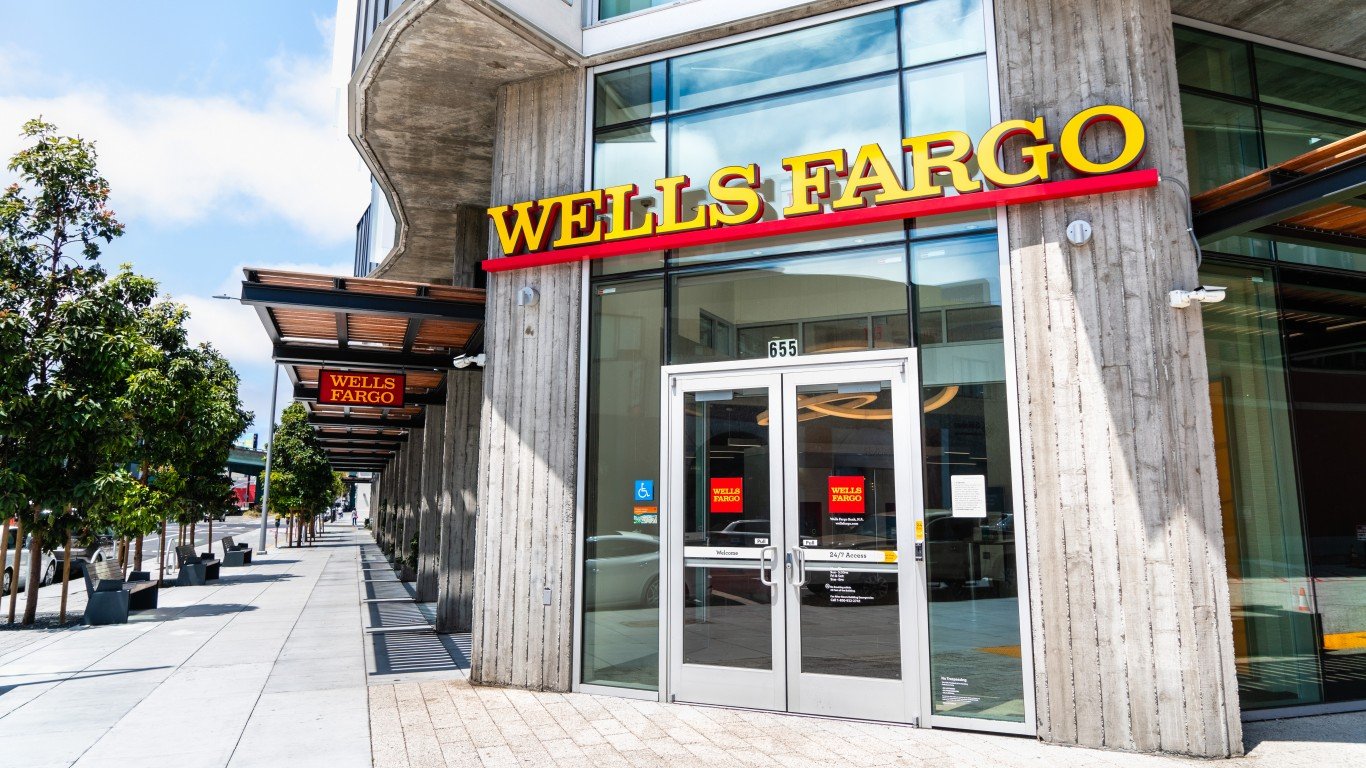
Wells Fargo: A Rebuilt Dividend Closing In on Its Old Peak
Wells Fargo (NYSE:WFC) yields 2.24% at a share price of $81.32. The quarterly dividend rose from $0.45 to $0.50 starting with the third-quarter payment, which puts the forward annual rate at $2 per share.
Retirees should know the full history. Wells Fargo cut its dividend in 2020, from $0.51 to $0.10 a quarter. Since then, it has rebuilt the payout one step at a time: $0.20 in 2021, $0.30 by late 2022, $0.35 in 2023, $0.40 in 2024, $0.45 in 2025, and $0.50 now. The current rate sits just below the pre-cut level.
One rule applies to all four banks. Big-bank dividends operate inside limits set by regulators. Each year the Federal Reserve stress-tests the largest banks, and the results determine how much common equity (measured by the CET1 ratio) each one must hold before paying dividends or buying back stock. Free cash flow tells you little about a bank because loans and deposits run through its cash flow statement, so earnings coverage and capital matter more.
Here Wells Fargo looks solid. A trailing dividend of $1.85 against EPS of $7.09 works out to a payout ratio of about 26.1%. Second-quarter diluted EPS reached $2.00[1], up 25% YoY, and net charge-offs held at just 0.34% of average loans. CET1 slipped to 10.3%[1] from 11.1% as the balance sheet grew, and that number is worth tracking.
The bull case is growth that is finally unlocked. With the Fed’s long-standing asset cap removed, average loans reached $1.03T[1], topping $1 trillion for the first time, and return on tangible common equity climbed to 17.7%. The bank returned $23 billion[2] to shareholders in 2025, including $18 billion in buybacks. At 11 times trailing earnings and 10 times forward earnings, the shares drew a recent shoutout from CNBC’s Jim Cramer, who called Wells Fargo “incredibly cheap”.
The main risk is interest rates. Net interest margin narrowed to 2.43%[1] from 2.68% a year earlier, and further rate cuts would squeeze the spread income that funds the dividend.
Citigroup: Low Payout Ratio and a Stock Priced Near Book Value
Citigroup (NYSE:C) yields 2.1% at $114.77 a share. The quarterly dividend rose from $0.60 to $0.67 with the third-quarter payment, which lifts the annualized forward rate to $2.68. This is Citi’s fourth raise since the payout sat at $0.51 from 2019 into early 2023, with steps to $0.53, $0.56 and $0.60 along the way. Longtime holders also remember the financial crisis, when the dividend fell to $0.01 and stayed there for years.
Coverage today is the best of the four. A trailing dividend of $2.47 against EPS of $10.26 gives a payout ratio of roughly 24.1%. The 134%[3] payout figure in Citi’s first-quarter release combines buybacks and dividends, so it overstates the dividend burden. Citi ended 2025 with a CET1 ratio of 13.2%, 160 bps[4] above its regulatory requirement. Management put it plainly: “We have ample capital to support our growth while continuing to return excess capital to our shareholders.”[4]
For income investors, the bull case is a turnaround that is starting to show up in earnings. First-quarter EPS jumped to $3.06[3] from $1.96, revenue rose 14%, and all five business segments grew. Citi returned $7.4B[3] that quarter, including $6.3B in buybacks. The valuation leaves room for upside. The stock trades at 9 times forward earnings and a price-to-book ratio of 1.015, near its book value of $115.61 per share.
Citi’s specific risk is its controls. Reuters reported Thursday that Citi underestimated risky assets after incorrectly recording trades. Risk-weighted assets feed directly into the capital ratios that govern payouts, and the stock has dropped 7.49% over the past week.
Morgan Stanley: A Wealth Machine Funding a Growing Payout
Morgan Stanley (NYSE:MS) yields 2.38% at $174.94. The board raised the quarterly dividend by 15 cents to $1.15, up from $1, for an annualized forward rate of $4.60. The longer record shows a crisis-era cut to $0.05, followed by a steady climb. The payout held at $0.35 through 2020, jumped to $0.70 in 2021 and has risen every year since.
Morgan Stanley’s dividend uses more of its earnings than the other three, though coverage is still comfortable. The trailing dividend of $4.375 against EPS of $12.45 equals a payout ratio of about 35.1%, or roughly 36.9% at the new forward rate. Return on tangible common equity reached 22.6%[5] in the third quarter. The board also reauthorized a multi-year $20B buyback, and the company repurchased $1.5B of stock in each of the past two quarters.
The bull case is wealth management, which brings in steady fees that fund a growing dividend. That segment posted record revenue of $9.065B[5] and pulled in $232B of net new assets, lifting total client assets to $10.5T. Fees on that asset base hold up better through market cycles than trading desks do, which matters for a retiree counting on the check.
The risk is trading and dealmaking volatility. Third-quarter EPS of $3.03[5] came in below the record $3.46[6] a quarter earlier, and Investment Management revenue fell 12%. Equity trading revenue, which rose 41%,[5] can reverse quickly when markets cool.
Goldman Sachs: Back-to-Back Raises Backed by Record Fees
Goldman Sachs yields 2.05% at $847.03. The dividend history shows two increases within the past year: from $4 in late 2025 to $4.50 for the first two 2026 payments, then an 11%[7] raise to $5. The next $5 check goes out December 30 to holders of record on December 2. Goldman held its quarterly payout at $0.35 from 2007 through 2010, so it kept paying through the financial crisis, and the payout has grown to $1.25 in 2020.
Coverage is wide. A trailing dividend of $18 against EPS of $69.55 works out to a payout ratio near 25.9%. In the third quarter, Goldman paid $1.49B[8] in dividends against net income of $5.294B, and it also bought back $3.0B of stock. Its standardized CET1 ratio fell to 12.4% from 14.3% at year-end 2025 as the firm put capital to work, leaving less cushion than before.
The bull case is earnings power that keeps beating forecasts. Third-quarter EPS of $17.01[8] came in well ahead of the $13.6515 consensus. Asset and Wealth Management reached record assets under supervision of $4.10T[8], with a 35th consecutive quarter of long-term fee-based net inflows. The shares trade at 13 times trailing earnings and 12 times forward earnings.
The risk is the dealmaking cycle. Goldman’s investment banking backlog decreased[8] from the prior quarter, and third-quarter EPS fell short of the $20.98[7] earned a quarter earlier. When deal and trading volumes fade, earnings fall faster at Goldman than at the deposit-funded lenders.
Four Growing Paychecks From Wall Street’s Core
Each of these banks raised its dividend in recent quarters while paying out somewhere between about a quarter and just over a third of earnings. Citigroup and Wells Fargo give retirees lower valuations and lending-driven income, while Morgan Stanley and Goldman Sachs add fee-rich wealth businesses with more market sensitivity. Watch CET1 ratios and the next round of Fed stress tests, because those capital levels set the limit on how much each bank can keep raising its payout. (Stacking growing payers like these into a ladder that funds retirement without ever selling a share is the whole idea behind our free guide here: Never Touch the Principal.)
Contact [email protected] for any questions or corrections.
Chris Lange is a financial and geopolitical writer with more than a decade of experience covering a myriad of topics. He has published thousands of articles for 24/7 Wall St., with past coverage focused heavily on stocks, IPOs, healthcare, defense, global affairs, and technology.
His work has been quoted, or referenced by a number of outlets including Business Insider, USA Today, Yahoo Finance, MSN, The Motley Fool, and many other publications. A graduate of Southwestern University, he studied business with a focus on investments and has previous experience in banking and startups.
When not reading or writing the news, he is following his passion for Lacrosse, playing chess, or building solar projects with his dad.