The S&P 500 Is Having the Longest Losing Streak Since February 2020

This post may contain links from our sponsors and affiliates, and Flywheel Publishing may receive compensation for actions taken through them.

State Street SPDR S&P 500 ETF Trust (NYSEARCA:SPY) closed at $689.81 on Friday, November 20, 2026. That was a 3.64% drop, after the fund fell in each of the six sessions before it.
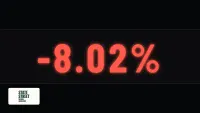
The S&P 500 fell 3.70%, or 265.44 points, to 6,910.39. It was the index’s seventh straight loss, the longest streak since the one that ended February 28, 2020, when the pandemic selloff began. It also closed below 7,000 for the first time since April 14, 2026, at its lowest level since April 13.
The index is now 11.6% below its October 6 record close of 7,818.93. That puts it in a correction, which means a drop of at least 10% from a record. Even so, the index is still up 0.95% for 2026, so nearly a full year of gains disappeared in about six weeks.
Friday Ties the 2020 Streak for the Longest Run Since the Pandemic Selloff
The February 2020 streak also lasted seven sessions, running from February 20 through February 28, 2020, and it took 12.8% off the index. Longer streaks are rarer. There was one of nine sessions that ended November 4, 2016, and one of eight that ended October 10, 2008.
If the index gains on Monday, November 23, the streak ends at seven. A loss would make it eight, the longest since 2016.
Selling Grew Heavier as the Streak Went On
Losses of 0.35% and 0.40% on November 12 and 13 opened the streak quietly. A 1.92% drop on November 16 broke the calm, and after smaller 1.03% and 0.23% declines, losses of 2.02% and 3.70% on November 19 and 20 showed sellers pressing harder.
That pattern matters because selling got heavier as prices fell, when a slow drift usually runs out of sellers. Friday was the worst day since November 5, when the index fell 4.36%. The weekly drop of 8.61% was the worst since the week ended April 4, 2025.
From the 7,619.38 close on November 11, the index has lost 9.3%, or about 709 points. Jared Blikre of Yahoo Finance noted that a week with a loss every day and four drops of 1% or more had happened only in 1962, 1974, 1978, the week after the September 11 attacks, and October 2008.
Blikre estimated that the index lost about $2.4 trillion in market value on Friday and nearly $6 trillion over the week. The index is down 8.83% for November. Per Blikre, since 1970, only November 1973 was worse, falling 11.39%.
AI Concentration Drives an Index Fund’s Losses
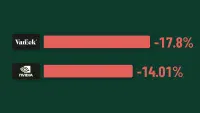
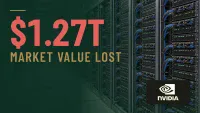
Investors are losing confidence in the AI trade, and the Associated Press reported that NVIDIA (NASDAQ:NVDA | NVDA Price Prediction) fell 13.8% on Friday. As of March 17, 2026, NVIDIA was SPY’s largest holding at 7.58% of net assets.
SPY weights each company by its market value, so a handful of AI-linked giants can move the whole fund. The Invesco S&P 500 Equal Weight ETF (NYSEARCA:RSP) holds the same index in about equal portions. It fell 6.83% from November 11 through November 20, while SPY fell 9.21%.
Michael Antonelli, a market strategist at Baird, said he thinks the idea that unlimited AI spending can keep propping up stocks is ending. He thinks the bull market that began in October 2022 remains intact.
The next trading session is Monday, November 23. Markets are closed on Thursday, November 26, and open for a half day on November 27, and light trading volume can make price moves bigger. The Federal Reserve’s next meeting is on December 8-9.
What SPY Holders Should Monitor Before the Fed Meeting
Concentration is the main issue for SPY holders, and RSP offers a useful point of comparison. Losing streaks this long have often come near times of market stress, yet bull markets have survived corrections of this size, and the index is still up for 2026.
The weak spot is concentration. From October 21 through November 20, SPY fell 10.77% while RSP fell 4.25%. That gap shows how much of SPY’s risk sits in a few AI names that are now losing support.
The level to check is the 6,886.24 close from April 13. If the index closes below that level before the Fed meeting, selling would spread beyond the AI leaders, and the outlook for the broader market would weaken.
Contact [email protected] for any questions or corrections.
Omor Ibne Ehsan is a writer at 24/7 Wall St. He is a self-taught investor with a focus on growth, cyclical, and dividend equities that have strong fundamentals, value, and long-term potential. He also has an interest in high-risk, high-reward investments such as penny stocks.