Williams Companies Slashed Its Dividend in 2016. Here’s What $1,000 Invested Then Is Worth Today

This post may contain links from our sponsors and affiliates, and Flywheel Publishing may receive compensation for actions taken through them.

Ten years ago, Williams Companies (NYSE:WMB | WMB Price Prediction) was working to fix its balance sheet. In 2016, it cut its quarterly dividend from $0.64 to $0.20 per share. For retired people living on that income, the decade got off to a painful start.
From Dividend Cut to Gas Powerhouse
Williams moves and stores natural gas. Its pipelines, anchored by Transco, the largest interstate gas pipeline in the U.S., carry about one-third of U.S. natural gas. Most of its revenue comes from fees, so Williams gets paid like a toll road operator and has little direct exposure to commodity prices.
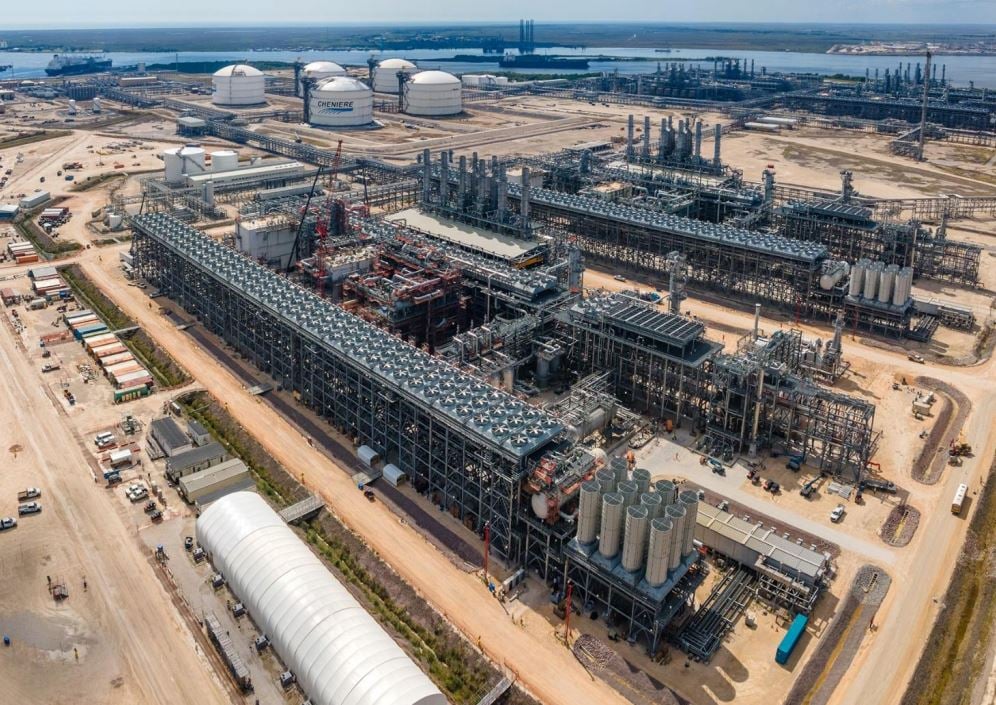
Over the decade, Williams narrowed down its focus to natural gas infrastructure. It then caught two big demand trends: LNG exports from the Gulf Coast and power for data centers. Its Socrates power project came online ahead of schedule[1], and the $2.816 billion Momentum Midstream deal expanded its position in the Haynesville. Adjusted EBITDA hit a record $7.75 billion[2] in 2025.
The dividend returned in steps: $0.30 a quarter in 2017, $0.40 in 2020, and $0.525 in 2026, after a 5%[2] raise to $2.10 a year.
Your $1,000 Grew to About $3,521
The Williams figures below use dividend-adjusted share prices, which roughly approximate reinvesting every payout. The S&P 500 figures, via the SPDR S&P 500 ETF Trust (NYSEARCA:SPY), are price-only and leave out dividends.

1-Year Return
- Initial Investment: $1,000
- Current Value: $1,124.80
- Total Return: 12.48%
- S&P 500 (price only): $1,057.10 (5.71%)
5-Year Return
- Initial Investment: $1,000
- Current Value: $2,926.50
- Total Return: 192.65%
- Annualized Return: 23.96%
- S&P 500 (price only): $1,471.20 (47.12%)
10-Year Return
- Initial Investment: $1,000
- Current Value: $3,521.20
- Total Return: 252.12%
- Annualized Return: 13.41%
- S&P 500 (price only): $3,127.30 (212.73%)

The five-year annualized return is far higher than the 10-year figure, which means the first half of the decade was weak. Buyers in 2016 had to sit through the dividend cut and years of recovery before demand for gas took off. Because the SPY figures leave out dividends, the 10-year lead would shrink in a like-for-like comparison. The stock is also volatile right now: it fell 11.66% over the past month.
What Income Investors Should Weigh Now
Williams looks like a strong investment if gas demand grows the way management expects. The main threat is debt pressuring the dividend.
Bull case: Management is aiming for 11%+[1] annual adjusted EBITDA growth through 2030. Chief executive Chad Zamarin pointed to “35% to 40% demand growth for natural gas over the next 10 years.”[3] At the guidance center, the dividend is covered 2.47x.
Bear case: Williams earlier guided to $7.3 billion to $7.9 billion of growth capex in 2026, and leverage is heading toward 3.75x[3], close to its 4x ceiling. Tariffs on steel pipe and approval delays could push costs up and stall projects.
For retired people, the draw is a rising $2.10[2] dividend backed by fee-based cash flow. Keep in mind that the last decade’s returns guarantee nothing about the next one, and 2016 shows that even reliable payers can cut.
Contact [email protected] for any questions or corrections.
Chris Lange is a financial and geopolitical writer with more than a decade of experience covering a myriad of topics. He has published thousands of articles for 24/7 Wall St., with past coverage focused heavily on stocks, IPOs, healthcare, defense, global affairs, and technology.
His work has been quoted, or referenced by a number of outlets including Business Insider, USA Today, Yahoo Finance, MSN, The Motley Fool, and many other publications. A graduate of Southwestern University, he studied business with a focus on investments and has previous experience in banking and startups.
When not reading or writing the news, he is following his passion for Lacrosse, playing chess, or building solar projects with his dad.