Bloom Energy is Down 22% Just This Month: Two Wall Street Pros Predict 109% Gains With 2 More $1 Dollar Lower

This post may contain links from our sponsors and affiliates, and Flywheel Publishing may receive compensation for actions taken through them.
Bloom Energy (NYSE:BE) currently trades at $168.15, and the average analyst price target sits at $282.69. That implies 68.12% upside to where analysts think it belongs.
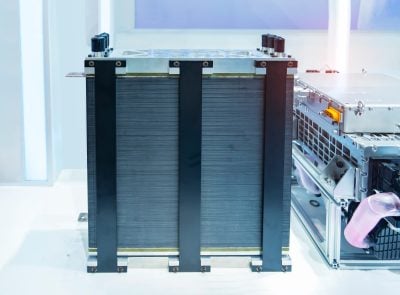
Bloom makes solid oxide fuel cell Energy Servers that generate power on site, and AI data centers have become its growth engine. Third-quarter revenue rose 138.1%[1] to $1.24 billion, and management raised full-year guidance for the third time.
That gap matters because the business keeps getting stronger while the stock keeps getting cheaper, so investors have to decide whether the market sees something the guidance misses.
Bloom Energy Lost Half Its Value Despite a Beat-and-Raise Quarter
The AI infrastructure trade broke down, and Bloom was one of the high-beta names caught in it. The stock sits 52.13% below its 52-week high of $351.28. That is a steep drawdown.
The slide began on a strong quarter. Shares fell six and a half percent after the report. Bloom beat estimates and raised guidance, but tech stocks were selling off that same day. A Barclays upgrade to overweight triggered a 9% bounce. It faded into a six-day losing streak, and one session alone took off 15.6% as concerns about AI spending spread.
The fundamentals also gave skeptics something to work with. Operating cash flow came in at -$27.1 million[1] while capex rose to $153.5 million. The trailing P/E of 86x left no cushion. Shares bounced 18.09% in the most recent session, but that only recovered part of the damage.
Two Analysts Still See $351 While the Street Splits
The 108.74% upside comes from the Street-high $351.00 target, shared by Baird’s Ben Kallo (raised from $310.00) and TD Cowen’s Maheep Mandloi (raised from $242.00). UBS and Evercore ISI sit just below at $350.00. Recent moves have been raises and reiterations.
Their thesis rests on time-to-power. Grid interconnection waiting lines often run 3 to 5+ years. Bloom delivered power to an Oracle (NYSE:ORCL | ORCL Price Prediction) site in Utah in less than two months[2]. That onsite-power angle matters. It is exactly why fuel cell and data-center infrastructure names keep surfacing in our free report on seven AI-boom stocks that aren’t chipmakers. Full-year guidance now calls for revenue of $4.4 billion to $4.6 billion[1] and non-GAAP EPS of $3.10 to $3.40, backed by a total backlog of about $20 billion[3].
Estimates keep rising even as the price falls. The 2026 EPS consensus drew 21 upward revisions, against zero down ones over 30 days. The 2027 average reached $5.3143, up from $4.9385 a month earlier. At a forward P/E of 25x, bulls argue the multiple has already reset.
Of 29 analysts, five rate it Strong Buy, 10 Buy, 12 Hold, one Sell and one Strong Sell. Conservative desks near $182 to $250 cite valuation, customer concentration and permitting risk. These are 12-month targets and carry uncertainty.
Fuel Cell Peers Fell Harder Than Bloom
Every name in the group sold off together, and Bloom actually held up better than its smaller rivals.
FuelCell Energy (NASDAQ:FCEL) fell 29.97% over the past month to $7.78. Its $21.10 average target implies 171.21% upside, with six Buys, three Holds and two bearish ratings. Revenue fell 29.4% last quarter, missing expectations.
Plug Power (NASDAQ:PLUG) dropped 28% to $0.99. Its $2.967 target implies 199.70% upside, but 11 of its analysts sit at Hold and three at Sell. Plug still posts gross losses.
Plug carries the group’s largest implied upside, followed by FuelCell, but Bloom’s smaller gap comes with an advantage unique in the group: real profits.
Bloom Is Still Up 93.52% This Year After the Slide
At $168.15, Bloom has 68.12% implied upside to the $282.69 consensus from 29 analysts. It lost 13.01% over the past month and 5.15% over the past week.
Bloom is still up 93.52% year to date, while the S&P 500 has gained 5.92%. Over the past month, the index fell 4.96%.
Bloom’s Path to the Average Target Hinges on AI Demand and Fourth-Quarter Results
The case for Bloom beefs up if hyperscalers keep choosing onsite power over grid waiting lines and fourth-quarter results land near the top of guidance. In that case, the 2027 EPS consensus of $5.3143 makes today’s price look cheap. The bear case gains weight if AI capex budgets shrink, permitting stalls installations or working capital keeps using up operating cash. With a beta of 3.618, any of those would hit the stock hard.
The $351 targets require a perfect recovery, but the average target looks reachable if estimates keep rising, and the rising estimates are the strongest signal that the selloff has run ahead of the fundamentals.
Contact [email protected] for any questions or corrections.
Alex Sirois is a financial writer with experience spanning both retail and institutional investing. He has written for InvestorPlace and held roles at BNY Mellon and Bernstein, giving him a perspective that bridges Main Street portfolios and Wall Street analysis.
Alex holds an MBA from George Washington University and has built his career across multiple industries, including e-commerce, education, and translation — a breadth of experience that informs how he breaks down complex financial topics for everyday investors. His writing is conversational, actionable, and grounded in long-term, buy-and-hold investing principles.
At 247 Wall St., Alex focuses on delivering analysis that is both accessible and useful, with a clear emphasis on helping readers make more informed decisions with their money.