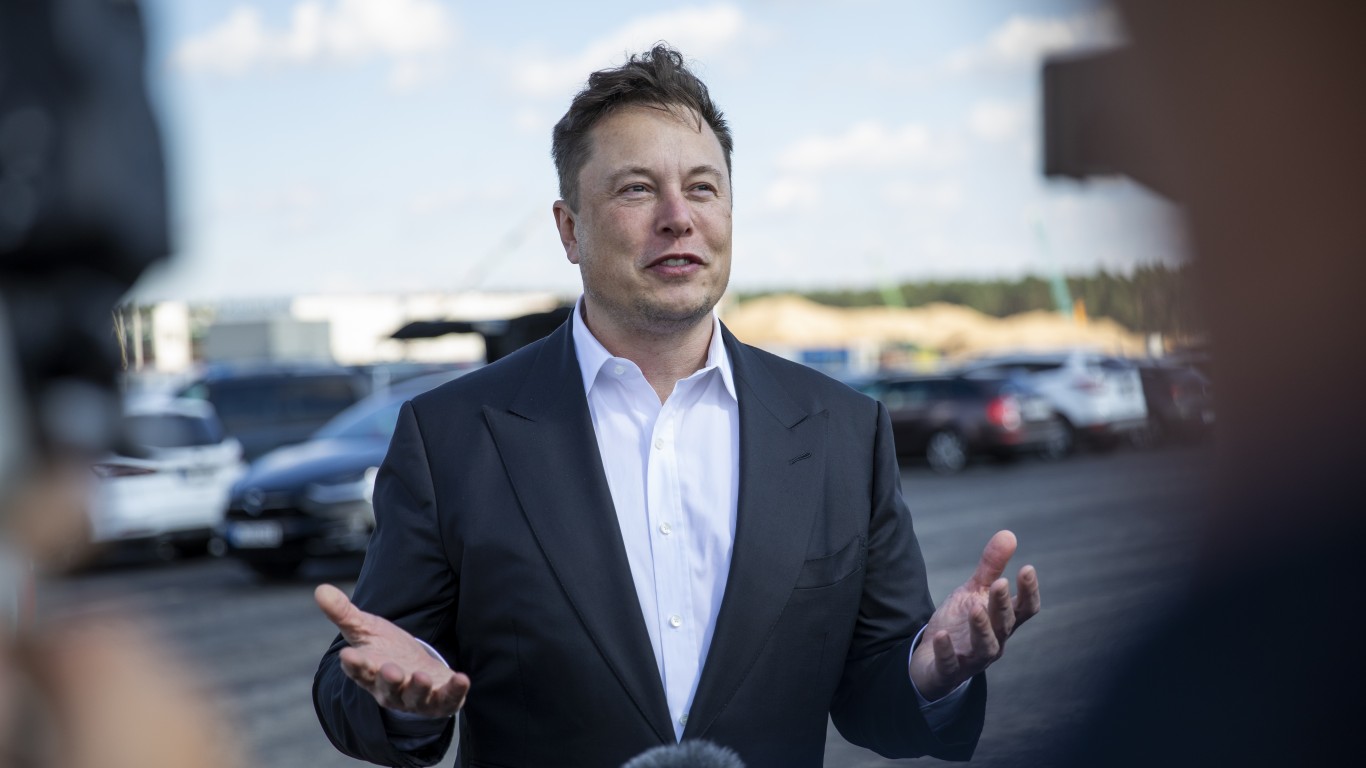
Elon Musk Reportedly Told Staff SpaceX Is Falling Behind in AI

This post may contain links from our sponsors and affiliates, and Flywheel Publishing may receive compensation for actions taken through them.
Elon Musk has reportedly told SpaceX (NASDAQ:SPCX | SPCX Price Prediction) staff that the company is falling behind in AI development, which makes renting out its computing power more profitable than using it for its own AI products. The New York Times, reporting on November 23, 2026, also said the AI unit, SpaceXSI, produces more than half[1] of SpaceX’s revenue. SpaceX did not comment.
The stock closed that day at $133.35, up 4.35%, and traded at $134.47 after hours. That gain came on a broad rally day and followed a Jefferies initiation at Buy with a $210 target on November 22, so it tells you little about how investors judged the report.

The question for shareholders is what SpaceX’s AI business really is. If its best AI money comes from leasing chips to rivals, the market may value that unit like a cloud landlord instead of a model builder.
Musk’s Metric Favors Renting Over Building
Musk reportedly told staff: “At the end of the day, the only thing that matters for competitiveness is revenue per GPU, not benchmarks. If you can’t pay for your GPUs, then you either go bankrupt or you become a computer rental company. Move the needle on revenue.”
A GPU, the specialized chip that trains and runs AI models, earns cash every month when rented, while one spent training a model that trails rivals may earn nothing, so by his own measure renting wins until Grok closes the gap. In August, he reportedly renamed an internal engineering chat “Sell compute because we can’t compete,” and he has asked engineers to justify their use of expensive GPUs.
SpaceX’s Biggest Tenants Are Its AI Rivals
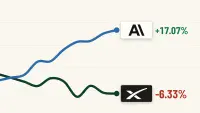
NYT reported that Google, owned by Alphabet (NASDAQ:GOOG, NASDAQ:GOOGL), pays about $800 million a month[1]. It said that Anthropic (NASDAQ:ANT), the largest compute customer, pays about $3.1 billion a month[1], under agreements that could run through 2029 but that either side can end on 90 days’ notice.
That exit clause makes the revenue far less locked in than the end date implies, and two customers carry most of it, whose payments also fund the models that can extend the gap Musk described.
Project Cuts Point to a Narrower Grok
SpaceX reportedly shut its AI companions project in September and moved engineers from its Digital Optimus AI-worker project to Grok’s core capabilities. That focuses talent on the one model that might eventually earn back its own chips.
Filings show that AI Solutions and Infrastructure revenue reached $7.6 billion[2] in the third quarter, up 830% year over year, out of $14.60 billion in total.
SpaceX announced plans to invest $74 billion[1] in data centers in Arizona and Texas. That capacity serves either path, rental or in-house AI.
It also locks in a heavy cost base. If compute prices fall as supply catches up, or a major tenant leaves on short notice, the buildings and chips stay on the books.
What a Landlord Model Means for SpaceX Shareholders
The bull case for SpaceX rests on accepting that its AI arm is mainly a landlord. Rental cash from the largest labs helps fund Starship and Starlink, whose Connectivity revenue grew 69%[2] in the third quarter. Musk’s honesty helps, because pouring scarce chips into a trailing model would destroy more value than renting them out.
The bear case is that compute can commoditize and tenants can leave quickly. The stock already prices in some of that, sitting about 41% below its 52-week high of $225.64 and 17.15% below its June 12 first-day close of $160.95.

An 8-K revealing termination of the Google or Anthropic agreements, or a close below the $104.83 52-week low, would break this view. The first test comes when trading resumes Tuesday, November 24, ahead of the Thursday, November 26, Thanksgiving closure.
Contact [email protected] for any questions or corrections.
Omor Ibne Ehsan is a writer at 24/7 Wall St. He is a self-taught investor with a focus on growth, cyclical, and dividend equities that have strong fundamentals, value, and long-term potential. He also has an interest in high-risk, high-reward investments such as penny stocks.