Elon Musk Says ‘I’ve Never Seen Anything Grow This Fast.’ One Product is the Key to Musk’s Plans to Cross $1 Trillion in Revenue.
Elon Musk just called one SpaceX product the fastest-growing he has ever seen, and he believes it could rewrite the company's entire revenue trajectory before 2028 arrives.

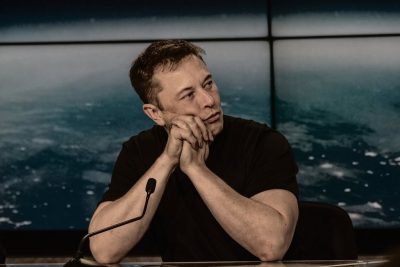
SpaceX (NASDAQ:SPCX | SPCX Price Prediction) founder Elon Musk is known for big claims. On the company’s third-quarter call on October 20, 2026, he made a new one about a product SpaceX launched in August: “On the Grokbot side, we’re seeing the fastest growth of a product that I’ve ever seen in my life. I’ve never seen anything grow this fast.”
Engagement grows over time, he added: “We’re seeing users use it more per week, not use it less.” Then came the line that links the product to SpaceX’s spending: “Grokbot may end up being what uses most of our superintelligence compute.” Sawyer Merritt clipped the remarks on X.
What Grok Bot Actually Does
Grok Bot is an always-on AI agent. A chatbot answers one question at a time. Grok Bot keeps working on multi-step tasks. SpaceX said companies treat it as “an always-on teammate” across sales, marketing, IT and engineering, and that business customers are its fastest-growing category.
SpaceX said Grok Bot had 800,000 paid weekly users earlier this month, more than doubling over the prior month. It expects wide enterprise deployment within a few weeks. SpaceX also said Grok Enterprise customers with more than $1 million in run-rate revenue, including Cursor, rose 50% quarter over quarter on a pro forma basis. Last week it combined Grok, Grok Bot, Cursor and X Premium into a single plan. Separately, a Dealroom report put Grok Bot at more than 418,000 weekly users a month after launch. That count tracks all weekly users, so it can’t be lined up against the paid figure.
How Grok Bot Feeds Musk’s $1 Trillion Math
Right after his Grok Bot comments, Elon Musk said “what this implies for SpaceX annual recurring revenue by the end of [2027] is somewhere between $500 billion and a trillion.” Keep three points in mind:
- Musk’s $1 trillion is the top of the range, and it describes an annualized revenue run rate.
- It is Musk’s own projection. The company has not issued it as guidance.
- CFO Bret Johnson’s stated goal is $100 billion in annual recurring revenue by the end of this year, based on December revenue annualized.
SpaceX’s AI unit brought in $7.6 billion in third-quarter revenue, up 830% year over year. The company said that growth came “primarily” from cloud services agreements, meaning it rents out its computing power. Grok Bot gives SpaceX a way to earn recurring revenue from that expansion through its own product instead of relying only on rentals. That matters because capital spending reached $19.6 billion in the quarter, and SpaceX expects $35 to $40 billion in Q4.
Shares were up 8.26% premarket at $160. The move also reflects reports of merger talks with Tesla (NASDAQ:TSLA).

Rivals Are Racing to Build Agents
The Information reported in September that OpenAI is developing features to counter Grok Bot. OpenAI has also launched always-on agents of its own. Alphabet (NASDAQ:GOOGL) unit Google Cloud revealed persistent Gemini Agents for long-running tasks in early October, and Meta Platforms (NASDAQ:META) is working on its own assistants.
Three Signals That Would Prove Musk Right
- Paid weekly users keep climbing from 800,000, as SpaceX reported.
- The enterprise launch arrives on the schedule SpaceX promised.
- Annualized December revenue reaches Johnson’s $100 billion goal.
If all three happen, the low end of Musk’s range starts to look more achievable. But keep in mind, Wall Street expects Fiscal 2028 revenue will hit $315 billion by the end of Fiscal 2028, so Musk’s math should be treated as extremely aspirational.
If the launch slips, or power limits hold back compute, Musk’s $1 trillion figure is the first one investors should mark down. Musk himself called power and cooling infrastructure “somewhat of a limiting factor.” That constraint is why the power, cooling, and networking suppliers behind the AI expansion keep showing up in our free report on seven AI infrastructure stocks that aren’t chipmakers.
Contact [email protected] for any questions or corrections.
Joel South covers large-cap stocks, dividend investing, and major market trends, with a focus on earnings analysis, valuation, and turning complex data into actionable insights for investors.
He brings more than 15 years of experience as an investor and financial journalist, including 12 years at The Motley Fool, where he served as an investment analyst, Bureau Chief, and later led the Fool.com investing news desk. He has also co-hosted an investing podcast and appeared across TV and radio discussing market trends.