Oracle Is a Higher-Leverage, Cash-Hungry Twin to Microsoft

This post may contain links from our sponsors and affiliates, and Flywheel Publishing may receive compensation for actions taken through them.
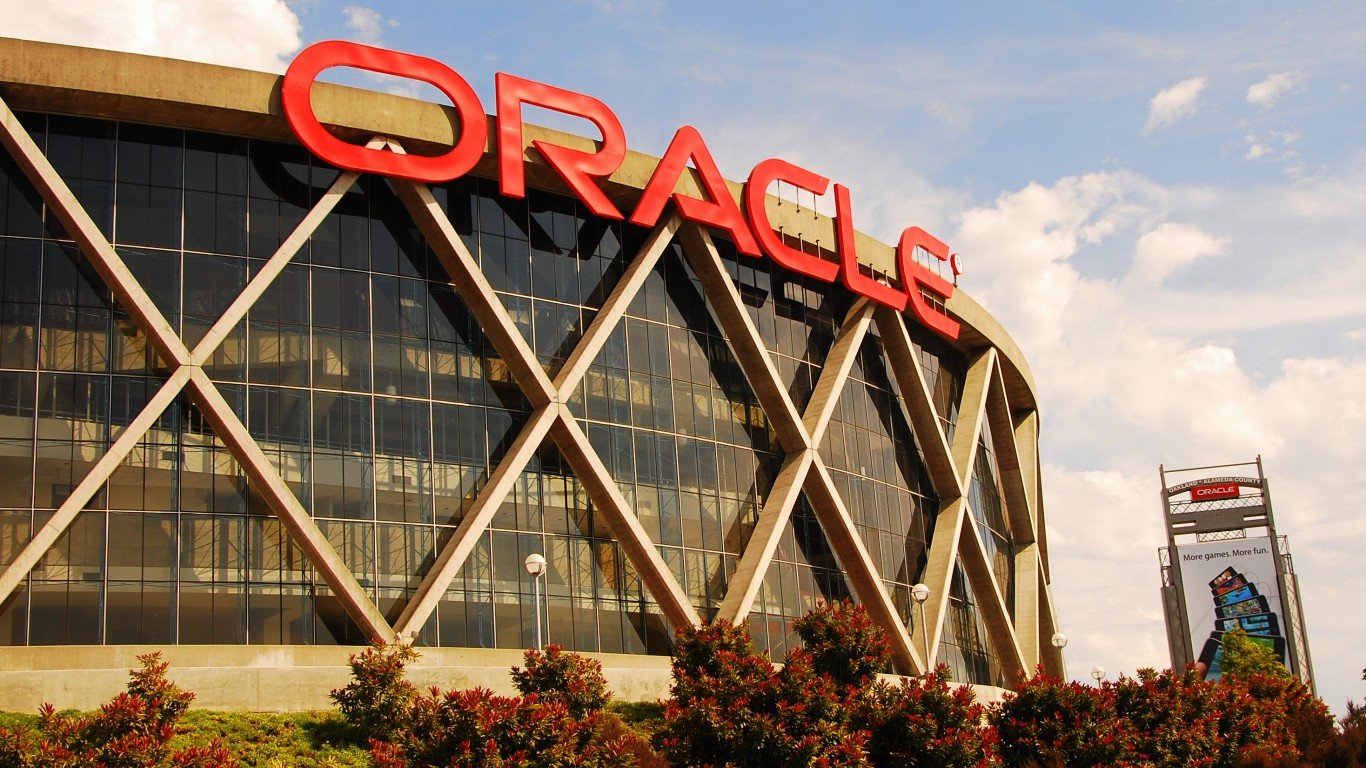
Oracle (NYSE:ORCL | ORCL Price Prediction) and Microsoft (NASDAQ:MSFT) both opened fiscal 2027 with faster AI cloud growth and record backlogs. Each company pairs sticky enterprise software with a fast-growing base business. Microsoft pays for its buildout out of surplus cash. Oracle is taking on debt, issuing stock and asking customers to help pay for its expansion.
OCI Runs Hotter, but Azure Pays for Itself
Oracle Cloud Infrastructure revenue rose 121% to $7.388B[1]. Cloud now makes up 60% of revenue[1], so the AI business now drives the results. GPU usage reached 97.9%[2], and renewing capacity was leased out at a 20% premium. That points to real pricing power. The legacy business keeps contracting: software license revenue fell 15%[1].
Microsoft has a wider base. Azure grew 48%[3]. Daily Copilot users rose nearly 50% quarter-over-quarter[4], and agents now open more than one-third of GitHub pull requests. It suggests AI is turning into everyday workflow. Satya Nadella called Copilot “the new OS for work.”[4]
| Business Driver | Oracle | Microsoft |
|---|---|---|
| AI Cloud Growth | OCI +121%[1] | Azure +48%[3] |
| Backlog (RPO) | $664B[1] | $677B[3] |
| Q1 Free Cash Flow | -$5.396B[1] | $18.6B[4] |
| Legacy Drag | License -15%[1] | Windows OEM -22%[3] |
The backlogs are nearly the same size, even though Microsoft is the far larger company. That gap shows how much Oracle depends on a few of very large AI contracts.
Customer-Funded Capacity vs. Fortress Cash Flow
Oracle finished a $20B[1] equity sale, and interest expense rose 55% to $1.4B. Management says most of the new contracts use prepayments or bring-your-own-hardware deals. Co-CEO Clay Magouyrk put it simply: “It does not have to be Oracle CapEx.”[2] CFO Hilary Maxson would not give a date for positive free cash flow, which makes me skeptical.
Microsoft expects calendar-year capex of about $170 billion[4] and still plans to remain free cash flow positive in FY 2027. Investors are pricing in that difference. Microsoft trades at 27 times earnings, compared with about 14 times Oracle’s $8.10[1] fiscal 2027 EPS target. Oracle shares are down 40.85% year to date, while Microsoft is up 2.69%.
December 14 Puts Oracle’s Funding Promises to the Test
Oracle stock rose 12.43% today as reports said funding for its data-center buildout is in place. When Oracle reports again on December 14, 2026[2], the key questions are whether net cash capex remains at or below $70 billion and whether cloud growth reaches the guided 65%-71%[1]. For Microsoft, watch Q2 capex above $50 billion[4] and third-party GPU contracts that were pushed into the second half.
What Separates Microsoft’s Self-Funded AI Model From Oracle’s Higher-Risk Path
On funding, Microsoft has the cleaner AI base model. It funds its own growth, and Copilot gives it a second way to make money from AI on top of Azure. Oracle has more upside if customer prepayments keep covering more of the bill. A clear path to positive free cash flow would determine whether Oracle’s lower multiple reflects a discount or a warning sign.
Contact [email protected] for any questions or corrections.
Alex Sirois is a financial writer with experience spanning both retail and institutional investing. He has written for InvestorPlace and held roles at BNY Mellon and Bernstein, giving him a perspective that bridges Main Street portfolios and Wall Street analysis.
Alex holds an MBA from George Washington University and has built his career across multiple industries, including e-commerce, education, and translation — a breadth of experience that informs how he breaks down complex financial topics for everyday investors. His writing is conversational, actionable, and grounded in long-term, buy-and-hold investing principles.
At 247 Wall St., Alex focuses on delivering analysis that is both accessible and useful, with a clear emphasis on helping readers make more informed decisions with their money.