The Average Social Security Check Would Drop to $1,691 When the Trust Fund Runs Short. Start Living on It in January

This post may contain links from our sponsors and affiliates, and Flywheel Publishing may receive compensation for actions taken through them.

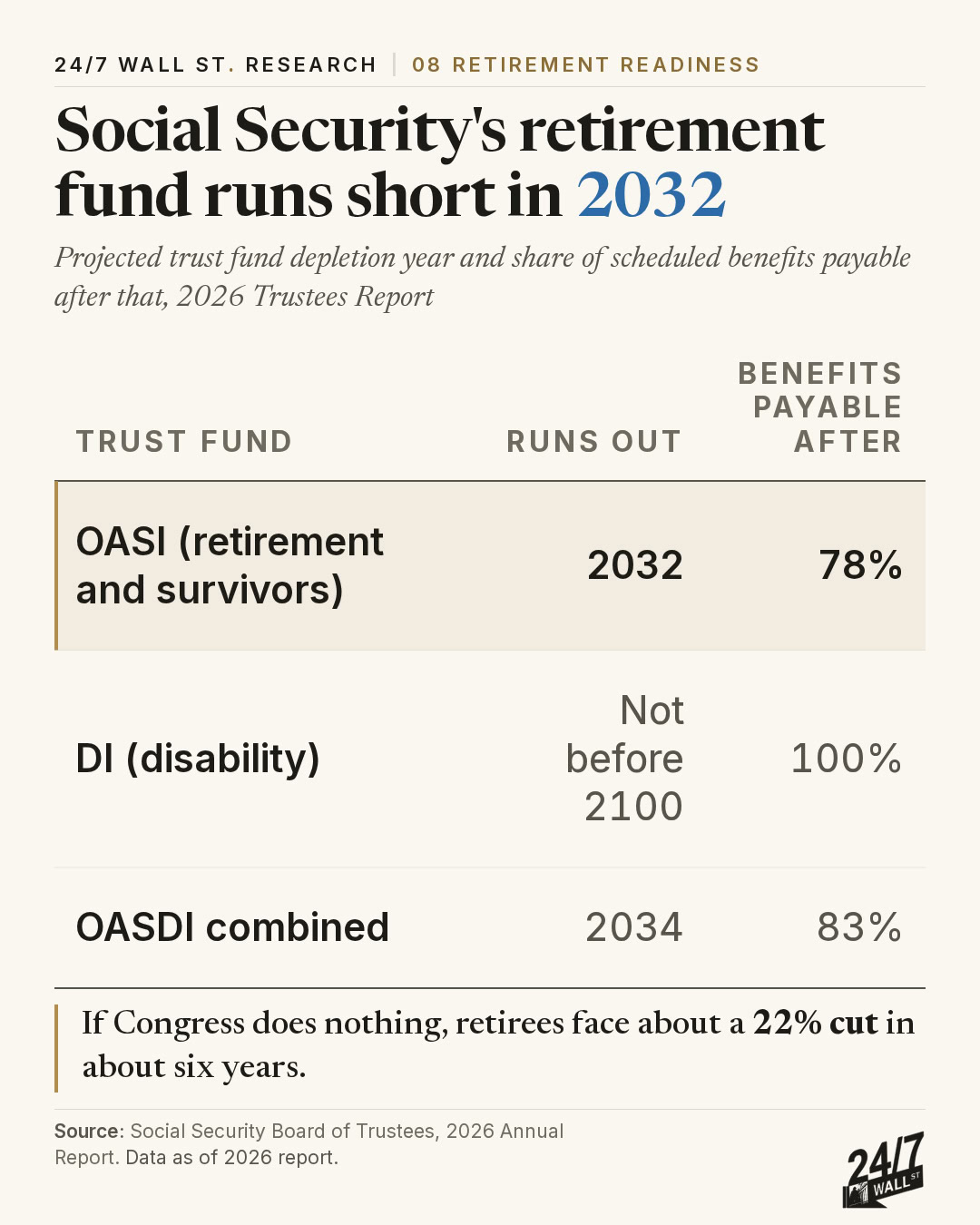
If you’re 66, single and collecting a Social Security payment near the national average, try living on $1,691 a month starting in January. That’s roughly what your deposit would shrink to once the retirement trust fund runs dry, which the program’s trustees expect in 2032, when you’d be 72, unless lawmakers change the rules first.
The number takes three steps. The Social Security Administration put the average retired worker’s monthly benefit at $2,092.17 in October 2026. A 3.6% cost-of-living raise arrives in January 2027, lifting that to about $2,167. Then the Board of Trustees’ 2026 annual report says that after the fund is empty, payroll taxes coming in can pay 78% of what’s owed. Seventy-eight percent of $2,167 is $1,691. The missing $477 a month adds up to $5,722 a year, measured in 2027 dollars.
That math assumes the reduction hits the whole payment evenly, the way the 78% figure implies. Lawmakers could spread it differently or fix the funding. Last week I wrote about a 62-year-old whose brother-in-law told him to claim right away because “Social Security is beyond saving.” That column weighed when to claim. This one is for someone who already has, so what’s left to decide is how to live on less. And on Saturday I compared Kevin O’Leary’s “$5 million liquid” bar with what typical families own at every age; for a typical 65-year-old couple, the monthly benefit turned out to be worth more than anything they had in the bank. The figures come from 24/7 Wall St.’s new research report, “The State of the American Household,” and trace back to the agency named in each case.
Rehearse the smaller deposit starting in January
The plan takes ten minutes to set up and real discipline to keep. When the January payment lands, move $477 into a separate savings account that same day and pay your bills from what remains. Do it every month. Most banks will run a recurring transfer, so you only decide once.
Two things happen. First, you learn now whether $1,691 covers your rent or property taxes, groceries, utilities, insurance and the car. If it doesn’t, you find out at 66, while a part-time job, a roommate, a cheaper apartment or selling a second car are still easy moves. At 72 those doors are harder to open.
Keep a short list of what you trimmed in the first three months: dining out, a streaming service, a gym membership, gifts. That list is your plan for 2032, written while you still have time to test it.
Second, the transfers pile up. January 2027 through December 2031 is 60 months. Set aside $477 each time and you’ll hold $28,611 when 2032 begins, before interest. That’s exactly five years of the missing money. If the reduction comes, that account refills the difference from age 72 to 77 and pushes the pinch back five years, if it arrives at all.
If $477 is too steep, rehearse half. Setting aside $238 a month for the same 60 months builds $14,305, enough to cover half the difference for five years. Even banking only the January raise counts: it’s $75 a month, and saving it through 2031 adds up to $4,519, about 79% of one year’s shortfall.
Park the money somewhere dull and safe, such as a high-yield savings account or short-term Treasury bills. You want the cash ready on the day you need it, whatever stocks are doing that year.
Making the difference up for life
Five years of cover buys time. Replacing $477 a month permanently takes a bigger pile. Under the 4% rule, a common guideline that lets you draw 4% of a nest egg each year, $5,722 a year calls for about $143,100. The guideline promises nothing, but it puts a quick price on any slice of income.
Building $143,100 from scratch before 2032 would mean saving about $1,987 a month with no growth, nearly the whole payment. For someone living on the average benefit, that won’t happen. If you already have an IRA or a brokerage account, label part of it as your Social Security reserve and plan the rest of your spending around what’s left over.
Replacing half the missing amount for life takes about $71,500. A retiree with that much tucked away can draw it at the same 4% pace and treat it as the other half of the payment.
Who has the least room
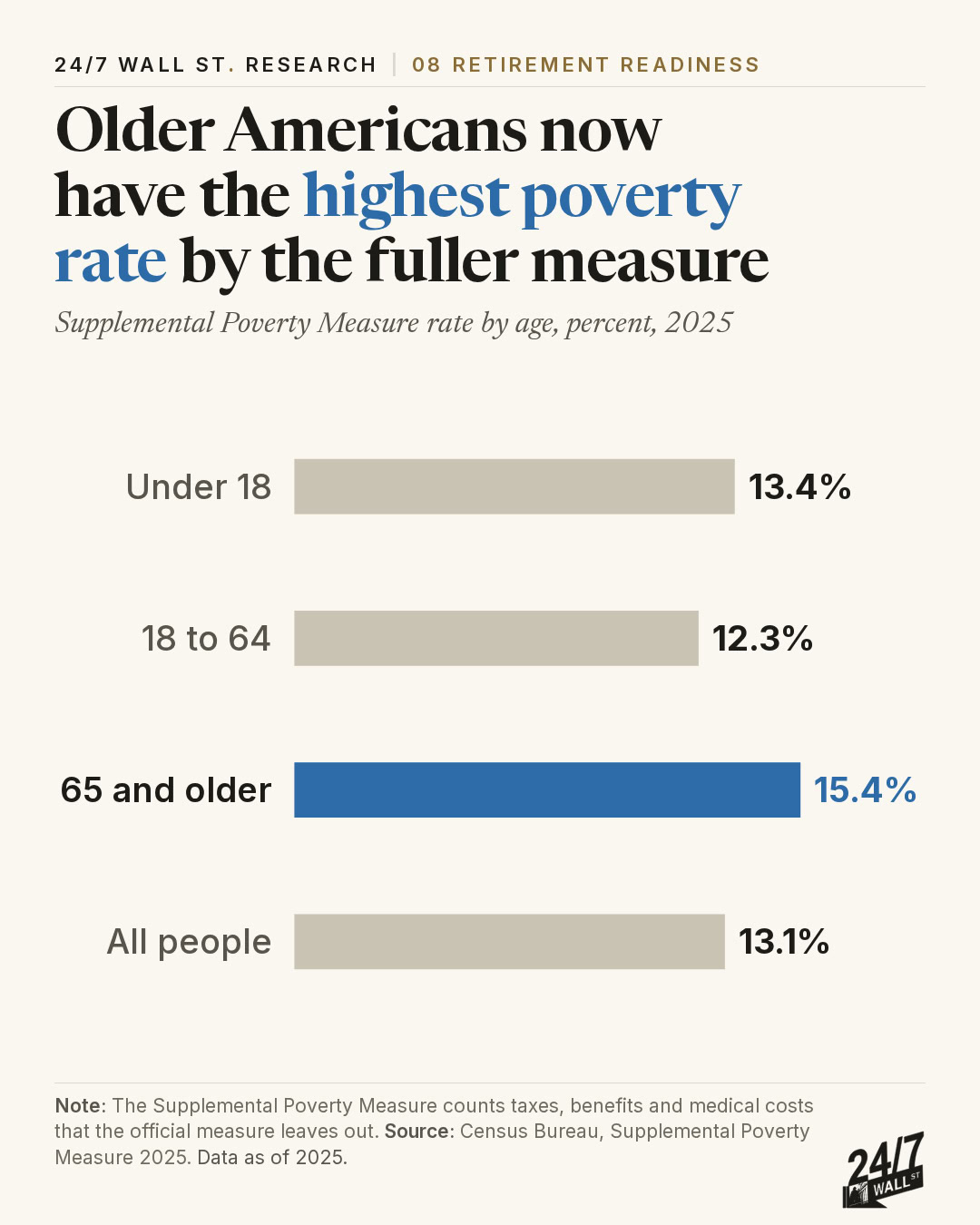
People 65 and older already have the highest poverty rate of any age group by the Census Bureau’s Supplemental Poverty Measure, which counts more expenses than the official rate: 15.4% in 2025. A reduction of this size would hit households with the thinnest margins.
So I’d plan for the smaller deposit now and count any rescue as extra. If lawmakers act, your rehearsal account becomes $28,611 of savings you built without missing it. If they don’t, you’ll have spent five years proving you can live on $1,691 and you’ll have five years of the difference in the bank.
Start with your January statement. Multiply your new benefit by 0.22, set up a transfer for that amount, and see how the first month goes.
Vilma Rios, our tax and planning lead, works out the Roth, Medicare and withdrawal moves in dollars in The Daily Profit. It’s free.
Contact [email protected] for any questions or corrections.
I've spent more than 15 years inside enterprise software, working alongside the finance, sales operations, and HR leaders who run the revenue engines at some of the largest tech companies in the country.
My day job is helping enterprise executives make smarter decisions about retention, compensation, and growth. These are the same operational levers that show up in every earnings report investors actually read. That perspective shapes my writing for 24/7 Wall St.
The headline numbers are easy. The interesting stuff is underneath: how companies make money, what executives are worried about, and what any of it means for the person checking their 401(k) on a Sunday afternoon. I write about personal finance and business as someone who has spent her career inside the rooms where these decisions get made.