Your $300,000 in XLC Holds $130,206 in Just Meta and Alphabet

This post may contain links from our sponsors and affiliates, and Flywheel Publishing may receive compensation for actions taken through them.
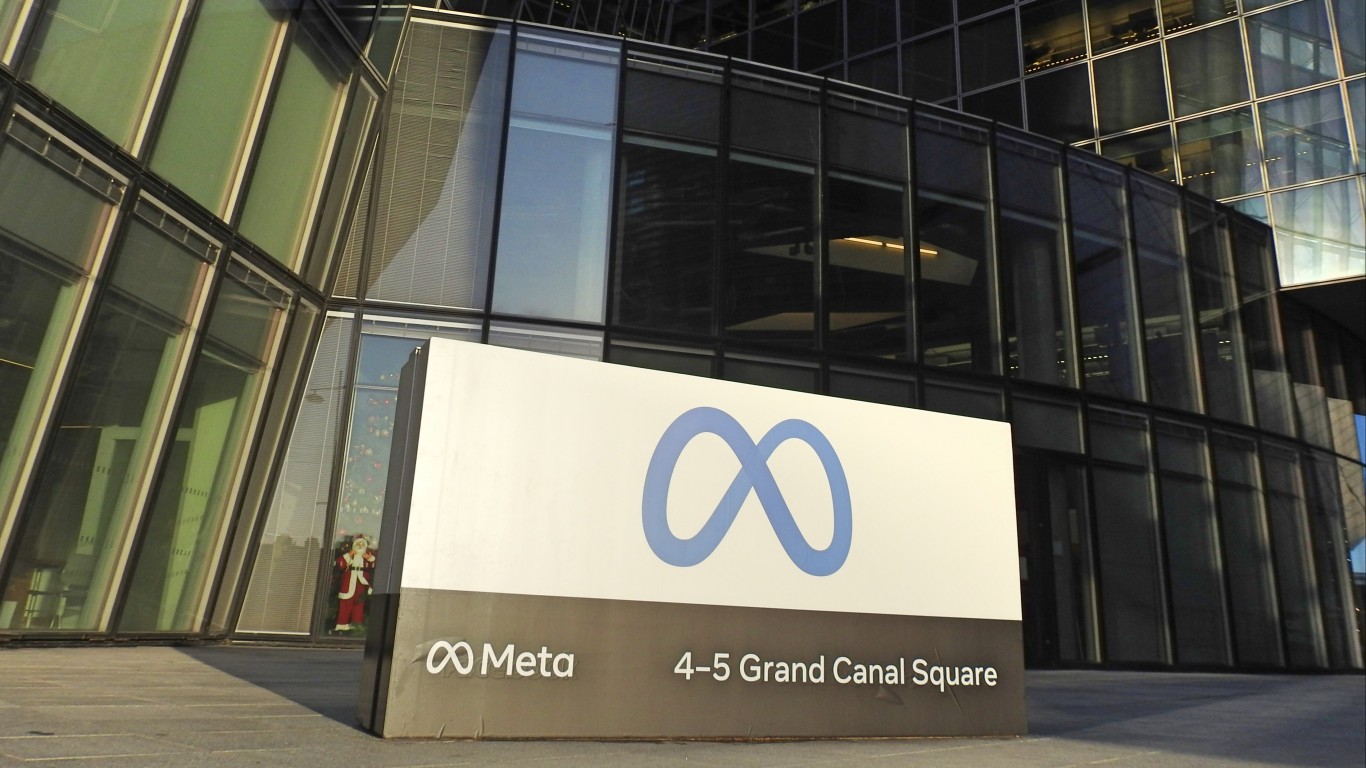
Picture a retirement account with $300,000 parked in a communication services fund. The fund’s label suggests exposure across telecom, media, and entertainment. The filing tells a narrower story. In the SEC filing that lists the State Street Communication Services Select Sector SPDR ETF (NYSEARCA:XLC) holdings as of June 30, 2026, two companies made up 43.4% of net assets. That $300,000 would leave $130,206 sitting in Meta Platforms (NASDAQ:META | META Price Prediction) and Alphabet (NASDAQ:GOOGL).
Two Companies Carry Nearly Half Your Sector Fund
The fee looks small. XLC’s September 30, 2026 fact sheet lists a gross expense ratio of 0.08%. That comes to roughly $8 a year per $10,000 invested, or $240 a year on $300,000. The bigger cost is a risk many holders never notice they are carrying.
As of June 30, 2026, Meta carried a 19.9% weight. That puts $59,702 of the hypothetical $300,000 in one company. Alphabet carried 23.5% across its share classes, or $70,503.
Alphabet Shows Up Twice in the Filing
Scan the holdings list quickly, and Alphabet looks like two separate positions. The filing lists Class A shares at 13.08% and Class C shares at 10.42%. Both lines are the same company. Same business, same earnings reports, same headlines. Considered together, Alphabet’s 23.5% outweighs every other holding in the fund, Meta included.
28 Positions, and a Steep Drop After the Top Two
The filing listed 28 positions as of June 30, 2026. That count includes cash-like holdings and a futures contract (an exchange-traded derivative), so the stock roster runs smaller. The September 30 fact sheet listed 23 holdings.
Past the top two, weights fall off quickly. The next four holdings were Take-Two Interactive (NASDAQ:TTWO) at 5.25%, Netflix (NASDAQ:NFLX) at 4.84%, Comcast at 4.7%, and Warner Bros. Discovery at 4.67%.
Why a Sector Fund Ends Up Top-Heavy
XLC tracks the Communication Services Select Sector Index, which gets its members from the S&P 500, according to the fund’s fact sheet. The index covers telecom, wireless, media, entertainment, and interactive media companies. Indexes weighted by market capitalization (total value of shares) hand the biggest slices to the biggest companies. When two giants dwarf the rest of a sector, they dominate the fund. As of September 30, 2026, interactive media and services alone made up 45.89% of XLC.
What Concentration Means Near Retirement
When two companies carry this much of a fund, their earnings, regulatory news, and stock swings can move the whole fund. Recent trading shows it. Over the month through November 23, 2026, Meta fell 14.33%, and Alphabet Class A fell 15.32%, while XLC slipped 5.1%. Year to date, XLC is down 11.36%. For someone about to start withdrawals, a slide like that hurts most, because selling shares during a downturn locks in the loss (we walked through why those first few years of withdrawals do oversized damage, and how to protect against them, in a free guide here).
Concentration Also Lifts Returns on Strong Days
The same tilt helps on good days. In Monday’s session through early afternoon, Meta rose 6.55%, Alphabet Class A gained 6.85%, and XLC climbed 3.38%. Over the past five years, XLC’s adjusted price rose 36.8%.
State Street reveals these weights in public filings and fact sheets. They also shift. By September 30, 2026, the fact sheet showed Meta at 22.19%, Alphabet Class A at 11.65% and Class C at 9.35%, a combined 43.19%. The gap lies between what gets disclosed and what most holders actually read.
Ask This Before You Buy a Sector Fund
Pull up the top holdings and add the weights of the two or three largest names. Then check what you already own. If a broad market index fund sits in your account, it almost certainly holds Meta and Alphabet too, which stacks your exposure to the same two companies. The question to ask: do you want a communication services fund, or $130,206 of every $300,000 concentrated in two stocks?
Contact [email protected] for any questions or corrections.
Ryne Mauck is an investment writer covering exchange-traded funds, retirement planning, and portfolio strategy. Through his work at 24/7 Wall St. and other investment platforms, including Seeking Alpha, he aims to provide clear, research-driven insights that help investors make more informed decisions while maintaining a long-term approach to investing.
Ryne holds a B.Sc. in Finance and an M.A. in Political Science. He is a formerly registered Municipal Advisor Representative and has passed the Series 50, Series 63, and Series 65 exams. His articles are not intended to be, nor should they be interpreted as, financial advice.