United States Antimony Sinks 9% as Monday’s Critical-Minerals Rebound Splinters; USA Rare Earth Drops 5%, MP Materials Holds Steady

This post may contain links from our sponsors and affiliates, and Flywheel Publishing may receive compensation for actions taken through them.
Monday’s critical-minerals rebound is breaking away, and the smaller, more speculative names are giving back the most ground. United States Antimony (NYSE:UAMY) stock is at $2.18 in afternoon trading, down 9%. That pullback leaves the antimony producer down 57% year to date (YTD).
The decline extends a tough year for United States Antimony, whose core product has lost pricing power. On August 11[1], the company disclosed that its average realized antimony price fell 52% year over year (YoY) to $13.70 per pound, even as pounds sold rose 26%. The company also cut its full-year 2026 revenue guidance to $60 million to $75 million[1] from $125 million.
Why Critical-Minerals Stocks Are Splitting Apart
A broad rally lifted the whole critical-minerals group on Monday, but the follow-through is mixed, and profit taking after a sharp one-day bounce may explain United States Antimony’s slide, and it appears to be hitting the most volatile names hardest.
Tech and AI stocks broadly are giving back part of Monday’s rally, with Federal Reserve rate worries and Iran sanctions also cited in market coverage. That risk-off tone in growth stocks often spills into resource names like United States Antimony that trade on future production more than current profits.
Rare-earth stocks have also swung on U.S.-China headlines over the past two weeks. On November 24, rare-earth stock moves suggested at China’s fading dominance, a theme that touches United States Antimony and its peers alike.
How USA Rare Earth and MP Materials Parted Ways
USA Rare Earth (NASDAQ:USAR) stock is at $6.69, down 5%. The magnet developer is down 44% YTD, a steep loss that mirrors United States Antimony’s year.
Meanwhile, MP Materials (NYSE:MP) stock is at $35.69, up 0.4%. Even the group’s steadiest name carries a heavy loss for the year, with MP Materials down 29% YTD. Scale sets MP Materials apart from the group’s smaller names, and the company disclosed on November 5[2] that its Q3 2026 revenue rose 175.7% YoY to $147.66 million.
That total included a one-time $31.6 million[2] sale of heavy rare-earth products to a U.S. aerospace and defense customer. Even so, MP Materials still posted a net loss of $20.71 million[2]. Chief executive James Litinsky stated that the company “delivered a strong quarter of growth across production, sales, and earnings.”[2]
Critical Metals (NASDAQ:CRML) rounds out the group as its most speculative name. Pre-revenue status defines the Greenland-focused developer, which has raised substantial doubt about its ability to continue as a going concern.
Antimony Smelting Versus Rare-Earth Magnet Platforms
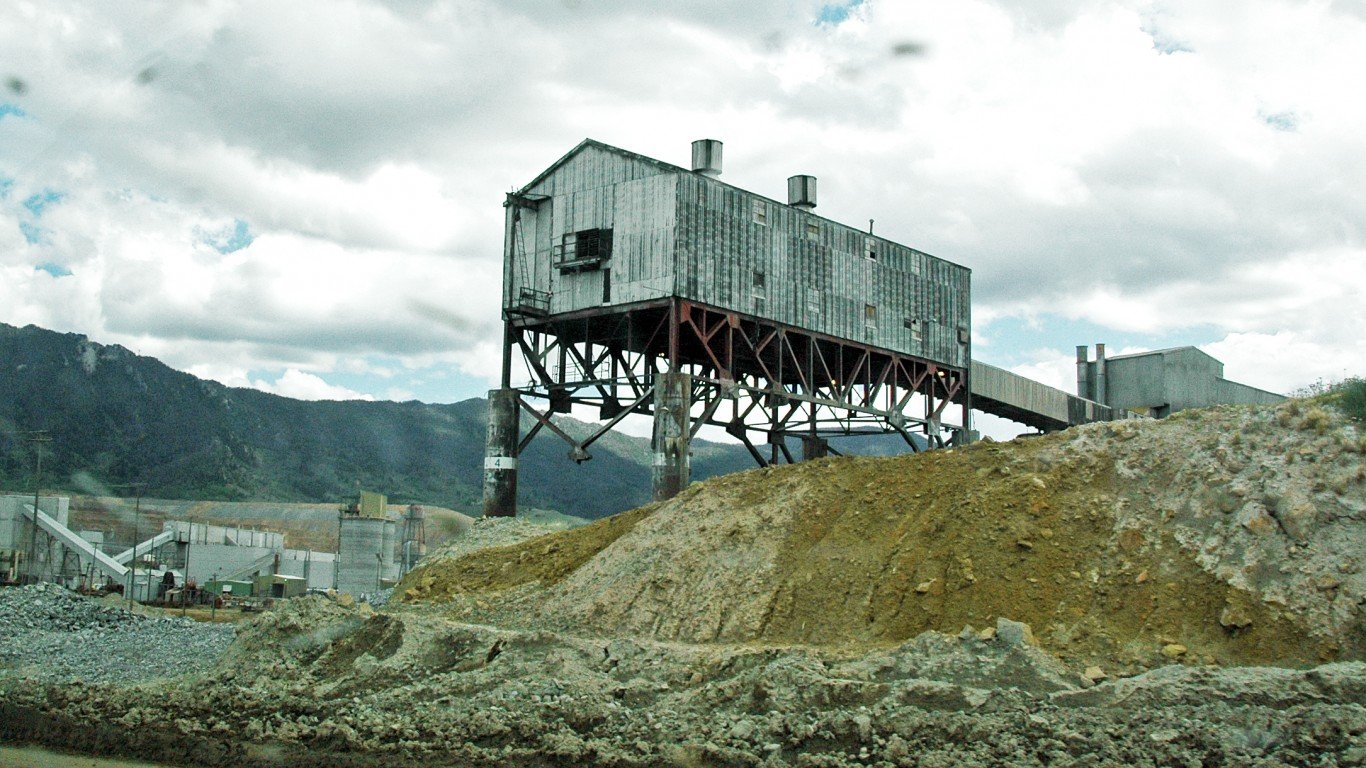
United States Antimony runs a niche business built around its smelter in Thompson Falls, Montana, operations in Bolivia and a zeolite unit, with tungsten and gold exploration on the side. Pricing drives the story, since the company sells a commodity whose world price has collapsed while also serving as a sole-source antimony supplier to the Defense Logistics Agency (DLA).
USA Rare Earth is building a vertically integrated rare-earth magnet chain, from the Round Top deposit in Texas to its Stillwater, Oklahoma, magnet plant and the newly acquired Serra Verde producer. MP Materials already mines and separates rare earths at Mountain Pass in California, makes magnets in Fort Worth, Texas, and holds magnet supply deals in consumer electronics and cars plus price-floor support from the U.S. Department of War.
Critical Metals is the earliest-stage name of the group, developing the Tanbreez rare-earth project in Greenland and the Wolfsberg lithium project in Austria. Those business models range from scaled producer to pre-revenue explorer, which helps explain why the group rarely trades in lockstep.
What Could Decide United States Antimony’s Next Leg
United States Antimony still has to find out if antimony prices steady near the level its revised guidance assumes. DLA shipments matter too, along with grant applications pending with the Departments of Energy and War[3].
The bulls can point to United States Antimony’s government contract, rising sales volume and the $41.4 million[1] in cash on hand. A guidance cut, a collapsing realized antimony price and a share price that keeps lagging MP Materials give the bears plenty of ammunition.
Waiting for the antimony price question to resolve could be the safer play here. For USA Rare Earth and MP Materials stock investors, the next read comes from magnet production ramps heading into 2027.
Contact [email protected] for any questions or corrections.
David Moadel is financial writer specializing in stocks, ETFs, options, precious metals, and Bitcoin. David has written well over 1,000 articles for leading online publications, helping investors understand markets, income strategies, and risk. His work has appeared in 24/7 Wall St., The Motley Fool, InvestorPlace, U.S. News & World Report, TipRanks, ValueWalk, Benzinga, Market Realist, MarketScreener, TalkMarkets, Finmasters, and others. With a master’s degree in education, David has taught at the elementary, high school, and college levels. That teaching background shapes his writing style: clear, educational, and practical. David has also built a loyal social-media audience by providing trustworthy financial content on YouTube, X/Twitter, and StockTwits.