JPMorgan Says the Biggest Risk to Stocks in 2027 Is the Fed

This post may contain links from our sponsors and affiliates, and Flywheel Publishing may receive compensation for actions taken through them.
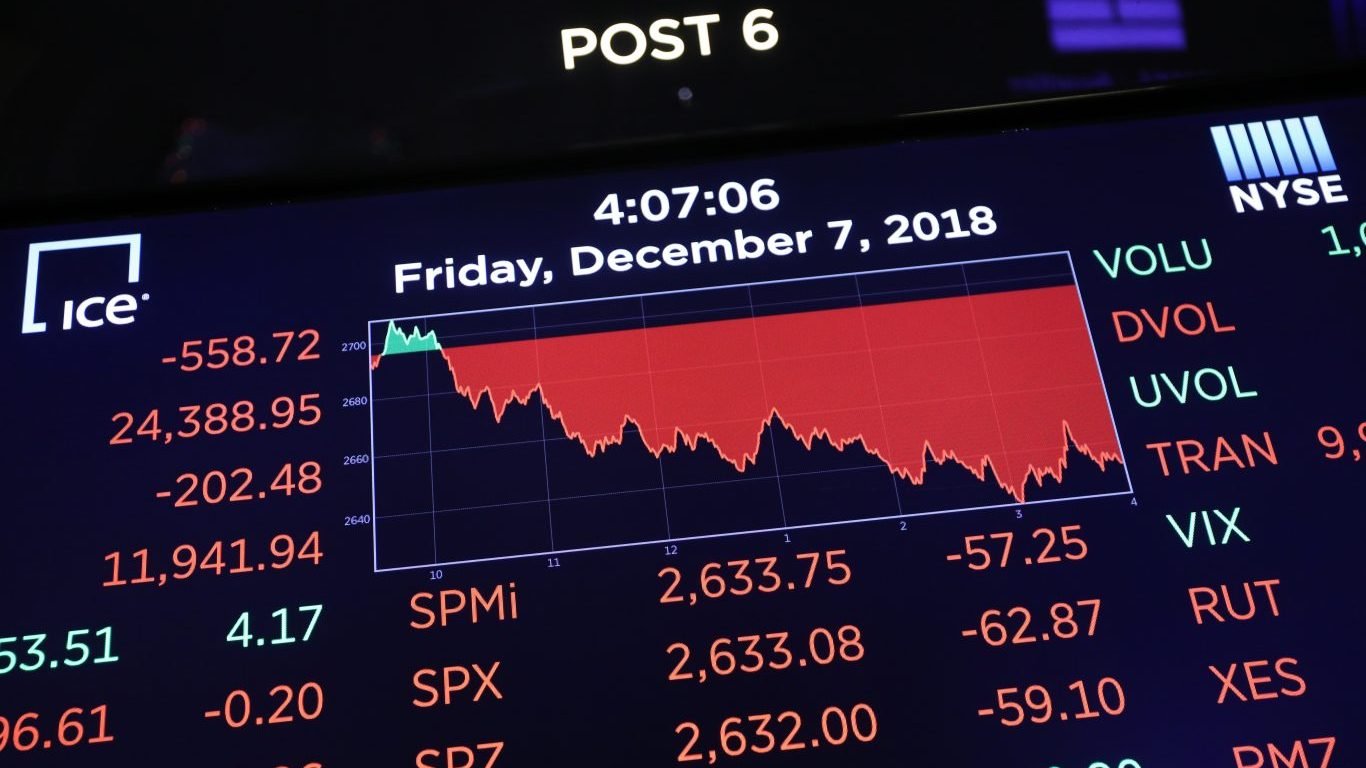
The S&P 500 closed at 7,201.09 on Tuesday, down 0.50%. A few hours later, strategists at JPMorgan Chase (NYSE:JPM | JPM Price Prediction) published their first full-year call for 2027, with an 8,200 target for the index.
That target implies 13.9% upside from Tuesday’s close, which is a solid gain for an index that has slid since its October record. The team, led by Dubravko Lakos-Bujas, expects S&P 500 earnings per share of about $430 in 2027, or about 15% growth.
JPMorgan’s strategists name the main risk as damage from Federal Reserve tightening, along with weaker liquidity and fragile sentiment. That risk is already on the calendar. Futures price in a near 96% chance of a 25-basis-point hike in December and another in January.
Owning the market through the SPDR S&P 500 ETF Trust (NYSEARCA:SPY) makes 2027 come down to one question. Can profit growth outrun a central bank that keeps raising interest rates?
An 8,200 Target That Needs Earnings to Do the Work
The target equals about 19 times JPMorgan’s 2027 earnings estimate. Multiple expansion is unlikely while the Fed tightens, so nearly all of the gain has to come from profits.
Lakos-Bujas wrote that the “AI supercycle remains intact,” and the team expects above-trend, AI-driven profit growth. It also said the recent momentum unwind and holdings correction have improved near-term risk-reward.
The bank’s own results reflect that environment. In its second-quarter filing, JPMorgan reported EPS of $7.70[1], exceeding the $5.80 estimate, and Jamie Dimon credited AI-driven capital investment and fiscal stimulus.
He also warned of risks “shifting below the surface like tectonic plates,”[1] including sticky inflation and elevated asset prices. The 2027 call puts the Fed at the center of that list.
JPMorgan Sits Below the Street’s Most Bullish Calls
The target sits below the 8,471 consensus and the 8,700 targets from Goldman Sachs (NYSE:GS) and Morgan Stanley (NYSE:MS). It matches the calls from three other large firms.
From Tuesday’s close, the consensus implies 17.6% upside and the 8,700 targets imply 20.8%. A November 16 to 24 poll of 42 strategists, analysts and portfolio managers produced a median of 8,150, slightly below JPMorgan.
Rates explain the control. The fed funds upper bound has been 4.00% since September 17[2], and the 10-year Treasury yield was 4.92% on November 23, down from 5.31% on October 5.
Why Rate Hikes Hurt SPY More Than the Average Stock
Higher rates reduce the present value of profits expected far in the future, and growth companies carry most of their value in those distant years, so they lose more when yields climb.
Those companies dominate SPY, whose largest holdings are heavily weighted toward technology and technology-adjacent names. That weighting makes the index more sensitive to a Fed squeeze than the typical stock.
It also explains the index’s split year. The S&P 500 is up 5.2% from its 6,845.50 close on December 31, 2025, yet it sits 7.9% below its October 6 record close of 7,818.93.
What Would Push the Fed Toward Growth
JPMorgan sees a gradual recovery only if the Fed gives more weight to its growth mandate alongside price stability. That shift requires softer data.
Core PCE, the Fed’s preferred inflation gauge, rose 0.3%[3] in September, extending a climb that ran through every month of the past year. The Fed has little reason to ease while that continues.
October PCE, GDP and durable goods arrive at 8:30 a.m. ET Wednesday, followed by the Beige Book at 2 p.m. Weak readings there, or in the December 1 job openings report, would strengthen the growth argument. That could shift the debate.
How Long-Term and Near-Retirement Investors Can Weigh SPY
Investors with horizons past 2027 have the most time to recover from a Fed-driven drawdown, and JPMorgan’s path to 8,200 rests on earnings, with AI-driven profits as the most reliable part of this market.
For people close to retirement, the problem is different. A Fed-driven drawdown does the most damage when a 401(k) or IRA balance is largest and the time to recover is shortest, which is the sequence-of-returns risk we walked through in a free guide to defending the first five years.
For that group, the Invesco S&P 500 Equal Weight ETF (NYSEARCA:RSP) is one alternative worth researching. It holds the same 500 companies at equal weights, which cuts exposure to the long-duration giants most sensitive to rate hikes.
The tradeoff is that equal weighting falls behind when AI leaders carry the market, and investors with longer horizons may weigh that lag against the lower rate sensitivity.
Contact [email protected] for any questions or corrections.
Omor Ibne Ehsan is a writer at 24/7 Wall St. He is a self-taught investor with a focus on growth, cyclical, and dividend equities that have strong fundamentals, value, and long-term potential. He also has an interest in high-risk, high-reward investments such as penny stocks.